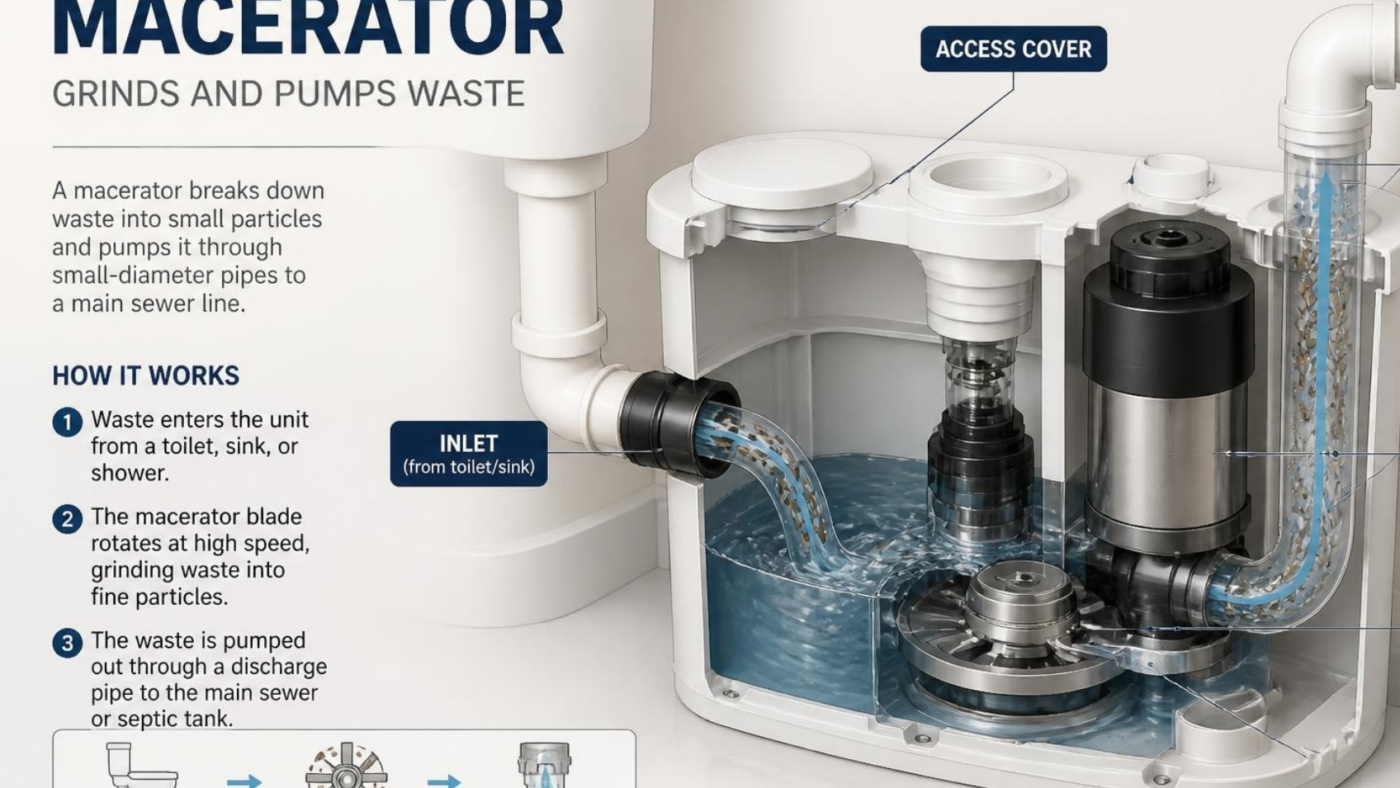
A macerator lets you add a toilet where conventional gravity drainage would be difficult or disruptive. The unit breaks down waste and pumps it through smaller pipework towards an existing drainage connection. That makes these systems useful for lofts, basements, cloakrooms, garage conversions, and distant en-suites.
Quick answer: A macerating toilet uses an electric pump and cutting mechanism to break down waste before moving it through small-bore pipework. It can solve difficult drainage layouts, but it needs electricity, suitable discharge pipework, maintenance access, and compliance with UK building requirements.
| Question | Quick answer |
|---|---|
| What does it do? | Breaks down toilet waste and pumps it to suitable drainage |
| Where is it useful? | Lofts, basements, en-suites, garages, and cloakrooms |
| Does it need electricity? | Yes |
| Can it replace every normal WC? | Not normally in England |
| Typical 2026 fitted cost | Around £600–£1,200 for many installations |
| Main disadvantages | Noise, maintenance, electricity dependence, and blockage risk |
| Best reason to use one | Conventional gravity drainage is impractical or excessively disruptive |
Key takeaways
- These systems can make difficult bathroom locations practical.
- A normal gravity connection remains preferable when it is straightforward to install.
- Only suitable waste and toilet paper should enter the unit.
- Installation limits differ between manufacturers and models.
- England has specific drainage requirements for pumped toilets.
- Electrical and plumbing work must be planned together.
How does a macerator work?
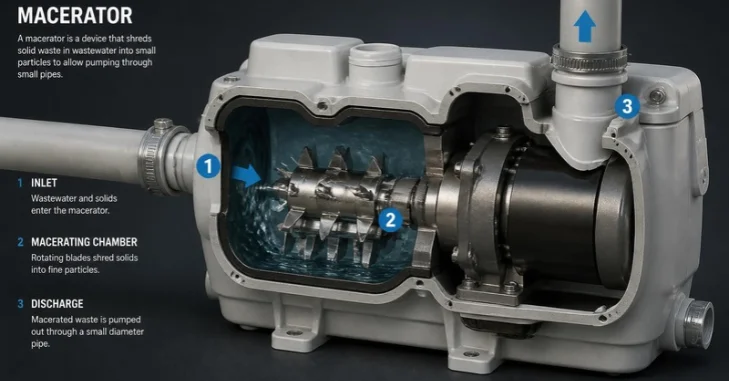
A macerator normally sits behind a toilet or inside suitable bathroom furniture. Flushing sends waste and water into the powered unit. Internal blades or another cutting system reduce the solids before a pump moves the mixture away.
The discharge pipe is much smaller than the large soil pipe used by a conventional toilet. This smaller pipe can make routing through an existing property easier. Some models can also accept wastewater from a basin, shower, or bidet.
The exact pumping distance and vertical lift depend on the chosen model. Manufacturers publish maximum figures for both horizontal and vertical discharge. Installers should design the route around those stated limits rather than using a generic figure.
When does a pumped toilet make sense?
These systems are most useful when a normal soil connection would require major building work. A basement WC may sit below the practical drainage level. A loft or converted bedroom may also be far from the existing soil stack.
They can also suit a new downstairs cloakroom where routing a large soil pipe would damage finished rooms. Under-stairs conversions are another common example. Readox has more ideas for making awkward domestic spaces useful in its home improvement guides.
A conventional connection should still be considered first when it is practical. Gravity drainage has fewer mechanical parts and does not depend on electricity. It also tends to need less specialist maintenance over its working life.
UK rules you should understand before installation
Building requirements matter because pumped waste still has to reach an adequate foul drainage system. In England, Approved Document H provides guidance for foul water drainage. The rules elsewhere in the UK differ, so local requirements should always be checked.
Current English guidance allows a WC with a pump to discharge through small-bore drainage under specific conditions. Another accessible WC must discharge directly to a gravity system. The pumping equipment must also meet the relevant BS EN 12050 standard.
Electrical safety deserves equal attention because the equipment combines mains electricity with bathroom plumbing. Part P requires reasonable electrical safety provisions in dwellings. A competent installer should confirm the correct supply, isolation, protection, and location for the chosen product.
Leasehold homes, flats, and shared drainage can add another layer of permissions. Building control may also become relevant when wider building work is involved. Checking these points before buying equipment can prevent expensive alterations later.
Macerating toilet advantages and disadvantages
A pumped system solves problems that ordinary drainage cannot always solve economically. It can reduce the need to open floors, build boxed soil runs, or make major structural changes. Installation can therefore be quicker in properties with difficult layouts.
The compromise is greater mechanical complexity. Motors, switches, seals, cutting components, and narrow pipework create more possible failure points. A power cut also prevents the system from working until electricity returns.
| Advantages | Disadvantages |
|---|---|
| Flexible toilet positioning | Requires electricity |
| Small discharge pipework | Produces operational noise |
| Useful below normal drainage level | Can block if misused |
| Can reduce structural disruption | Mechanical parts eventually wear |
| Some models accept several fixtures | Needs accessible servicing space |
| May cost less than major drainage alterations | Installation limits must be followed carefully |
How much does installation cost in the UK?
Current UK cost guides show a wide range because installations differ substantially. Checkatrade lists an average unit cost around £380 and installation around £650. MyBuilder gives a broader typical installed range of about £600 to £1,200 for 2026.
A straightforward installation near existing drainage should sit toward the lower end. Longer pipe routes, new electrical work, additional bathroom fixtures, and building alterations increase the bill. Premium multi-inlet pumps also cost more than basic WC-only models.
Always compare the total project cost against conventional drainage work. The cheapest pump is not necessarily the cheapest long-term solution. A plumber can compare both routes before you commit to the room layout.
Common problems and what causes them
Blockages are among the most common complaints. Wipes, sanitary products, cotton wool, paper towels, and other unsuitable materials can jam internal parts. Even products described as flushable can create problems inside narrow discharge pipework.
Continuous running can indicate several possible faults. The unit may have a blocked outlet, damaged pressure membrane, switch fault, or internal obstruction. A humming motor without proper discharge can also signal a blockage or mechanical problem.
Leaks, unusual smells, repeated electrical trips, and grinding noises need prompt attention. The power should be isolated before any inspection around internal components. Professional help is sensible where wastewater, sharp components, or electrical faults are involved.
Maintenance that can reduce failures
Correct everyday use is the most important maintenance measure. Flush human waste and normal toilet paper only. Household rubbish should go into a bin rather than through the pumping system.
Limescale can also affect equipment in hard-water areas. Follow the manufacturer’s cleaning and descaling instructions because harsh chemicals may damage seals or internal parts. Never assume a general household cleaner is suitable for the pump.
Readox’s guide to white vinegar for cleaning explains why acidic cleaners need careful surface checks. That advice is especially relevant around bathrooms and plumbing components. Product instructions should take priority when maintaining mechanical equipment.
The unit should remain accessible after decorating or fitting bathroom furniture. Hiding it permanently behind tiles can turn a simple repair into a larger renovation job. Leave practical access for servicing, inspection, and eventual replacement.
What should you consider before buying?
Start with the fixtures that need to discharge into the pump. A WC-only system has different requirements from a model serving a toilet, shower, and basin. Check the number of inlets before comparing prices.
Next, measure the expected pipe run and vertical lift. Compare those measurements against the manufacturer’s installation instructions. Do not choose a unit based on motor wattage alone.
Noise may matter in bedrooms, flats, and compact homes. Product design, mounting, nearby surfaces, and pipework can all affect how noticeable operation becomes. A short operating cycle is normal, but repeated or excessive noise deserves investigation.
Finally, consider the whole room rather than only its drainage. Waterproof surfaces, safe flooring, ventilation, and service access still matter. Readox’s bathroom flooring guide can help when planning the surrounding renovation.
Is a macerating toilet better than a conventional toilet?
Neither system is automatically better in every property. Conventional gravity drainage is simpler and should usually win when it can be installed sensibly. A powered waste system becomes attractive when normal drainage would be costly, disruptive, or technically difficult.
Think of the pump as a problem-solving option rather than a default upgrade. Its value comes from making otherwise awkward bathroom locations possible. The best installation is one chosen after comparing both drainage methods.
Before buying, ask a plumber to inspect the proposed pipe route and connection point. Electrical requirements should be checked at the same stage. That planning can prevent a convenient bathroom idea from becoming an expensive repair problem.
Choosing the right solution for your home
A pumped toilet can turn an impractical corner of a home into a useful cloakroom or en-suite. It works best when the drainage route is carefully designed, and the right unit is selected. Proper access and sensible daily use also reduce future problems.
Choose conventional gravity drainage when it is easy and affordable to install. Consider pumping equipment when the alternative requires disruptive structural work or an impractical pipe route. Compare both options with a qualified installer before purchasing equipment.
For a wider bathroom project, plan drainage alongside flooring, ventilation, electrics, and maintenance access. Readox’s mould and bathroom moisture guide can help with moisture-related planning. A coordinated design usually produces a more practical room than treating every component separately.
Frequently asked questions
What is a macerator toilet used for?
A macerator toilet is commonly used where a conventional soil pipe connection is difficult. Typical locations include basements, loft conversions, cloakrooms, garages, and distant en-suites. Its pump allows waste to travel through smaller pipework towards suitable drainage.
Can you use one as the only toilet in a UK home?
Rules vary across the UK, so the location of the property matters. In England, current guidance requires access to another WC connected directly to gravity drainage. Always check the rules applying to your specific project.
How noisy is a pumped toilet?
Some operating noise is normal because an electric motor starts after flushing. Good installation and secure pipework can reduce vibration. Grinding, unusually loud buzzing, or repeated cycling may indicate a fault.
What should never be flushed through it?
Avoid wipes, sanitary products, cotton wool, paper towels, nappies, and other foreign objects. These materials can block narrow pipework or damage internal components. Normal toilet paper and human waste are what the system is designed to handle.
How long does a macerator last?
There is no single lifespan for every unit. Usage, water conditions, installation quality, and maintenance all affect durability. Correct use and manufacturer-approved care can help extend service life.
Can a shower or basin use the same pump?
Some models include extra inlets for basins, showers, bidets, or other fixtures. The model must specifically support the connected appliance and expected water temperature. Always check the technical data before adding another fixture.