A good mould remover should clear visible growth without damaging the surface underneath, but the right product depends on the problem. Bathroom grout, silicone sealant, painted walls, and fabrics can need different treatments. You also need to deal with the moisture that allowed the growth to appear, or cleaning alone may offer only temporary results.
Direct answer: For most small household patches, choose a treatment labelled for the exact surface, follow its stated contact time and ventilate the room. Sprays and foams suit many bathroom surfaces, gels can stay in place on vertical joints, while painted walls need a product specifically approved for that finish.
| Situation | Sensible starting option | Main thing to check |
|---|---|---|
| Bathroom tiles | Surface-compatible spray or foam | Contact time and ventilation |
| Grout | Spray, foam or targeted gel | Colour and material compatibility |
| Silicone sealant | Clinging gel or labelled treatment | Whether it is suitable for sealant |
| Painted wall | Product specifically labelled for painted surfaces | Patch test before wider use |
| Recurring patches | Cleaning plus moisture control | Condensation, leaks and ventilation |
| Large or fast-spreading areas | Professional assessment | Underlying damp or building defects |
Key takeaways
Match the cleaning product to the surface rather than buying on strength alone.
Never mix bleach-based products with vinegar, acids or ammonia-based cleaners.
Treat recurring growth as a moisture problem as well as a cleaning problem.
Patch-test painted, coloured or delicate finishes before treating a larger area.
Get professional advice when growth is extensive, keeps returning quickly or follows a leak or structural damp problem.
How to choose the right treatment
Current UK buying guides and cleaning advice consistently make surface compatibility one of the first things to check. A product that works well on white tiles may discolour fabric, coloured grout or paint. Reading the label before buying can therefore matter more than choosing the strongest-looking bottle.
Application format also matters because sprays, foams, and gels behave differently on a wall or joint. A liquid spray can cover a broad hard surface quickly, while a thicker treatment stays in contact with a narrow vertical area for longer. Readox already has a dedicated guide to mould-removal gels for readers dealing with sealant, grout lines and other targeted areas.
| Type | Useful for | Advantages | Limitations |
|---|---|---|---|
| Bleach-based spray | Compatible tiles, grout and hard bathroom surfaces | Quick coverage and strong stain removal | Can bleach materials and has important mixing precautions |
| Foam | Vertical bathroom surfaces and larger patches | Better cling than a thin liquid | Still needs surface and label checks |
| Gel | Silicone, grout lines and small vertical areas | Targeted application with less runoff | Less convenient for large surfaces |
| Paint-safe or chlorine-free treatment | Suitable decorated surfaces | May reduce bleaching risk | Compatibility still varies by formulation |
| Fungicidal wash | Suitable surfaces where fungal treatment is required | Designed specifically for fungal growth | Must be used according to its approval and label |
Choosing by surface
Bathroom tiles, grout and silicone
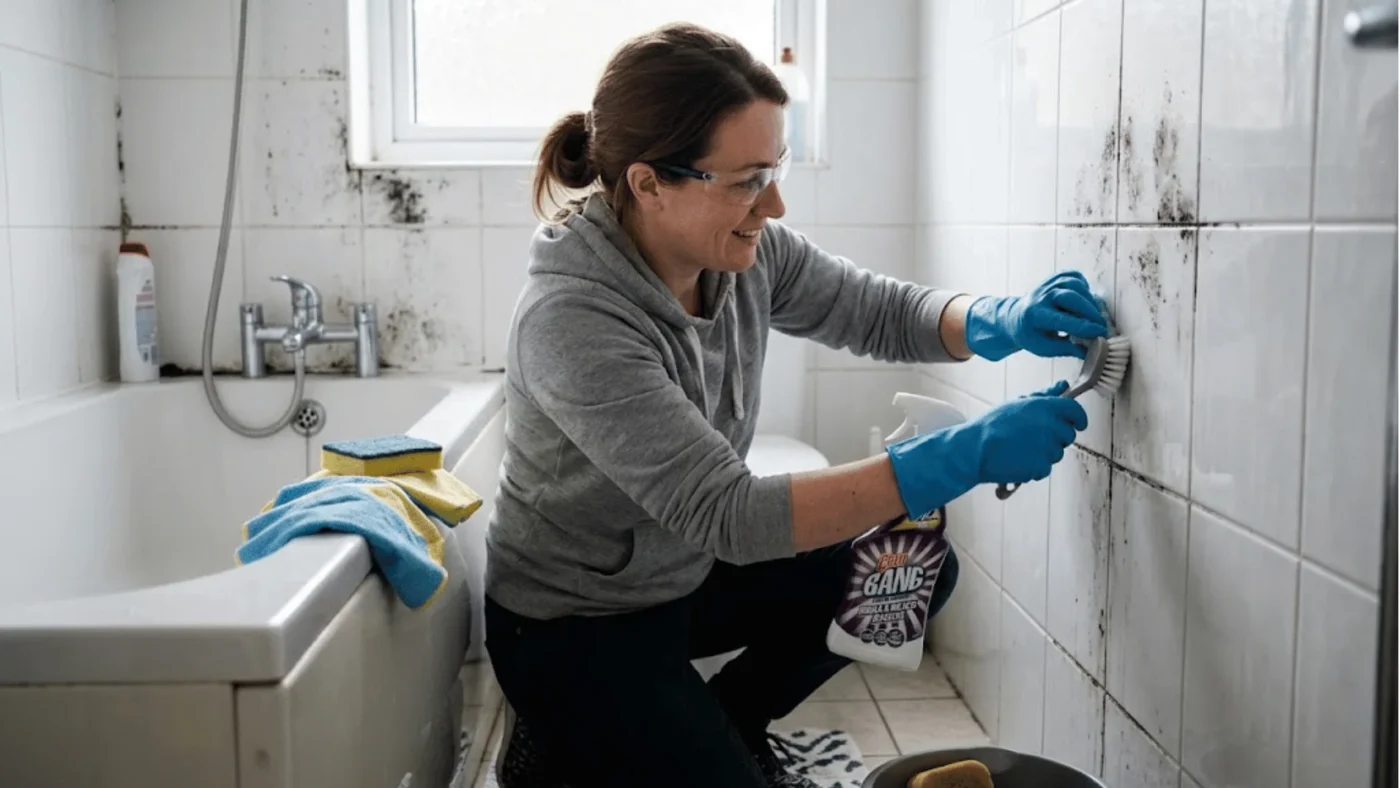
Glazed tiles are among the easier household surfaces to treat because many commercial products are designed for them. Grout and silicone need more care because they can stain deeply, and coloured grout may react differently from white grout. Check the bottle for the exact materials it covers rather than assuming every bathroom cleaner is suitable.
Silicone around baths and showers often benefits from a thicker product because gel can stay in a narrow vertical joint instead of running down the wall. Contact time varies between formulations, so use the timing printed on the packaging rather than copying a general cleaning recipe. Replace badly deteriorated sealant if cleaning no longer restores a sound, hygienic surface.
Painted walls and ceilings
Painted walls need a cautious approach because strong chemicals can remove colour, alter sheen, or soften an unsuitable coating. Choose a formulation that specifically lists painted surfaces, then test a hidden patch before treating the visible area. Avoid aggressive scrubbing until you know the finish can tolerate the product.
Once you’ve dealt with the fungal growth and corrected the moisture source, you may need to decorate where staining remains. Readox’s sugar soap guide for decorating preparation explains how to clean suitable walls before repainting. Sugar soap itself should not be treated as a substitute for dealing with active fungal growth or persistent damp.
Fabrics, wood and sensitive materials
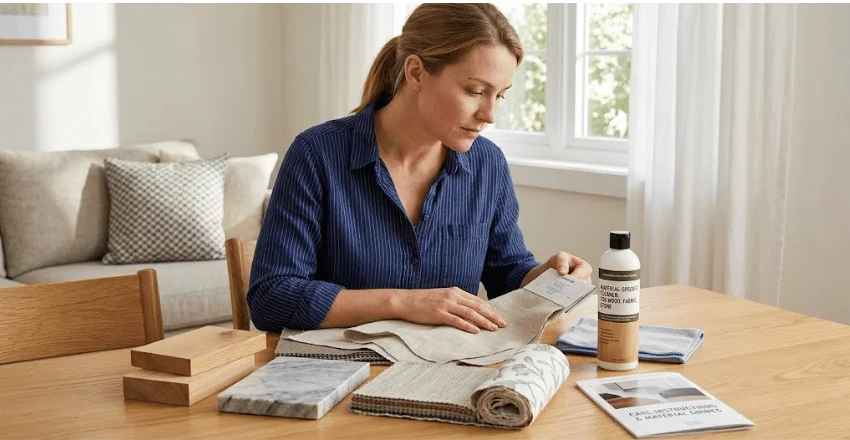
Do not assume a bathroom product belongs on curtains, upholstery, timber or natural stone. Bleaching agents can permanently mark coloured textiles, while acidic or alkaline cleaners can damage some stone and finished wood. Use a material-specific treatment and follow the care instructions supplied with the surface or product.
Vinegar is often suggested online as a general household cleaner, but it is not suitable for every material and must never be combined with bleach. Readox’s white vinegar cleaning guide covers appropriate household uses and surfaces that need greater care. Treat cleaning chemicals as separate products, not ingredients for homemade mixtures.
How to use mould remover safely
Before applying mould remover, read the product label from start to finish because dilution, contact time, rinsing and ventilation instructions vary. Open a window or use suitable room ventilation, as the label directs. Keep children and pets away from the working area until the treatment and any required rinsing are complete.
Identify the affected material and confirm that the product is compatible with it.
Ventilate the room and use any protective equipment specified on the label.
Patch-test delicate, painted or coloured surfaces in an inconspicuous place.
Apply the product only as directed and leave it for the stated contact time.
Wipe or rinse the area according to the manufacturer’s instructions.
Allow the surface to dry fully before redecorating or returning items to the area.
Avoid improvising with several cleaning chemicals at once. GOV.UK guidance states that sodium hypochlorite, commonly associated with household bleach, can release chlorine gas when mixed with acidic products such as vinegar, while mixing with ammonia-based products can also create respiratory irritants. For that reason, never combine products unless their manufacturer explicitly instructs you to do so.
Why does the mould keep returning?
Cleaning removes visible growth, but it does not repair a leaking pipe, improve a weak extractor fan or stop repeated condensation on a cold wall. Oxford City Council advises that you must address excess moisture to prevent the problem from returning. Recurring patches should prompt you to find the water source rather than repeatedly treating the same stain.
Bathrooms and kitchens generate large amounts of moisture through bathing, showering and cooking. Ventilation, appropriate heating, fixing leaks and allowing air to circulate can all reduce conditions that favour regrowth. Current NHS-linked guidance also recommends addressing the damp source, using extractor fans, and reporting necessary repairs where housing defects contribute to the problem.
When should you stop treating it yourself?
A small, localised patch on a suitable washable surface can often be handled with a correctly labelled household product. Extensive growth, rapid recurrence or damp that covers a large section of a wall or ceiling deserves further investigation. Which? also advises seeking professional help when mould spreads quickly or the affected area becomes too large to manage safely.
Renters should report leaks, failed ventilation and other repair issues to their landlord or housing provider rather than relying indefinitely on surface cleaning. Structural leaks, penetrating damp and similar defects need their cause repaired before repeated cleaning can provide a lasting result. Keep photographs and records if the problem recurs and is linked to a repair issue.
Verdict: choose by surface, not by the strongest claim
For ordinary bathroom tiles and compatible grout, a labelled spray or foam is usually the simplest starting point. A gel is more useful when the problem sits on silicone or a narrow vertical joint, while painted walls call for a product explicitly approved for the finish. The strongest product is not automatically the right product if it damages what you are trying to clean.
The other half of the job happens after the stain disappears. Dry the surface, improve airflow, and investigate condensation or leaks so the same conditions don’t remain. Readers planning wider household maintenance can browse Readox’s Home Improvement guides for related cleaning, decorating and home-care advice.
Frequently asked questions
Which mould remover should I choose for black mould?
Choose based on the affected surface and the product instructions, not the colour of the growth alone. On compatible bathroom tiles, a labelled spray or foam may be practical, while silicone can suit a clinging gel. Painted or delicate materials need a formulation that specifically confirms compatibility.
Can I use the same product on walls and bathroom grout?
Only if the label lists both surfaces. Painted walls can react differently from ceramic tiles or grout, particularly where strong bleaching ingredients are involved. Patch-test uncertain finishes and stop if you notice colour loss, softening or another change.
Does bleach stop the problem from coming back permanently?
Cleaning a visible patch does not remove the moisture conditions that allowed it to grow. If condensation, a plumbing leak, inadequate ventilation or another damp source remains, new growth can return after the surface has been cleaned. Prevention therefore requires both treatment and moisture control.
Can I use vinegar after a bleach-based product?
Do not combine vinegar with bleach or apply one while residue from the other may still be present. GOV.UK states that acidic products can react with sodium hypochlorite and produce chlorine gas. Follow the product’s rinsing instructions and use one cleaning system at a time.
Keep the surface clean by fixing the cause too
Treat visible growth promptly, but make the moisture source part of the same job. Choose a surface-compatible treatment, follow its label, and investigate why that area stays damp enough for growth to return. That approach protects the finish you are cleaning and gives you a better chance of keeping the area clear.