The British high street has had a difficult decade. Rising rents, business rates, and energy bills have squeezed independent cafés, bakeries, barbers and gift shops from every side. In that climate, the customers who come back week after week are worth more than ever. And the humble loyalty card, often a slip of paper with ten boxes to stamp, is still one of the main ways small shops say thank you to them.
The trouble is that paper cards rarely survive long. They get lost, go through the wash, or stay at home on the day the customer actually visits. The shop learns nothing about who its regulars are, and a reward earned on paper often goes unclaimed simply because the card was forgotten.
The phone wallet changes the picture
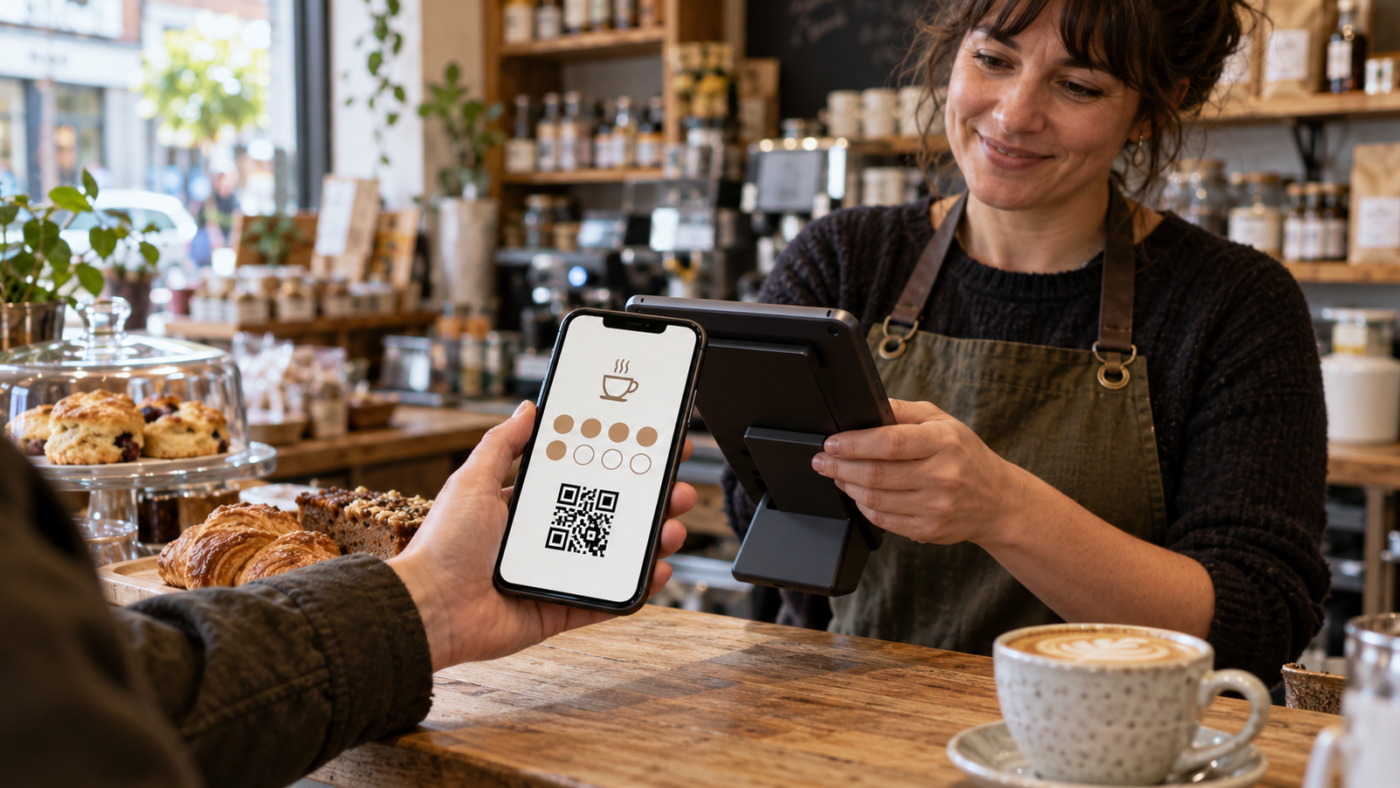
Almost every customer now carries a smartphone with a built-in wallet: Apple Wallet on an iPhone, Google Wallet on Android. Those wallets were made for train tickets and boarding passes, but they hold loyalty cards just as well. The card sits next to the customer’s bank card, updates itself when a stamp is added, and can show a message when a reward is ready.
For a small shop, the setup is far simpler than most owners expect. Here is how it usually works.
Step by step
- Choose the reward. Keep it simple and within reach: a free coffee after eight stamps, a free loaf after ten, ten per cent off the next haircut. The first reward should feel achievable within a few weeks of normal visits.
- Design the card. Add your logo, your colours and a short line about the reward. It should look like your shop, not like a generic template.
- Put a QR code on the counter. Customers scan it with their phone camera and add the card in a couple of taps. A small printed sign by the till is usually enough.
- Stamp from a phone. Staff scan the customer’s card with a phone or tablet behind the counter. The stamp appears on the customer’s card straight away.
- Tell every customer for the first month. The single biggest factor in a successful launch is staff mentioning the card at every sale. “Would you like our loyalty card? It goes straight into your phone” takes three seconds.
If you would like to see what the process looks like before committing, you can create a sample card at passtastic.io/en/create-loyalty-card and preview it on your own phone.
A word on customer data
A digital card usually asks the customer for a name and an email address, and that is a real benefit: you finally know who your regulars are. In the UK, that also means following UK GDPR. Ask only for what you need, explain what you will use it for, and get clear consent before sending marketing messages. Customers are generally happy to share an email for a card that gives them something back, as long as they trust you not to flood their inbox.
What to do with what you learn
Once the card is running, look at the numbers once a month. How many new members joined? How many rewards were claimed? Which regulars have not been in for a while? A short, friendly message to lapsed customers (“We’ve missed you, here’s a free pastry on your next visit”) is often the most effective marketing an independent shop can send, and it costs almost nothing.
Loyalty will never replace good coffee, warm service or a well-stocked shelf. But for an independent business competing with chains that have entire teams working on retention, a simple card in the customer’s phone is one of the few tools that levels the field.