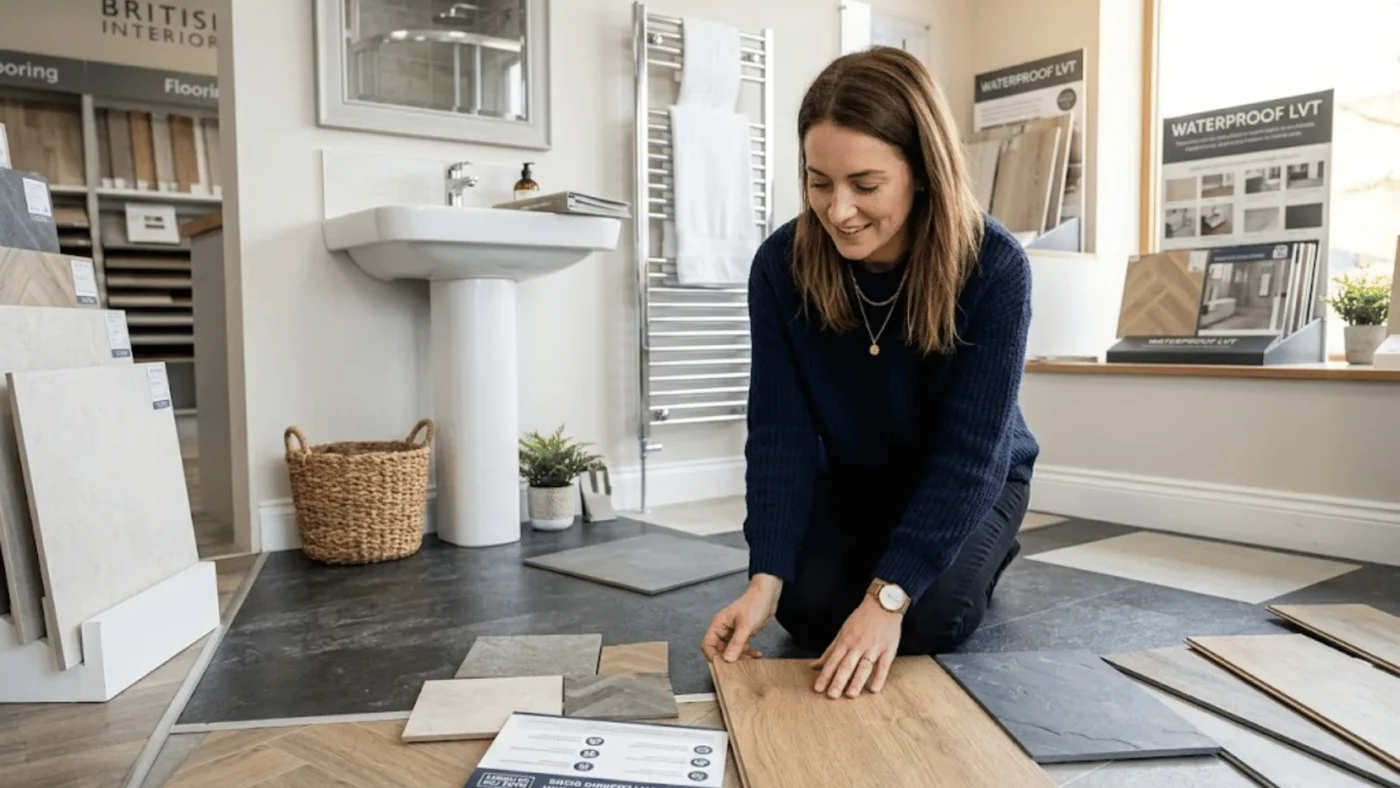
Choosing bathroom flooring in a UK home is less about finding the prettiest finish and more about controlling water, slips, and long-term maintenance. The right surface should cope with splashes and steam, feel safe under wet feet, and suit the subfloor beneath it. For most homes, porcelain tile and bathroom-rated LVT lead the shortlist, with sheet vinyl offering a strong budget alternative.
Quick answer: For most UK homes, porcelain tile or water-rated LVT are the strongest all-round choices. Porcelain suits wet rooms and households prioritising durability, while LVT feels warmer and is often quicker to fit. Sheet vinyl is the budget option, while standard laminate and solid wood are poor choices where water is common.
| Floor type | Water performance | Comfort underfoot | Maintenance | Typical 2026 supply + fitting* | Best suited to |
|---|---|---|---|---|---|
| Porcelain tile | Excellent | Cool and hard | Low to moderate | About £55–£105/m² | Family bathrooms, wet areas |
| Ceramic tile | Very good | Cool and hard | Low to moderate | About £35–£65/m² | Standard bathrooms |
| LVT | Very good when bathroom-rated and correctly fitted | Warm and softer | Low | About £35–£115/m² | En-suites, family bathrooms |
| Sheet vinyl | Very good with minimal seams | Warm and comfortable | Low | About £25–£55/m² | Budget refits, rentals |
| Natural stone | Good when correctly sealed | Cool and hard | Higher | About £90–£210/m² | Premium bathrooms |
*Indicative UK ranges based on 2026 trade pricing. Subfloor repairs, removal, levelling, unusual layouts and waterproofing can increase the final price.
Five bathroom floor options compared
No single material wins every category because a wet room has different demands from a lightly used en-suite. Current UK buying guides repeatedly focus on water resistance, slip safety, comfort, cleaning and installation requirements. Your best choice should balance those factors rather than relying on appearance alone.
A family bathroom may benefit from a forgiving surface that feels comfortable under bare feet, while a walk-in wet area should prioritise drainage and waterproof construction. A downstairs WC faces fewer splashes, so you have more flexibility with materials. Thinking about how the room is genuinely used makes the final choice much easier.
How to choose bathroom flooring for a UK home
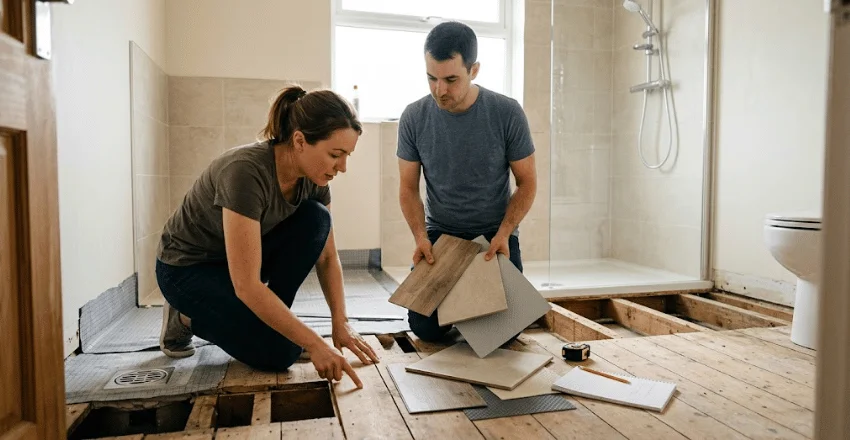
Start with water exposure rather than colour or pattern. A floor beside an enclosed shower does not face the same conditions as one forming part of a level-access wet room. In high-exposure areas, the complete floor build-up, waterproofing and drainage matter as much as the decorative surface.
Next, check the subfloor’s condition and construction before buying anything. Timber floors can move, while uneven concrete may need levelling before you install a rigid finish or glued covering. Poor preparation can cause cracked grout, movement, lifted edges, and premature wear, even when the surface material itself is suitable.
1. Porcelain tile: the durability-first choice
Porcelain is a strong option for busy family bathrooms because it handles moisture well and offers excellent durability. It comes in stone, concrete, marble, and timber effects, so practical performance doesn’t limit the room’s style. Correctly specified tiles can also work well with underfloor heating, which helps offset their naturally cool feel.
The main drawbacks are hardness, installation time, and subfloor requirements. Dropped objects are more likely to break on a tiled surface, while poorly prepared timber floors can contribute to movement and cracked joints. Professional preparation becomes especially valuable where the existing floor is uneven or flexible.
Pros
- Strong resistance to water and everyday wear.
- Wide range of sizes, colours and finishes.
- Suitable for many underfloor-heating systems.
- Long service life when properly installed.
Cons
- Hard and cold without heating.
- More labour-intensive to install.
- Grout requires routine cleaning.
- Subfloor movement needs careful management.
2. Ceramic tile: practical performance at a lower price
Ceramic tiles provide many of the visual benefits of porcelain while generally costing less to buy and fit. They are commonly used in domestic bathrooms and come in a broad selection of patterns and colours. For a typical bathroom without heavy traffic, a suitable floor-rated ceramic tile can be a sensible choice.
Porcelain is denser and generally better suited to demanding installations, so choose ceramic with its intended use in mind. Always confirm that the product is designed for floors rather than walls and check the manufacturer’s wet-area guidance. The finish should also provide appropriate grip and not become dangerously slick when wet.
Pros
- Usually cheaper than porcelain.
- Wide choice of colours and designs.
- Straightforward everyday cleaning.
- Suitable for many normal domestic bathrooms.
Cons
- Generally less hard-wearing than porcelain.
- Can chip or crack.
- Feels hard underfoot.
- Installation still requires a sound base.
3. LVT: a warmer alternative to tile
Luxury vinyl tile appeals to homeowners who want the look of timber or stone without the cold feel of ceramic surfaces. Bathroom-rated products are comfortable underfoot, relatively quiet, and available in convincing plank and tile designs. Current UK guides regularly position LVT as a main alternative to traditional tile.
The word “waterproof” still needs context because a waterproof plank does not automatically make the entire floor assembly waterproof. Water may reach the subfloor through poorly installed joints, edges, or penetrations, so the fitting method matters. Check the exact manufacturer’s instructions for bathrooms, perimeter detailing, and compatibility with any heating system.
Pros
- Warmer and softer than ceramic surfaces.
- Wood and stone effects are widely available.
- Low everyday maintenance.
- Often quicker to install than tile.
Cons
- Product quality varies.
- Joints and edges need careful installation.
- Not every product suits every wet zone.
- Heat limits depend on the manufacturer.
4. Sheet vinyl: a strong budget option
Sheet vinyl remains useful because small bathrooms can often be covered with few or no seams. Fewer joins mean fewer potential routes for water to work beneath the surface, while the material is comfortable under bare feet. Current UK trade estimates also place it among the lowest-cost mainstream options.
It works particularly well in straightforward family bathrooms, rental properties and quick renovations where value matters. Appearance and durability vary considerably between product ranges, so the cheapest roll isn’t automatically the best purchase. A neat fit around toilets, pipework and doorways also makes a major difference to the finished result.
Pros
- Affordable.
- Warm and comfortable.
- Easy routine cleaning.
- Minimal seams in many small bathrooms.
Cons
- Can be damaged by sharp objects.
- Premium tile finishes may look more substantial.
- Detailed cutting can be difficult for beginners.
- Damaged sections are less convenient to replace.
5. Natural stone: premium looks with extra maintenance
Slate, limestone, travertine and marble can create a distinctive floor because natural variation makes every installation different. Stone can also last for years when you use the right product, finish, substrate, and maintenance routine. The trade-off is more preparation and ongoing care than porcelain or vinyl normally requires.
Many natural stones are porous and need proper sealing, while polished surfaces may become slippery when wet. Cleaning products also need careful selection because acids can attack materials such as marble, limestone and travertine. Readox’s white-vinegar cleaning guide explains why you should keep acidic cleaners away from acid-sensitive stone.
Pros
- Distinctive natural appearance.
- Premium finish.
- Long-lasting with correct care.
- Works with many traditional and contemporary schemes.
Cons
- Higher purchase and fitting cost.
- Sealing may be required.
- Some finishes become slippery when wet.
- Acidic cleaners can damage certain stones.
What about laminate and real wood?
Standard laminate is a risky choice where water can reach joints because its core can swell after moisture penetrates. Some manufacturers sell ranges designed for greater water resistance, but check their instructions and limitations before installation. B&Q, Wickes and Howdens all distinguish bathroom-suitable or moisture-resistant products from ordinary laminate.
Solid timber also demands caution because changing moisture levels can cause movement, staining or other damage. If you prefer a wood appearance, wood-effect porcelain or LVT usually reduces the moisture concerns associated with genuine timber. Readox’s hardwood-floor maintenance guide also explains how water damage can affect real wooden floors.
Do not overlook slip resistance
A surface that handles water but becomes dangerously slippery is not a good bathroom choice. Texture, cleaning, wear, and the conditions under which a product is tested all affect its real-world grip. Ask suppliers for meaningful wet-slip data instead of assuming that a matt-looking tile is automatically safe.
The Health and Safety Executive uses the pendulum test when assessing floor slipperiness and classifies a Pendulum Test Value of 36 or more as having low slip potential. That guidance is written mainly for workplace risk assessment, but it gives UK consumers a useful reference when comparing technical flooring information. The HSE publishes its own guidance on assessing floor slip resistance, which is worth reading before you discuss test data with a supplier.
The subfloor can decide whether your new floor succeeds
A new covering will not correct rotten boards, serious movement, dips or moisture problems underneath it. Investigate existing defects before adding adhesive, underlay, tile backer, or levelling products. This is especially important in older UK homes where bathroom floors may contain timber boards, previous overlays or several generations of finishes.
Wet rooms need more than a water-resistant decorative finish because the surrounding construction must manage regular direct water exposure. The correct waterproofing system, falls, drainage details and compatible materials need to work together. If you are converting a normal bathroom into a wet room, professional specification is often worth the extra cost.
Can you use underfloor heating?
Tile works particularly well with many underfloor-heating systems because heat transfers effectively through the hard surface. Many LVT, sheet-vinyl, and stone products are also compatible, but temperature limits and installation methods vary. Always use the technical data for the exact floor covering and heating system, rather than assuming every product in a category behaves the same.
Before fitting heating, consider:
- The manufacturer’s maximum floor-surface temperature.
- Whether adhesive or underlay is approved for heating.
- The subfloor’s condition and insulation.
- Final floor height around doors and sanitaryware.
- Who will complete any required electrical work.
Keep the floor clean without damaging the finish
Routine care is usually simpler than aggressive deep cleaning. Remove standing water, clean spills promptly, and use a product recommended for your specific surface. Grout lines and edges also deserve attention because persistent damp can encourage staining and unwanted growth.
Bathrooms with poor ventilation may develop mould around sealant, grout and other damp areas even when the floor itself is sound. Readox’s guide to dealing with mould around bathroom surfaces covers cleaning and moisture-control considerations. Prevention still begins with addressing leaks, ventilation problems, and recurring sources of moisture rather than repeatedly treating the visible mark.
Verdict: Which option should you choose?
Porcelain is our durability-first recommendation for a busy bathroom or properly designed wet area, provided the substrate and waterproofing system are suitable. Bathroom-rated LVT is the stronger comfort-focused choice where you want a warmer feel and realistic timber or stone effects. Sheet vinyl is hard to ignore on a tighter budget, while natural stone makes most sense when appearance matters enough to justify its added cost and maintenance.
Ceramic remains a sensible middle ground for a conventional domestic room, especially where the budget does not stretch to premium porcelain. Whatever material you prefer, confirm the wet-use rating, slip information and installation requirements before ordering. A well-specified mid-priced product on a properly prepared floor is usually a better investment than an expensive finish laid over a poor base.
Frequently asked questions
What is the best bathroom flooring for most UK homes?
Porcelain tile and bathroom-rated LVT are two of the strongest general choices, but they solve different problems. Porcelain prioritises durability and wet-area performance, while LVT offers a warmer and softer feel. Sheet vinyl is a practical alternative where price and easy care take priority.
Is vinyl better than tile in a bathroom?
Vinyl can be warmer, quieter, and cheaper to install, which makes it attractive for family bathrooms and quick renovations. Tile usually offers greater hardness and a more traditional premium finish, especially when porcelain is used. The better choice depends on water exposure, comfort, budget, and the condition of the floor underneath.
Can I put laminate in a bathroom?
Only consider laminate if the manufacturer specifically approves it for the intended bathroom conditions. Standard laminate can be damaged when moisture penetrates the joints and reaches the fibre-based core. Even with a bathroom-suitable range, installation and prompt removal of standing water remain important.
What is the cheapest water-resistant floor for a bathroom?
Sheet vinyl is usually one of the cheapest mainstream choices and current UK trade figures put materials at roughly £10–£30 per square metre before fitting. Budget LVT sits above it in many price ranges but may provide a more convincing plank or tile appearance. Preparation costs can still change the final bill significantly, particularly if the existing surface needs repairs or levelling.
Do bathroom tiles make the room feel colder?
Tiles tend to feel cooler under bare feet because hard ceramic and porcelain surfaces do not provide the cushioned warmth associated with vinyl products. Underfloor heating can make tiled rooms more comfortable and is commonly considered during a full renovation. Check the heating design before installing the floor, because retrofitting later is far more disruptive.
Choose for the room you have, not the showroom display
Start by identifying how much water the room receives, who uses it, and what sits beneath the existing finish. Then compare wet-slip performance, maintenance, fitted cost and comfort before deciding on colour or pattern. For more ideas covering renovation, cleaning and practical home care, browse Readox’s Home Improvement section as you plan the rest of the project.