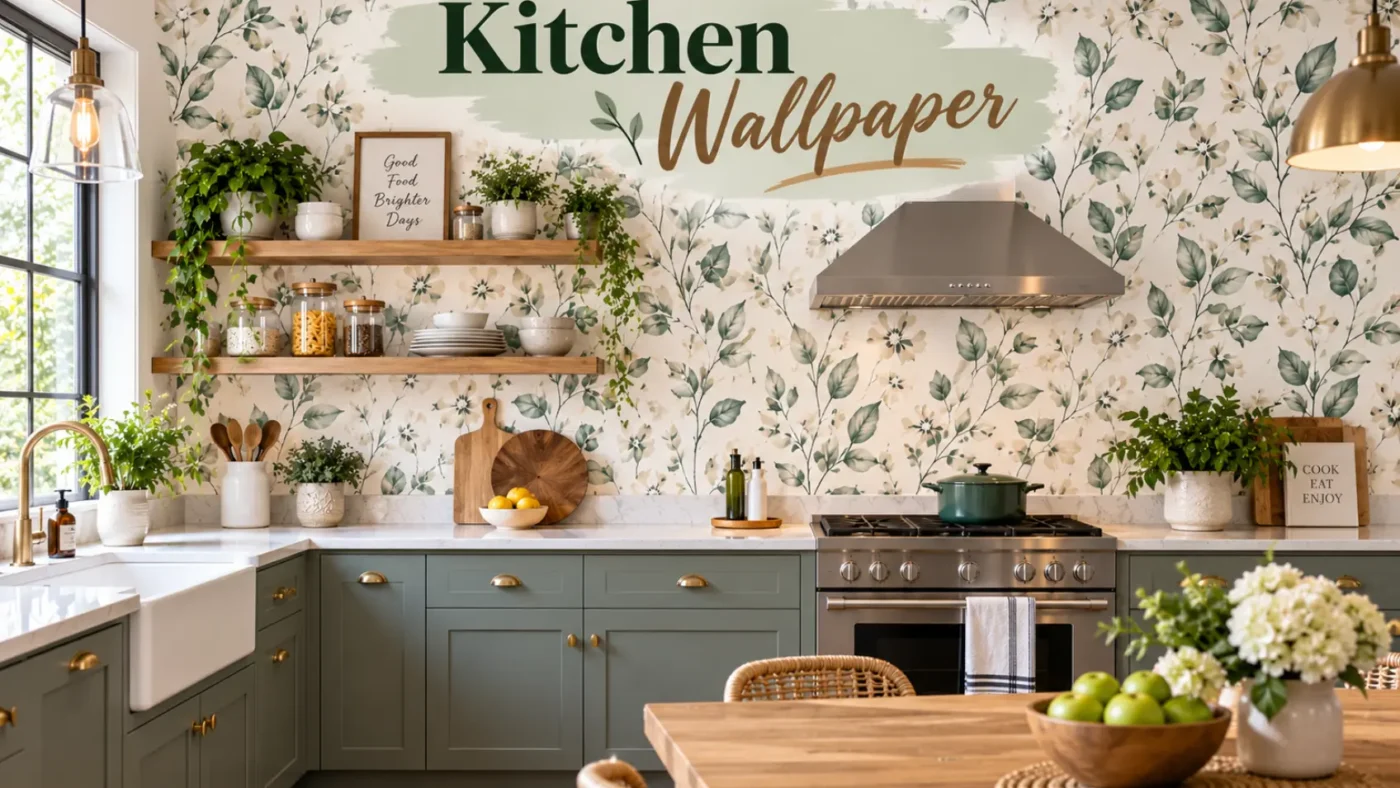
The right kitchen wallpaper can add color, texture, and character without committing to new units or expensive tiling. For a UK kitchen, practicality matters as much as appearance, so washable finishes and sensible placement should guide your choice. Vinyl or other wipeable coverings work well on suitable walls, while areas exposed to direct heat, grease, or frequent splashes usually need a proper splashback.
Direct answer: Choose a washable or vinyl wall covering for most busy kitchens, especially where steam and occasional marks are likely. Keep decorative paper away from direct heat and regular water unless the manufacturer specifically approves that use. A feature wall, dining area, or space above a splashback is usually the safest place to start.
| Kitchen Wallpaper | Practical choice for a UK kitchen | Why it matters |
|---|---|---|
| Finish | Washable, scrubtable, or vinyl-coated | Easier to clean after cooking |
| Placement | Dining walls, breakfast areas, alcoves, dry feature walls | Reduces exposure to water and grease |
| Hob and sink zones | Tile, glass, or another suitable splashback | Handles frequent heat and splashes better |
| Pattern | Scale that suits the available wall area | Helps the design feel balanced |
| Preparation | Clean, sound, and completely dry wall | Supports good adhesion |
| Rental homes | Removable paper where the product and wall allow it | Easier to change later |
UK decorating guidance broadly agrees that washable or vinyl surfaces are practical choices for kitchens. Experts also recommend keeping less durable designs away from the wettest and hottest areas. Good ventilation can further reduce moisture affecting painted walls.
Key takeaways
- Choose washable, scrubbable, or vinyl-coated products for hard-working walls.
- Use patterns where they will be seen without constant grease or water.
- Protect areas immediately behind a hob or sink with a suitable splashback.
- Match the scale and color of the design to cabinets, worktops, and natural light.
- Prepare greasy walls carefully and let them dry fully before decorating.
- Check the care and installation instructions for the exact product you buy.
Is Kitchen Wallpaper Practical in a UK Home?
Yes, as long as you match the material to the room and choose its position carefully. Modern kitchens contain several relatively dry areas where decorative wall coverings can work well, including dining corners, breakfast spaces, and clear walls away from food preparation. Vinyl-coated, washable products offer more cleaning flexibility than delicate untreated papers.
The main risk comes from treating every part of the room in the same way. Steam, splashing water, and airborne cooking residue place different demands on a surface than an ordinary dining-room wall. A mixed approach often works better, with durable protection around the busiest zones and decorative finishes elsewhere.
Which Type Works Best in a Kitchen?
Washable vinyl or vinyl-coated paper is a sensible starting point for a busy household. These products are designed to tolerate more cleaning and moisture than delicate papers, although individual performance varies by manufacturer. Always check whether a product is described as spongeable, washable, scrubbable, or suitable for kitchens before ordering.
Peel-and-stick designs can also suit smooth, dry walls where easy installation or later removal is important. That can make them attractive for rental properties or short-term decorating changes, but the wall condition and product instructions still matter. If you are concerned about the existing paint or finish, test an inconspicuous section first.
Where Should You Use It, and Which Areas Should You Avoid?
A useful planning method is to divide the room into green, amber, and red zones. Green zones receive little water or grease, amber zones experience occasional marks, and red zones sit beside direct cooking or washing activity. This simple framework helps you decide whether decoration, a washable finish, or a hard splashback makes the most sense.
- Green zone: dining walls, breakfast nooks, pantry areas, and walls well away from cooking.
- Amber zone: walls near worktops or preparation areas where occasional wiping is likely.
- Red zone: directly behind a hob, immediately around a sink, or anywhere exposed to repeated heat, oil, or water.
A wall beside a dining table is often an easier place to introduce a strong print than the wall behind the hob. Open-plan rooms also let you use a pattern to visually separate the eating space from the working kitchen. Designers regularly use this zoning technique to give a kitchen-diner more definition without changing its layout.
For high-exposure areas, follow the manufacturer’s stated limitations rather than assuming a washable surface is waterproof. Homebuilding and Homes & Gardens both advise greater caution around sinks, cooking zones, and heavy moisture. A glass, tile, or other suitable splashback can protect the busiest section while leaving the upper wall available for decoration.
7 Design Ideas That Suit British Kitchens
The pattern should work with the room rather than compete with every cabinet, handle, and worktop. Current interior design guidance shows that florals, botanicals, stripes, darker prints, and small-scale repeats can all work when they suit the wider scheme. The strongest choice usually connects to an existing color or material elsewhere in the room.
- Use a botanical print with green cabinets. Pick one green from the pattern and repeat it through cabinetry, accessories, or painted trim.
- Add a small repeat to a compact wall. A restrained motif adds interest to an empty section without making every surface compete for attention.
- Put a bold floral around a dining nook. The pattern can define the eating area while keeping the cooking zone easier to clean.
- Try narrow stripes in a traditional scheme. Vertical lines can introduce pattern while remaining quieter than a large floral or mural.
- Pair warm neutrals with natural wood. Beige, cream, and muted earthy shades work easily beside timber tables, shelving, and woven textures.
- Use a darker print on one clear feature wall. Deep green, navy, or charcoal can create contrast where the room has adequate light.
- Repeat the pattern color around a breakfast bar. Coordinated seating can complete the look; Readox’s guide to Dunelm bar stools can help when comparing seating styles and proportions.
Match the Color to Your Cabinets and Natural Light
Start with fixed surfaces because they cost more to change than a wall finish. Cabinet doors, flooring, worktops, and large appliances already create a palette, so choose two or three colors from those elements before comparing samples. This reduces the risk of picking an attractive roll that feels disconnected once it covers an entire wall.
Warm cream and beige schemes can work with sage, olive, terracotta, dark blue, and natural timber. Readox’s magnolia paint guide explains how warm neutrals change under different UK lighting conditions, while its light beige paint color ideas cover useful coordinating shades. Place samples beside the cabinets and check them in morning, afternoon, and evening light before deciding.
Prepare the Wall Before You Start
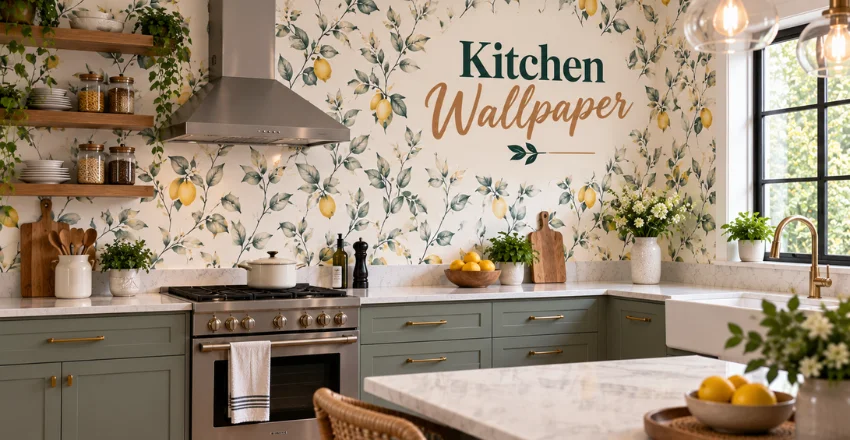
Kitchen surfaces can hold cooking residue that is hard to see from a distance. Dust the area first, identify greasy sections, and use a cleaning method that suits the existing finish. The surface should be sound and fully dry before applying paste, adhesive, or a self-adhesive covering.
Readox’s sugar soap guide explains how suitable decorating cleaners can help remove grease and grime before painting or papering. Follow the product label because formulations, dilution instructions, and rinsing requirements vary. After cleaning, repair loose paint, holes, or uneven filler, then let each preparation stage dry properly.
Common Mistakes That Shorten the Life of a Wall Covering
Most problems begin with unsuitable placement, weak preparation, or ignoring the manufacturer’s care instructions. A decorative finish that performs well on a dining wall may fail quickly behind a frequently used sink. Treat the kitchen as several different working zones rather than one uniform environment.
- Installing delicate paper directly beside regular splashes.
- Covering a greasy or dusty wall without preparing it.
- Assuming “washable” and “waterproof” mean the same thing.
- Using abrasive cleaners without checking the care instructions.
- Choosing a large repeat without allowing for pattern matching and waste.
- Ignoring ventilation in a kitchen that often becomes steamy.
- Buying several rolls before viewing a sample beside cabinets and worktops.
Plan the Finish Before You Buy the Rolls
A successful kitchen scheme balances appearance with the conditions each wall faces. Start by identifying the wet, hot, and low-risk areas, then choose a finish and pattern that make sense for each one. Browse the Readox Home Improvement section for more UK decorating, cleaning, and home-project guidance before starting your next update.
Frequently Asked Questions
Can you use wallpaper in a kitchen?
Yes, you can use it successfully when the product and position suit the conditions. Washable and vinyl options work well in many general wall areas, while delicate papers belong in drier parts of the room. Direct heat, grease, and regular water exposure need more durable protection.
What type of kitchen wallpaper is best?
A washable vinyl or vinyl-coated product is often the most practical choice for a busy household. It offers greater resistance to everyday marks and moisture than untreated decorative paper, although specifications differ between products. Check the manufacturer’s cleaning, installation, and room-suitability guidance before buying.
Can you put it directly behind a hob or sink?
It is safer to use a suitable heat- and water-resistant splashback in areas exposed to repeated cooking heat or water. Some specialist products may have different ratings, so their installation instructions should take priority. For an ordinary decorative paper, moving the design above or beside the protected zone reduces the risk of early damage.
Can peel-and-stick paper work in a rented kitchen?
It can be useful for renters when the wall is smooth, clean, and compatible with the adhesive. Removable products vary, so test a small hidden area instead of assuming every painted surface will release cleanly. Keep temporary coverings away from direct heat and heavy splash zones unless their instructions approve that use.
What design can make a small kitchen feel less crowded?
Start with a light or mid-tone background and a pattern that leaves some visual breathing room. Smaller repeats, restrained stripes, and soft botanical designs can add detail without turning every wall into a focal point. Using the design on one carefully chosen surface can also preserve calmer painted areas around it.