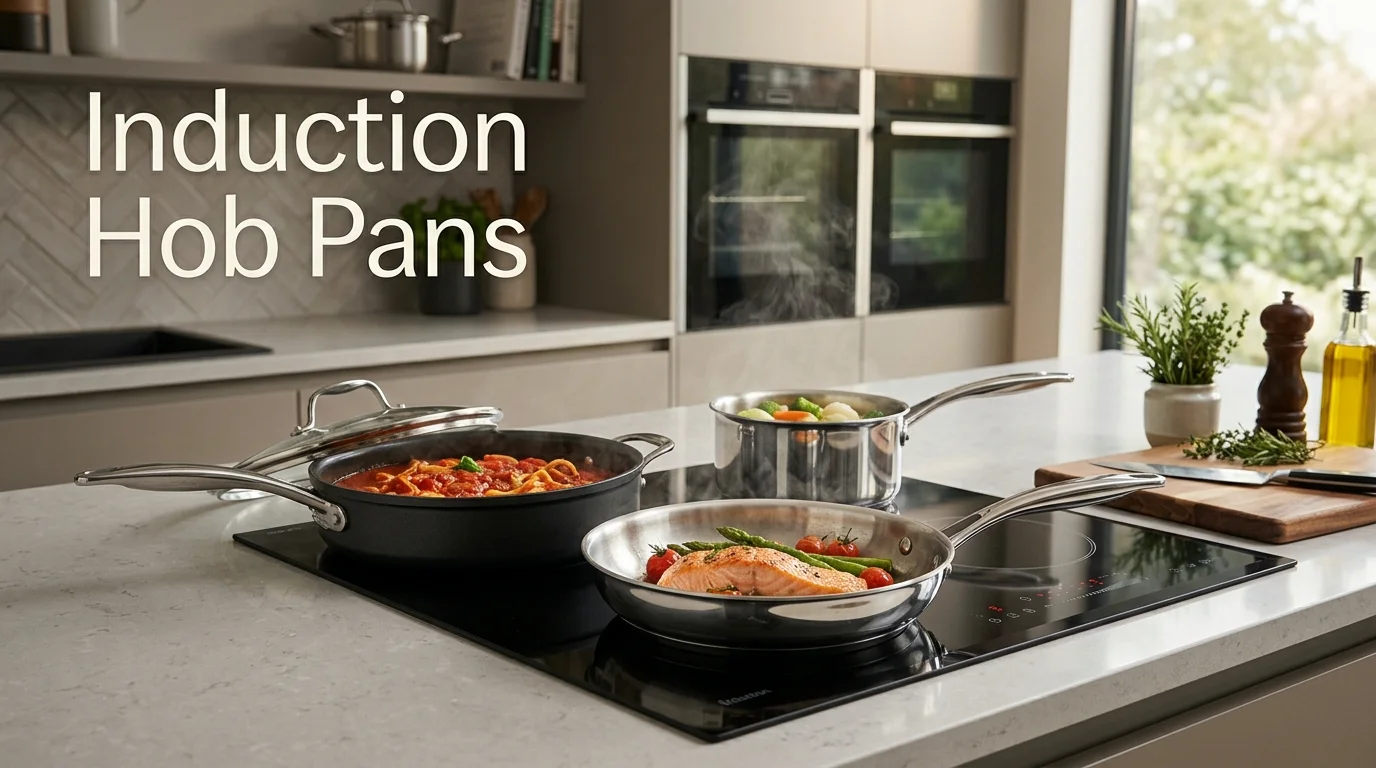
Choosing induction hob pans is simpler once you understand how the hob heats cookware. The pan needs a magnetic base, not a special shape or brand. Your best choice depends on your cooking style, storage needs, weight, and whether you prefer coated or uncoated surfaces.
Choose cookware with a flat, magnetic base that matches your hob’s cooking zone. Stainless steel and cast iron are reliable choices, while aluminium needs a magnetic induction-ready base. Test existing pans with a magnet before replacing them. Then check the compatibility symbol, base size, weight, coating, and care instructions before buying.
| What to check | What to look for | Why it matters |
|---|---|---|
| Compatibility | Induction symbol or magnetic base | The hob needs magnetic cookware |
| Base | Flat, thick, and stable | Supports even heating and reliable detection |
| Material | Magnetic stainless steel, cast iron, or compatible layered construction | Affects weight, heating and maintenance |
| Size | Base suited to your cooking zone | Small bases may receive less power |
| Handles | Secure and comfortable | Matters when lifting heavier cookware |
| Coating | Suitable for your cooking habits | Changes cleaning and utensil requirements |
| Storage | Stackability and handle design | Large sets can occupy substantial cupboard space |
| Oven use | Manufacturer-stated temperature limit | Useful for hob-to-oven recipes |
Key takeaways
- A strong magnet should stick securely across the pan base.
- Cast iron and suitable stainless steel work naturally with induction.
- Aluminium and copper need a magnetic layer or compatible base.
- A flat base usually performs better than a warped or uneven one.
- Match cookware size with the hob zone and appliance instructions.
- Buy pieces you will use rather than automatically choosing a large set.
What Makes Induction Hob Pans Different?
Induction hobs create a magnetic field beneath the glass cooking surface. Compatible cookware turns that energy into heat within the pan itself. This differs from conventional electric hobs, which first heat an element beneath the surface.
The cookware therefore needs magnetic material within its base. AEG lists cast iron, steel, enamelled steel, and suitable stainless steel among compatible options. Aluminium and copper usually need an added magnetic base before they will work.
Compatibility alone does not guarantee strong cooking performance. AEG notes that different composite bases can transfer heat with different effectiveness. Base quality can also influence humming, clicking, or tapping noises during cooking.
Which Cookware Materials Work Well on Induction?
Different materials suit different cooks, recipes, and budgets. No reason every pan in your cupboard needs identical construction. Choosing by task can give you better results while avoiding unnecessary pieces.
| Material | Main advantages | Main drawbacks | Well suited to |
|---|---|---|---|
| Magnetic stainless steel | Durable, versatile and usually low maintenance | Food can stick without good technique | Saucepans, sauté pans and everyday cooking |
| Cast iron | Excellent heat retention and naturally magnetic | Heavy and slower to respond | Casseroles, searing and slow cooking |
| Carbon steel | Magnetic, durable and responsive | Usually needs seasoning and drying carefully | Frying, searing and high-heat cooking |
| Aluminium with magnetic base | Lightweight and often affordable | Base construction quality varies | Frying pans and general cookware |
| Coated non-stick | Easy food release and straightforward cleaning | Coatings need suitable utensils and care | Eggs, pancakes, fish and low-fat cooking |
| Copper with magnetic layer | Responsive cooking performance | Often expensive and construction-dependent | Cooks wanting precise heat control |
For most households, induction-ready stainless steel makes a strong foundation for everyday cookware. Cast iron is useful when heat retention matters more than low weight. A separate coated frying pan can make delicate foods easier to manage.
Do not assume every stainless steel pan will work automatically. Some stainless formulations are not magnetic enough for induction cooking. Look for the induction symbol or perform a magnet test before purchasing.
How to Check Whether Your Existing Pans Will Work
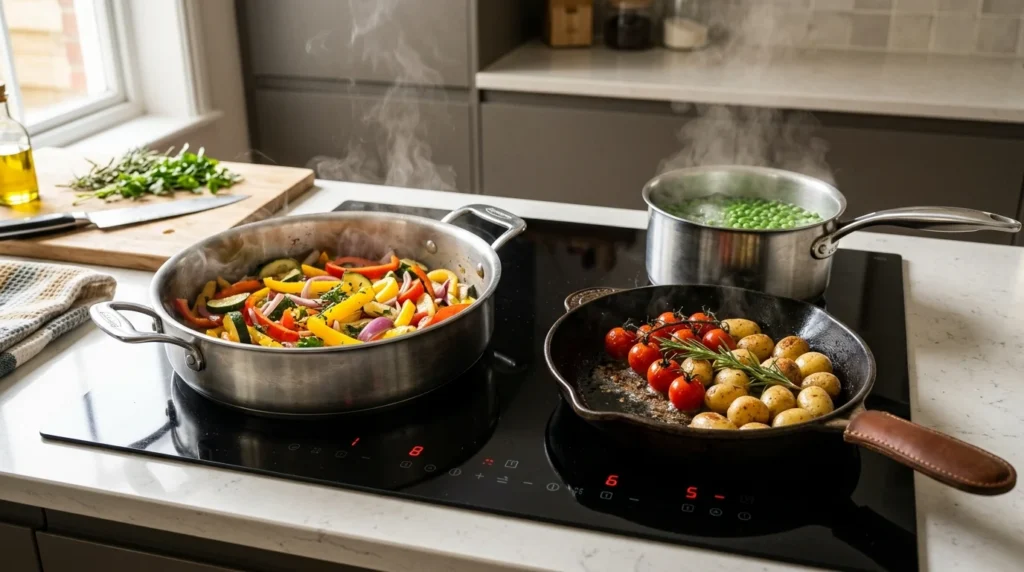
You may already own compatible cookware, so test it before replacing anything. The magnet method provides a quick compatibility check at home. AEG and Bosch both recommend checking whether a magnet sticks to the base.
- Turn the pan over. Check whether the base is flat and free from severe warping.
- Use a fridge magnet. Place it against several areas across the bottom.
- Check the attraction. A secure magnetic pull suggests induction compatibility.
- Look for the induction symbol. Packaging or the pan base may show the recognised coil-style mark.
- Check your hob manual. Confirm any minimum cookware diameter for each cooking zone.
A magnet test mainly tells you whether the material can work. It does not tell you how evenly a particular pan will heat. AEG specifically warns that apparently compatible composite bases can still differ in cooking performance.
Choose the Right Base Size, Shape and Thickness
The base deserves more attention than the pan’s decorative finish. A flat bottom increases contact and supports reliable hob detection. Thick construction can also help resist distortion during repeated heating.
Pan diameter matters because induction zones have operating size ranges. AEG says cookware below a zone’s minimum diameter may receive only part of its available power. Your appliance manual should list the correct limits for each zone.
Don’t judge size by the pan’s top rim alone. A wide sauté pan can have a much smaller magnetic bottom. Compare the actual base diameter with the cooking zones you use most often.
Should You Buy a Pan Set or Individual Pieces?
A complete set makes sense when replacing most of your cookware at once. Individual purchases work better when several existing pans already pass the magnet test. They also let you spend more on the pieces you use every day.
A useful starter collection does not need ten matching items. Many UK kitchens can cover regular meals with a compact group of versatile pieces. Storage space should influence the final number as much as the headline discount.
Consider starting with these pieces.
- One small saucepan for sauces and smaller portions.
- One medium saucepan for vegetables, rice, or pasta.
- One larger saucepan or stockpot for bigger meals.
- One 24cm to 28cm frying pan.
- One casserole or sauté pan if your cooking style needs it.
Measure your cupboards before choosing a large boxed collection. Detachable or compact handles can make storage easier in smaller kitchens. If you are planning a broader kitchen refresh, Readox also covers bar stools for kitchen islands and counters.
Seven Buying Features Worth Checking
Compatibility should be your first filter, but not your final decision. Two compatible pans can feel completely different during everyday cooking. Construction, handling, cleaning, and storage often matter more after the first week.
Check these seven areas before ordering.
- Base construction: favour a flat, stable base with magnetic material across the useful cooking area.
- Weight: choose something you can safely lift when it’s full.
- Handle design: check grip comfort, attachment quality, and heat warnings.
- Lid fit: a secure lid helps with simmering, steaming, and reducing splashes.
- Oven compatibility: confirm the stated maximum temperature for the pan and handles.
- Cleaning instructions: dishwasher-safe claims can vary by material and coating.
- Warranty: longer cover can provide useful reassurance on more expensive cookware.
Do not pay extra for features you rarely use. Oven compatibility matters little if you keep every meal on the hob. Stackability can matter far more in a flat with limited cupboard space.
Common Mistakes to Avoid With Induction Cookware
One common mistake is buying a pan because the main material sounds compatible. Construction matters because aluminium or copper cookware may need a separate magnetic layer. You should also check stainless steel rather than assume it’s compatible.
Another mistake is relying permanently on an induction adapter plate. Which? says adapters can reduce responsiveness and efficiency while increasing cooking time. They may help temporarily, but compatible cookware usually uses the hob better.
Avoid placing badly warped cookware on the glass surface. Poor contact can reduce performance and create uneven cooking. Bosch also advises against heating empty cookware because the base can become dangerously hot.
Protecting Your Hob and Looking After Your Pans
Lift heavy cast iron rather than sliding it across the hob. This reduces the chance of scratching the glass surface. Which? also reports manufacturer advice to keep cast iron bases in full contact with suitable cooking zones.
Keep cookware bases clean and dry before placing them on the hob. AEG recommends this when troubleshooting cookware detection problems. Residue beneath a pan can also make smooth movement across the surface less controlled.
Follow the cookware maker’s instructions when cleaning coatings or seasoned surfaces. Avoid assuming one household cleaner suits every pan material. Readox’s white vinegar cleaning guide explains why you should check surface compatibility before using acidic cleaners.
How Much Should You Spend?
Price should reflect construction and how often you will use each piece. A durable everyday saucepan can deserve more budget than a specialist pan used twice yearly. Buying fewer useful pieces can therefore make more sense than chasing the largest set.
Current UK buying guides show a wide spread between entry-level single pans and premium collections. Sets also vary sharply according to materials, brand, size, and number of pieces. Comparing construction and useful contents is more meaningful than comparing piece counts alone.
When comparing induction hob pans, focus on value for your cooking habits. A five-piece collection you use daily can beat a larger set filled with duplicate sizes. Pay for useful construction, not unused accessories.
Our Recommendation for Most UK Kitchens
For most households, start with magnetic stainless steel saucepans and one suitable frying pan. This combination handles boiling, simmering, sauces, browning, and many everyday meals. Add cast iron, carbon steel, or specialist cookware only when your recipes justify it.
Choose tri-ply or other well-built layered cookware when budget allows. Good construction can improve heat spread and create a more stable cooking surface. The strongest magnet response should also extend across most of the base.
Most importantly, test what you already own before shopping. Replace unsuitable pieces individually unless a complete set offers useful sizes and genuine value. Browse more practical household buying advice in the Readox Home Improvement section.
Frequently Asked Questions
Do you need special pans for an induction hob?
You need cookware with a magnetic base that the hob can recognise. Cast iron and suitable stainless steel commonly meet that requirement. Aluminium and copper need magnetic induction-compatible construction to work correctly.
How can I tell whether a pan is induction compatible?
Hold a magnet against the bottom of the pan and check whether it sticks securely. Then look for an induction compatibility symbol on the pan or packaging. Check your hob manual for any minimum base diameter requirements.
Do all stainless steel pans work on induction hobs?
No, stainless steel construction varies between products. The base must contain enough magnetic material for the hob to recognise it. Check the manufacturer’s compatibility information rather than relying on the material name alone.
What happens if I put an incompatible pan on an induction hob?
The cookware will normally fail to heat because the hob cannot create the required magnetic interaction. Some appliances may show an error or cookware detection symbol. AEG says incompatible cookware can cause its hobs to display a pan-recognition warning.
Can induction hob pans be used on gas hobs?
Many compatible pans can also be used on gas, but you should check the manufacturer’s instructions. Handles and exterior coatings may behave differently over an open flame. Which? advises checking base construction and handle materials before switching between hob types.