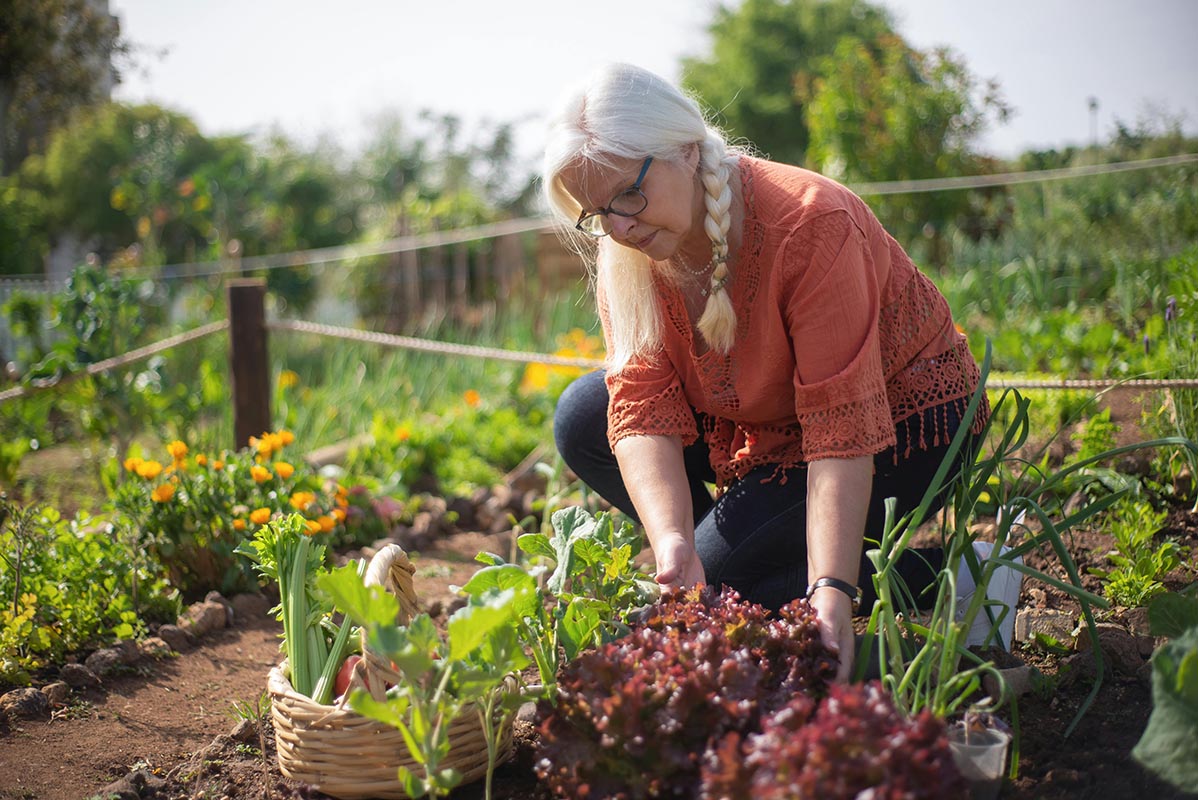
To grow a month’s worth of vegetables in a small space, pick fast, high-yielding crops that keep producing, grow upwards on fences and supports, and sow little and often so something is always ready to pick. A single raised bed of around 1.2m by 2.4m, plus a few large containers on a sunny patio, can keep a household supplied with salad leaves, herbs, beans, courgettes and tomatoes for weeks at a time in a British summer.
What makes the difference is planning rather than acreage: the right crops, the sunniest spot you have, rich soil, consistent watering and a steady sowing schedule. This guide walks through each of those in order, then finishes with an example layout you can copy.
Small-space vegetable growing at a glance
- Choose the sunniest spot you have: most vegetables need at least six hours of direct sun.
- Grow cut-and-come-again and repeat-cropping vegetables rather than one-harvest crops.
- Use vertical space for beans, peas, cucumbers and squash.
- Sow small batches every two to three weeks from spring to late summer.
- Feed the soil, water deeply and pick often.
Plan your growing space before you plant
Many people assume vegetable growing needs an allotment. In reality, small gardens, patios, balconies and raised beds can produce steady harvests when planned properly. People interested in growing fruit and vegetables usually get better results by starting with a manageable space and building confidence over a season, rather than digging up the whole garden at once. One well-tended bed will out-produce three neglected ones.
Map the sun first
Before buying anything, watch how sunlight moves across your space on a bright day. Note which areas get morning sun, which get afternoon sun and which stay in shade. A south or west-facing wall or fence is ideal because it gets strong sun and radiates warmth into the evening, which fruiting crops such as tomatoes love. Shadier corners can still grow leafy crops such as lettuce, spinach and chard, and herbs like parsley and mint, which cope with a few hours less sun.
Check the practical details
- Access to water: a bed near an outside tap or water butt gets watered; one at the far end of the garden often does not.
- Shelter: strong winds damage climbing crops and dry out pots quickly. A fence or hedge on the windward side helps.
- Weight limits: on balconies and roof terraces, wet compost is heavy, so check what the structure can safely carry before filling large containers.
- Distance from the kitchen: herbs and salad by the back door get used daily; those hidden away tend to bolt unnoticed.
Raised beds and containers
Raised beds and containers suit small spaces because they create organised, easy-to-reach growing areas. They drain better than heavy clay soil, warm up earlier in spring and make watering, feeding and harvesting simpler. Beds narrow enough to reach the middle from each side, usually around 1.2m wide, mean you never need to step on the soil and compact it. For more detail on building and filling them, see our guide on how raised beds make growing easier.
Containers should be as large as you can manage, because shallow pots dry out quickly and restrict roots. As a rough guide, salad leaves and herbs are happy in pots around 20cm deep, while tomatoes, courgettes and potatoes need 30 to 40 litres of compost or more per plant. Make sure every container has drainage holes, and raise pots slightly on feet so water can escape.
Choose vegetables that keep producing
Crop choice makes the biggest difference to how much you harvest from a small space. Fast, reliable vegetables that crop repeatedly give far more than those that take months and fill a large area for a single harvest, such as maincrop potatoes, cauliflowers or parsnips. Those are better left to allotments and farm shops.
| Crop | Why it suits small spaces | Approx. time to first harvest | Growing tip |
|---|---|---|---|
| Radishes | Very fast, fit between slower crops | About 4 weeks | Sow a short row every two weeks |
| Cut-and-come-again salad | Regrows after cutting | 3 to 5 weeks | Cut leaves 2 to 3cm above the base |
| Spinach and chard | Pick outer leaves for weeks | 5 to 8 weeks | Chard tolerates heat better than spinach |
| Climbing French or runner beans | Grow upwards, crop heavily | 10 to 12 weeks | Pick young and often |
| Courgettes | One or two plants give plenty | 8 to 10 weeks | Harvest at 10 to 15cm |
| Cherry tomatoes | Crop for months in pots | Midsummer onwards | Sunniest spot, feed weekly once flowering |
| Spring onions | Tiny footprint | 8 weeks or so | Sow thinly in clumps |
| Herbs | Daily use, pots or baskets | Varies | Pinch tips to keep plants bushy |
Leafy vegetables are the easiest starting point because they produce for weeks when harvested correctly. Instead of pulling up whole plants, pick the outer leaves and let the centre keep growing. A handful of chard plants picked this way can supply leaves from early summer well into autumn.
Crops to skip or limit in a small plot
Some vegetables simply give too little back for the space they occupy. Maincrop potatoes, Brussels sprouts, cauliflowers, parsnips and sweetcorn all hold ground for months for a single harvest. If you love new potatoes, grow a few early varieties in a large bag or tub instead of a bed. Choose compact or “patio” varieties of tomatoes, courgettes and beans where they exist, because they are bred for exactly this kind of growing.
Make better use of vertical and unused space
Climbing vegetables grow up rather than out, which is ideal when ground space is limited. Beans, peas, cucumbers and even small squash grow well on canes, netting or trellis, producing generous harvests over a long season. Vertical growing also improves airflow, which reduces fungal problems, and makes picking easier because the crops hang at eye level.
- Fences and walls: fix wires or trellis for beans, peas and cucumbers.
- Hanging baskets: good for herbs, salad leaves, trailing tomatoes and strawberries, and handy by the kitchen door so you actually use them.
- Tiered shelves and plant stands: create extra levels for pots of herbs and leaves, giving each plant better light and air.
- Wall planters and grow bags: use narrow side returns and the base of walls that would otherwise be wasted.
Place tall climbers at the north side of a bed so they do not shade shorter crops. Make sure supports are firmly anchored before plants get heavy; a wigwam of canes that topples in a summer storm in July can take a whole crop with it.
Use succession planting for steady harvests
Growing a month’s worth of food depends on sowing at regular intervals. Many beginners sow everything in one weekend, then face a glut followed by nothing. Succession sowing prevents this. Sow small batches of lettuce, rocket, spinach, spring onions and radishes every two to three weeks through spring and summer, and you will have a steady supply rather than a single rush.
When an early crop finishes, replant the space straight away. For example, after early salad in May, the same spot can take dwarf French beans in June, then winter salads or spring onions in late summer. Keeping a few young plants growing in modules on a windowsill means you always have something ready to fill a gap the day a row is cleared.
Intercropping
Intercropping means growing a fast crop between slow ones. Radishes and salad leaves sown between young courgettes or tomatoes will be harvested before the larger plants need the room. It is one of the simplest ways to get two crops from the same patch of soil in a single season.
A simple UK sowing calendar
- March to April: sow radishes, salad leaves, spinach and peas outside under cover; start tomatoes indoors.
- April to May: sow beans, courgettes and cucumbers indoors; keep sowing salads outside every few weeks.
- Late May to June: after the last frost for your area, plant out tender crops such as tomatoes, courgettes and beans.
- July to August: keep succession sowing, and sow chard, winter salads and spring onions for autumn picking.
- September onwards: clear finished crops, add compost and sow hardy salads or overwintering onions.
Last frost dates vary a lot across the UK, from early spring in parts of the south-west to late May or even June in colder northern areas, so check local conditions before planting out. Harden off indoor-raised plants by putting them outside during the day for a week or so before planting them out permanently.
Keep soil healthy throughout the season
Intensively planted beds and containers use up nutrients quickly. Healthy soil keeps plants productive and more resistant to pests and dry spells.
- Add a layer of well-rotted compost or manure to beds each spring and autumn. It improves structure and helps soil hold moisture.
- Refresh container compost each year, as old compost has little feed left.
- Use a balanced feed for leafy crops and a high-potash feed, such as tomato feed, for fruiting crops once they start flowering.
- Mulch the surface to keep moisture in and weeds down.
- Rotate crop families between beds or containers each year to reduce disease build-up.
A home compost bin, even a small one, turns kitchen peelings and spent plants into free soil improver and cuts down on bought compost over time.
Water well, pick often and check plants
Small spaces dry out fast. Containers in full sun may need watering every day in a hot spell, and raised beds more often than open ground. Water deeply at the base of plants, ideally in the morning or evening, rather than a light sprinkle that only wets the surface. Push a finger into the compost: if it is dry a couple of centimetres down, it is time to water. Water butts, drip lines and self-watering pots save time and water, and our guide on why sustainable gardening starts with how you use water covers automatic watering options in detail.
Pick regularly. Courgettes, beans and leafy crops produce more when harvested often, while unpicked pods and oversized courgettes signal the plant to slow down. Check plants every few days for slugs and snails, aphids, yellowing leaves and signs of uneven watering. Dealing with small problems early stops them spreading to neighbouring plants in a tightly planted space.
Common small-space mistakes to avoid
- Overcrowding: plants squeezed too tightly compete for light and water and get more disease. Follow spacing on the seed packet.
- Pots that are too small: a tomato in a small pot will need constant watering and crop poorly.
- Sowing everything at once: it leads to a glut in July and nothing in August.
- Planting tender crops too early: a single late frost can kill tomatoes, courgettes and beans.
- Forgetting to feed: container plants rely entirely on you for nutrients once the compost is exhausted.
Example layout for a small garden
As a starting point, a 1.2m by 2.4m raised bed could hold climbing beans on a cane wigwam at the north end (so they do not shade other crops), a courgette plant, a block of chard, and rows of salad leaves, radishes and spring onions sown in succession. Add three large pots of cherry tomatoes against a sunny wall and a hanging basket of herbs by the back door.
Exact yields vary with weather and care, but a layout like this can provide fresh produce most days through summer. In a typical week at the peak of the season you might pick a bowl of salad every couple of days, a handful of beans, a courgette or two and a steady trickle of tomatoes and herbs.
Frequently Asked Questions
What are the best vegetables to grow in a small space?
Salad leaves, radishes, spinach, chard, spring onions, climbing beans, courgettes, cherry tomatoes and herbs give the most food for the space they take. They either crop quickly or keep producing for weeks.
How much sun do vegetables need?
Most need at least six hours of direct sun. Leafy crops and some herbs cope with less, while tomatoes and courgettes want the sunniest spot you have.
What is succession planting?
It means sowing small batches every two to three weeks, and replanting space as soon as a crop finishes. You get a steady supply instead of one glut followed by a gap.
Can I grow vegetables on a balcony?
Yes. Use large containers, hanging baskets and railing planters, check weight limits, and choose compact varieties of tomatoes, beans, salads and herbs.
How often should I water raised beds and containers?
Check daily in warm weather. Containers in full sun may need water every day, and a deep soak at the base of plants is better than a light sprinkle.
When should I start sowing vegetables in the UK?
Hardy crops such as radishes, salad leaves and peas can be sown from March or April, often under cover. Tender crops such as tomatoes, courgettes and beans are started indoors and planted out after your local last frost.
Bottom Line
You do not need an allotment to grow a meaningful amount of food. Start with one sunny raised bed and a few large pots, choose crops that keep producing, grow upwards wherever you can, and sow a little every two to three weeks. Keep the soil fed and the plants watered, pick often, and a small space can keep your kitchen supplied with fresh vegetables for a month at a time.