Choosing a heater for a UK home involves more than finding a model with enough power. The right option depends on room size, heating time, controls, safety, and electricity costs. A well-chosen appliance can provide useful local warmth without heating rooms you aren’t using.
Portable electric models work particularly well as secondary heating for one room or short periods. They can become expensive when used for long hours because electricity costs considerably more per unit than gas. Understanding wattage and your tariff makes it easier to estimate the likely cost before switching one on.
| Key point | What UK households should know |
|---|---|
| Common types | Fan, convector, oil-filled, and radiant models |
| Typical power | Many portable models operate between 1 kW and 3 kW. |
| Best use | Short-term or targeted room heating |
| Running cost | Depends mainly on power, running time, and electricity tariff |
| Useful controls | Thermostat, timer, power settings, and frost protection |
| Safety | Keep clear of furniture, curtains, bedding, and clothing. |
| Buying priority | Match the heating method to the room and intended use. |
Direct answer: A good UK room-heating choice should match the space, usage time, and required speed. Fan models provide quick warmth, oil-filled radiators suit steadier use, and radiant options warm people directly. Check wattage, thermostatic controls, and safety features before buying, then calculate running costs using your electricity tariff.
Which Heater Type Is Right for Your Room?
Different heating technologies deliver warmth in different ways. That difference matters more than styling or marketing claims. First, consider whether you need rapid heat, sustained warmth, or heat directed to one occupied area.
Fan models push warmed air into a room and can feel effective soon after you switch them on. They can suit a home office, spare bedroom, or another room used for limited periods. The fan creates some noise, so check sound levels if you work, study, or sleep nearby.
Oil-filled radiators warm an internal thermal fluid and release heat through their metal body. They take longer to feel warm but provide a steadier output once operating. This makes them well-suited to longer periods in bedrooms, lounges, and home offices.
Convector models heat air that then circulates through the room. They are often slim and straightforward to position against a wall. They perform better in enclosed rooms than in draughty spaces where warmed air escapes quickly.
Radiant and halogen models direct heat towards nearby people and objects. This can make them useful when you want warmth without raising the temperature throughout a larger room. Electrical Safety First advises keeping portable appliances away from combustible materials and placing them on a stable surface.
How Much Does Electric Heating Cost to Run in the UK?
Running cost depends on electrical power, operating time, and your electricity unit rate. A 2kW appliance running continuously for one hour consumes up to 2kWh of electricity. Thermostatic cycling can reduce actual consumption once it reaches the desired temperature.
For 1 July to 30 September 2026, Ofgem’s average capped electricity rate for standard-variable Direct Debit customers is 26.11p per kWh. From 1 October to 31 December 2026, the corresponding average becomes 26.32p per kWh. Actual tariffs vary by region, payment method,, and energy deal.
At 26.32p per kWh, a 1kW appliance would cost about 26p for one hour at full output. A 2kW model would cost roughly 53p, while 3kW would cost about 79p. These figures describe continuous full-power operation and exclude the standing charge.
| Rated power | Approximate one-hour cost at 26.32p/kWh |
|---|---|
| 1kW | 26p |
| 1.5kW | 39p |
| 2kW | 53p |
| 2.5kW | 66p |
| 3kW | 79p |
Energy Saving Trust notes that direct electric heating can be useful for warming one room for a limited period. It also warns that prolonged use can be expensive because electricity costs more per unit of heat. Good insulation and heating controls can reduce wasted energy regardless of the system used.
Do Different Electric Heaters Cost Less to Run?
Two resistive electric appliances using the same electrical power for the same time consume roughly the same amount of electricity. A 2kW oil-filled radiator does not magically use cheaper electricity than another 2kW resistive model while both continuously draw 2kW. The practical difference comes from how they deliver and control the warmth.
A thermostat can stop full-power operation once it reaches the selected temperature. Timers can prevent unnecessary heating after you leave a room. Lower power settings also help when you need modest warmth rather than maximum output.
Room conditions also have a major effect. Drafts, poor insulation, and open doors allow heat to escape faster. Before increasing power, consider simple measures that help retain the warmth already produced.
Readox readers dealing with seasonal home comfort may also find the site’s guidance on choosing a small air conditioner for UK homes useful when planning year-round temperature control. The broader Home Improvement section also covers practical household maintenance and efficiency topics.
What Features Should You Look For?
A thermostat is one of the most useful controls because it responds to room temperature rather than relying entirely on manual switching. Multiple power levels give you more control during mild and colder weather. A timer can help limit operation to the periods when warmth is needed.
For portable appliances, look for appropriate overheat protection and tip-over protection where relevant. Check the product instructions, as placement requirements vary by design. Buying from a reputable retailer also reduces the risk of buying an unsafe or non-compliant electrical product.
Physical size matters when floor space is limited. A compact fan model may fit beneath a desk, while an oil-filled radiator needs more usable floor area. Wall-mounted panel products can free floor space but require suitable positioning and installation.
How to Use Portable Heating Safely
Portable heating equipment should stand on a stable surface where people and pets cannot easily knock it over. Keep combustible materials such as curtains, bedding, paper, and furniture well away. The London Fire Brigade advises people to sit at least one meter from portable heating equipment.
Never use the appliance to dry clothes. Electrical Safety First also advises against powering portable models through an extension lead because it can become overloaded. It recommends switching appliances off rather than leaving them operating unattended or while you sleep.
Inspect plugs, cables, and sockets for heat damage, scorch marks, or unusual sounds. Stop using electrical equipment if a plug or socket becomes abnormally hot. Government fire-safety guidance also recommends unplugging appliances when they aren’t in use or before bed.
Choosing Heating for a Bedroom, Office, or Living Room
A home office often needs targeted warmth for several working hours rather than intense whole-house heating. A thermostatically controlled radiator or convector can suit this pattern. A fan model can make more sense when you need fast warmth for shorter sessions.
Bedrooms require extra attention to safe placement and unattended operation. Avoid positioning portable equipment near bedding, curtains, or clothes. Electrical Safety First recommends avoiding overnight use of portable units.
Living rooms vary considerably in size, insulation, and layout. A small portable appliance may struggle in a large open-plan area and run continuously without achieving comfortable warmth. In that situation, reviewing the main heating system may make more financial sense than relying on several portable units.
If damp or condensation affects the room, adding more heat may not address the underlying cause. Readox’s Home Improvement coverage includes guidance on choosing the right mold remover, alongside household cleaning and other common property concerns. Addressing ventilation and moisture sources can be as important as changing the room temperature.
How to Reduce Heating Costs Without Feeling Cold
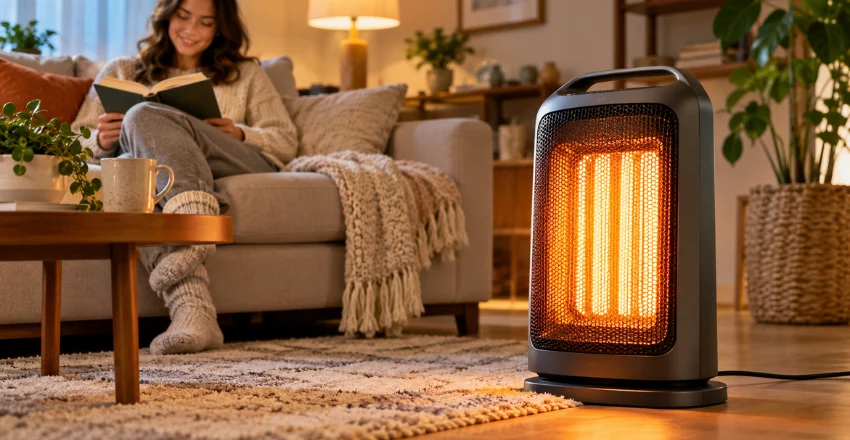
Start by heating occupied spaces rather than automatically warming every room. Close internal doors where appropriate and reduce obvious draughts around windows or doors. These changes help keep purchased heat where you need it.
Use thermostats and timers rather than leaving equipment running continuously. Check your actual electricity tariff before relying on generic online cost figures. Even a small difference in the unit rate changes the calculation when an appliance runs for several hours each day.
Consider whether portable electric heating is a temporary fix or a replacement for the main system. Energy Saving Trust describes portable electric units as useful secondary heating but notes their relatively high running costs. Longer-term problems may justify improving insulation, controls, or the property’s main heating arrangement instead.
Make the Choice Around How You Use the Room
No single heating product suits every UK household. Fast fan-assisted warmth works for short sessions, while slower oil-filled or convector options can better suit sustained room use. Controls, room conditions and usage habits often matter as much as the appliance category.
Before buying, calculate the expected hourly cost from the product’s kW rating and your electricity tariff. Check the safety features and decide where the appliance will stand. Those simple checks can help you choose practical warmth without creating unnecessary energy costs.
For more practical household guidance, explore the Readox Home Improvement section. It covers home comfort, maintenance, cleaning, and buying decisions for UK households.
Frequently Asked Questions About Heater Use in the UK
How much does a 2kW electric model cost per hour?
At Ofgem’s average 1 October to 31 December 2026 electricity rate of 26.32p per kWh, continuous 2kW operation costs about 52.64p per hour. Your actual figure depends on your tariff and how often the thermostat switches the element off.
Are oil-filled radiators cheaper than fan models?
Not automatically. Appliances drawing the same power for the same period use similar amounts of electricity. Differences in thermostats, heat delivery, and usage patterns can change the real-world total.
What size heater do I need?
The answer depends on room dimensions, insulation, glazing, ceiling height, and outside temperature. Avoid choosing solely by floor area because two rooms of identical size can lose heat at different rates. For permanent heating changes, a proper heat-loss assessment gives a stronger basis for sizing.
Can I leave a portable electric model on overnight?
UK electrical safety guidance recommends avoiding overnight use of portable appliances. Leaving one unattended increases the consequences of poor placement, damage or another fault.
Is electric heating cheaper than gas?
Energy Saving Trust says electricity currently costs considerably more per unit than gas. Direct electric systems can still make sense for targeted or occasional heating because they can warm one room without operating a whole-house system.