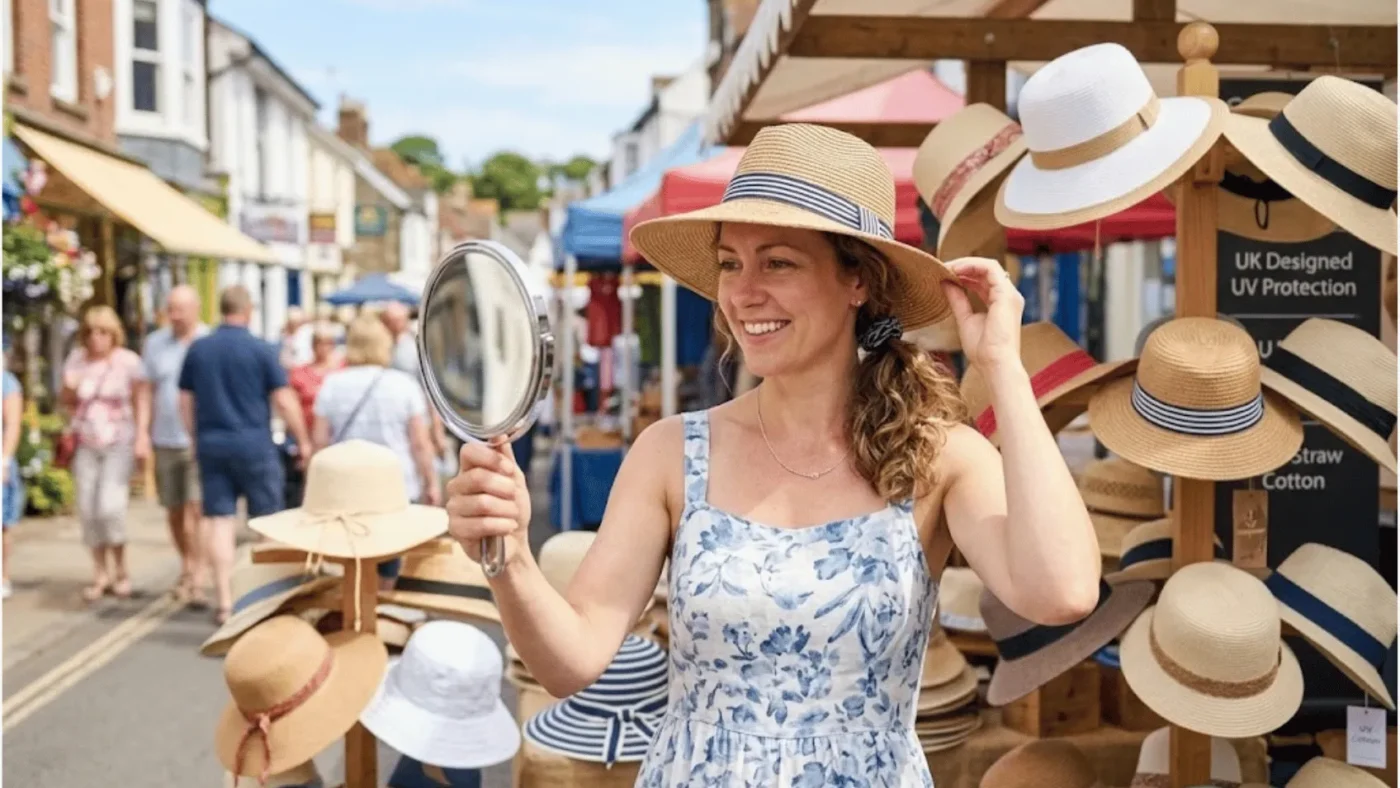
A sun hat can provide useful shade for your face, ears, scalp, and neck. The right design should also feel comfortable during warm weather. It needs enough coverage without becoming awkward, heavy, or difficult to pack.
For UK conditions, look beyond appearance when choosing one. Brim width, fabric, ventilation, fit, and UV protection all matter. Your intended activity should also influence the final choice.
Quick answer: Choose a hat with a broad brim that shades your face, ears, and neck. Look for close-weave or UPF-rated fabric and a comfortable, secure fit. For stronger coverage, a brim around 7.5 cm or wider is a practical benchmark, particularly when spending extended periods outdoors.
Sun Hat Features at a Glance
| Feature | What to look for | Why it matters |
|---|---|---|
| Brim | Broad, preferably around 7.5 cm or wider | Provides shade for more exposed skin |
| Fabric | Close weave or tested UPF fabric | Helps reduce UV passing through the material |
| UPF rating | UPF 50+ where available | Indicates a high level of fabric UV protection |
| Fit | Comfortable and secure | Helps the hat remain useful in breezy conditions |
| Ventilation | Breathable fabric or suitable vents | Improves comfort during warm weather |
| Chin strap | Adjustable where needed | Useful for walking, gardening, beaches, and windy areas |
| Packability | Crushable or foldable construction | Easier to carry during holidays and day trips |
| Coverage | Face, ears, and neck | Gives more complete shade than a front peak alone |
Why Wearing the Right Hat Matters in the UK
British weather can make sun protection easy to overlook. A cool breeze or cloudy sky doesn’t mean UV exposure is absent. The NHS states that people can burn in the UK even when conditions are cloudy.
NHS advice recommends spending time in shade when the sun is strongest. In the UK, this is generally between 11 am and 3 pm from March to October. It also advises using suitable clothing, sunscreen, sunglasses, and a wide-brimmed hat.
A hat should therefore form one part of your protection rather than replacing other measures. Sunscreen remains important on exposed areas. Shade and suitable clothing can provide further protection during longer periods outside.
How to Choose a Sun Hat for Good Coverage
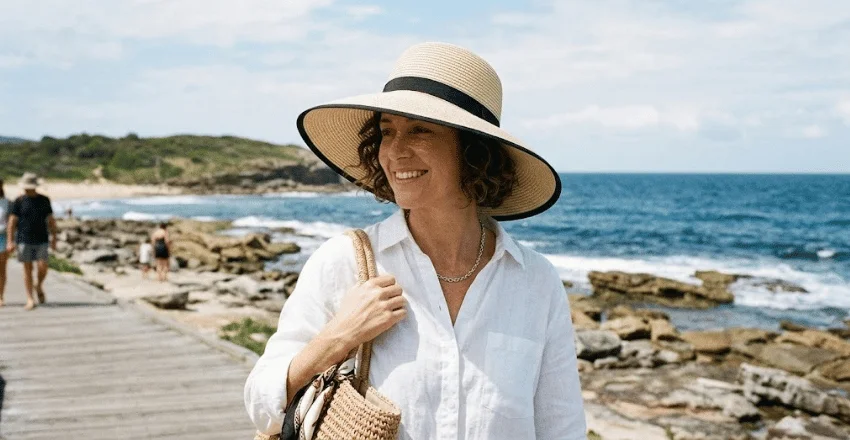
Protection depends on more than having fabric over your head. The shape determines how much shade reaches your face and other exposed areas. Material construction affects how much UV can pass through the hat itself.
These factors make two similar-looking hats perform quite differently. One may work well for a short garden visit. Another may suit an entire day of walking, sightseeing, or sitting beside the sea.
1. Start With the Brim
Brim size is one of the easiest features to assess. A broader brim casts shade across more of your face, ears, and neck. Cambridge University Hospitals recommends a wide brim and identifies bucket hats with a minimum 7.5 cm brim as an effective option.
A larger brim can be especially useful for gardening and relaxed outdoor activities; Readox’s home improvement advice covers more ways to get your garden ready for summer. You may prefer something smaller for active walking or travel. The key is balancing practical coverage with a shape you can wear comfortably.
Baseball caps provide less complete coverage. Their peaks shade parts of the face but leave the ears and neck exposed. Cambridge University Hospitals specifically highlights this limitation in its sun-safety advice.
2. Understand UPF Ratings
UPF stands for Ultraviolet Protection Factor. It describes how effectively a fabric limits ultraviolet radiation passing through it. It applies to textiles, not sunscreen.
A UPF 50+ label is worth considering when protection is your main priority. Current specialist buying guidance often lists UPF 50+ as a key feature for outdoor headwear.
Do not assume every thick-looking hat has a tested rating. Check the product description or label if UPF performance matters to you. A clearly stated rating removes much of the guesswork around the fabric.
3. Check the Fabric and Weave
Material affects comfort, durability, packability, and UV performance. A closely woven fabric generally offers better protection than a loose construction. Cambridge University Hospitals recommends close-weave or UPF-rated fabric for better protection.
Synthetic fabrics such as polyester and nylon can work well for outdoor activities. They can be lightweight, durable, and quick-drying. Some designs also include water-resistant finishes for changeable conditions.
Natural materials can provide a different combination of comfort and appearance. Cotton can feel soft and casual, while straw is popular for holidays and summer events. With straw, pay attention to weave density because large gaps can allow sunlight through.
4. Get the Fit Right
A protective hat has limited value if it keeps slipping or blowing away. The crown should sit comfortably without creating pressure around your forehead. It should also remain reasonably stable as you move.
Adjustable internal bands are useful when standard sizing feels slightly loose. A chin cord adds extra security during coastal walks or windy garden work. It can also help during boating, fishing, and hiking.
Measure around your head before ordering when numbered sizes are available. Compare that measurement with the manufacturer’s size chart. Do not assume every brand uses identical small, medium, or large dimensions.
5. Think About Ventilation
More coverage can sometimes mean more trapped heat. Breathable materials therefore become important during warm summer weather. Ventilation can make a noticeable difference during prolonged activity.
Some technical hats include mesh panels or eyelets around the crown. These features encourage airflow and can reduce the hot, clammy feeling associated with heavier headwear. If UV protection matters, check whether ventilated areas still offer coverage.
Sweatbands can also improve comfort. They absorb moisture around the forehead and help stop perspiration from reaching your eyes. This feature can help with hiking, gardening, and sightseeing.
6. Consider Packability
A beautiful hat is inconvenient if you cannot take it anywhere. Travellers should check whether the design can be folded, rolled, or crushed. Some structured styles need more careful storage.
Packable fabric hats usually suit hand luggage and day bags well. You can remove them indoors without creating a storage problem. Quick-drying materials are another advantage during beach trips and active holidays.
Straw and structured fashion hats require more attention. Folding an unsuitable design may permanently crease its crown or brim. Always follow the manufacturer’s storage instructions.
7. Match the Design to Your Activity
No single design suits every outdoor situation. Your priorities change depending on whether you are gardening, hiking, travelling, or attending an event. Choosing by activity can therefore simplify the decision.
| Activity | Useful style | Features to prioritise |
|---|---|---|
| Gardening | Wide-brim hat | Neck coverage, ventilation, washable fabric |
| Beach | Wide brim or bucket | UPF fabric, packability, secure fit |
| Hiking | Technical outdoor hat | Chin cord, ventilation, quick-drying material |
| Sightseeing | Packable bucket or medium brim | Comfort, low weight, easy storage |
| Summer event | Panama-style or structured hat | Appearance, comfortable brim, close weave |
| Fishing | Wide brim or legionnaire style | Strong coverage, neck protection, secure strap |
The most practical option is the one you will keep wearing. Maximum specifications mean little if a hat feels uncomfortable after ten minutes. Consider both protection and everyday usability before buying.
Wide-Brim, Bucket, Panama or Baseball Cap?
Different styles provide different levels of shade. Wide-brim designs usually offer the broadest coverage because the brim extends around the head. They suit gardening, beaches, and relaxed outdoor days.
Bucket hats are compact and easy to wear. A model with a sufficiently broad brim can shade the ears as well as the face. Their soft construction also makes many versions easy to pack.
Panama-style hats can work well when appearance matters alongside shade. Check the weave and brim dimensions rather than relying on the style name. A fashionable design doesn’t automatically come with a tested UV rating.
Baseball caps remain convenient for sport and casual use. Their main weakness is limited coverage around the ears and neck. If you wear one, those exposed areas still need appropriate protection.
A Simple Way to Compare Two Hats
Imagine you are choosing between two designs for a summer holiday. Hat A has a narrow front-focused brim but packs easily. Hat B has a broad all-round brim, a secure cord, and stated UPF protection.
Hat A may work for short periods and casual outfits. Hat B will likely provide more practical shade on long outdoor days. This comparison shows why intended use matters more than choosing by appearance alone.
Use the same method before buying. Compare coverage, material, fit, ventilation, and storage needs side by side. Remove any option that fails an important requirement.
What Colour Should You Choose?
Colour is often personal, but comfort and practicality matter too. Light colours may feel visually suited to summer and can coordinate easily with warm-weather clothing. Darker shades can hide marks better during outdoor activities.
The fabric’s construction and tested protection deserve more attention than colour alone. A tightly constructed or UPF-rated material provides clearer information about performance. Choose colour after you meet the essential functional requirements.
Caring for Your Summer Hat
Check the care label before washing any hat. Fabric designs may allow hand washing or gentle machine washing. Structured and natural-fibre designs can require spot cleaning instead.
Dry the hat in the shape recommended by its manufacturer. Avoid crushing a structured brim during storage. Proper care can help preserve its fit and appearance for future summers.
Inspect well-used outdoor headwear before another season. Look for thinning material, damage, stretched fasteners, or a misshapen brim. Replacing heavily worn equipment may be sensible when its coverage has deteriorated.
A Hat Is Only One Part of Sun Protection
Wearing protective headwear does not make sunscreen unnecessary. Your face, arms, hands, legs, and other exposed areas can still receive significant sunlight. Reflected light can also reach areas that appear shaded.
The NHS recommends at least factor 30 sunscreen, along with shade, suitable clothing, and sunglasses. It also advises checking the UV index and considering skin protection when it reaches 3 or higher.
For longer outdoor days, combine these measures rather than relying on one product. Reapply sunscreen as directed and seek shade where practical. This approach is particularly useful around beaches, water, and open outdoor spaces.
Frequently Asked Questions About a Sun Hat
What type of sun hat gives the most coverage?
A sun hat with a broad all-round brim provides shade across more of the face, ears, and neck. NHS guidance recommends a wide-brimmed design that shades these areas. Bucket and legionnaire styles can also provide useful coverage when properly designed.
The exact choice depends on your activity. A broad structured design can suit gardening, while a packable technical model may work better for walking. Look at coverage and fabric rather than the style name alone.
How wide should the brim be?
Around 7.5 cm is a useful benchmark when you need good all-round shade. Cambridge University Hospitals specifically references bucket hats with a minimum 7.5 cm brim. Some current UK buying guides suggest wider options for people seeking greater coverage.
Brim width should still remain practical. An oversized floppy brim can obstruct vision or become difficult in wind. Choose enough width for useful shade without compromising comfort.
Is UPF 50+ worth looking for?
It is a useful feature if you want clear information about a fabric’s UV protection. UPF relates to the material, not the amount of skin it physically covers. You therefore need to consider the rating and hat shape together.
A high rating can’t shade your neck if the brim is tiny. Similarly, a broad brim doesn’t tell you how much radiation passes through its material. Good protection combines suitable fabric with sufficient physical coverage.
Can I wear a baseball cap instead?
You can, but understand its limitations. A baseball cap shades part of the face while leaving the ears and neck relatively exposed. Cambridge University Hospitals warns specifically about these uncovered areas.
Apply sunscreen to exposed skin and use other protection where needed. For extended outdoor periods, an all-round brim can offer more shade. Your choice should reflect your expected exposure and activity.
Do I need protective headwear on cloudy UK days?
Cloud does not eliminate the possibility of sunburn. The NHS states that people can burn in the UK even when it is cloudy. Checking the UV index is more useful than judging conditions from temperature or cloud cover alone.
The NHS suggests considering skin protection when the UV index reaches 3 or above. That can include clothing, sunscreen, shade, sunglasses, and suitable headwear. Planning around UV levels is especially helpful during longer outdoor activities.
Choosing the Right One for Your Summer
The best choice should balance coverage, comfort, fit, fabric, and your planned activity. Start with a broad enough brim and suitable material. Then consider ventilation, adjustability, packability, and appearance.
Don’t buy based only on a product photograph. Check the dimensions, size information, material details, care instructions, and stated UPF rating where available. Those details tell you far more about how the hat will perform outdoors.
For more practical UK lifestyle guidance, explore the latest guides from Readox. Gardeners can also browse its Home Improvement section for related outdoor and garden advice. Both pages were live when we researched this article.