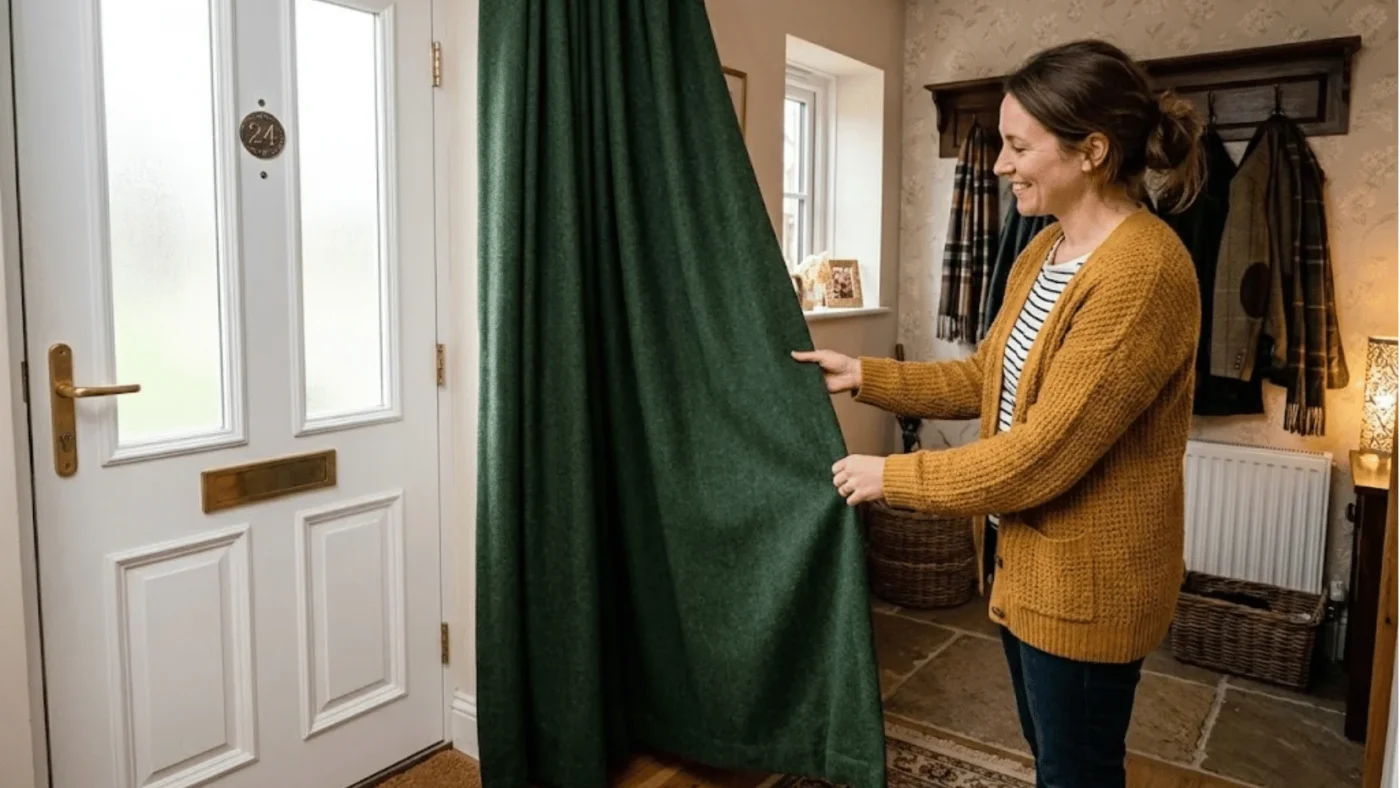
A door curtain can make a chilly entrance feel warmer while adding privacy and softness. The right choice depends on size, lining, heading style, and how much light you want to control. For UK homes, accurate measurements and practical fabric matter more than decoration alone. Elsewhere on the site: Bathroom Flooring for UK Homes.
A well-fitted thermal panel adds a useful barrier across a cold external doorway. Choose enough width for full coverage and a drop that reaches close to the floor. It can reduce discomfort, but it should support proper draught-proofing rather than replace it.
| Key point | What to know |
|---|---|
| Main purpose | Add warmth, privacy, light control, and a softer finish around a doorway |
| Useful locations | Front doors, back doors, glazed doors, hallways, and selected internal openings |
| Common ready-made UK sizes | 117 x 213 cm and 167 x 213 cm are widely sold examples |
| Main lining options | Thermal, thermal blackout, dimout, or unlined |
| Common headings | Eyelet and pencil pleat |
| Current price snapshot | Many ready-made single panels sit around £15–£50, with heavier options costing more |
| Important limit | A curtain does not repair gaps around a poorly sealed external door |
Current UK retailers commonly list ready-made panels in 117 x 213 cm and 167 x 213 cm. Prices vary substantially by fabric, width, lining, and retailer. Recent examples range from roughly £15 to the £40–£50 bracket, with some heavier designs costing more.
Key takeaways
- Choose thermal lining when warmth and draught reduction are the main priorities.
- Choose blackout thermal fabric when you also want strong light control and privacy.
- Measure the fitted pole or track where possible, not only the door leaf.
- Check whether the pack contains one panel, because many designs are sold singly.
- Keep fabric clear of handles, locks, radiators, and required ventilation.
- Treat curtains as an extra comfort layer alongside sensible draught-proofing.
Why UK homes use curtains over doors
External doors can feel cold because of glazing, letterboxes, keyholes, and small gaps. A heavy lined panel creates another layer between the room and colder surfaces. That can make an entrance feel less exposed during autumn and winter.
Current UK energy guidance supports heavy curtains as a simple improvement around doors and windows. It also recommends sealing unwanted gaps with suitable strips, brushes, or flaps. These measures work together because fabric slows heat movement while draught-proofing tackles direct air leakage.
A lined panel can also help outside in winter. Blackout or dimout fabric may improve privacy around glazed entrances and reduce strong sunlight. Readox readers can find related practical projects in the Home Improvement section.
Door curtain types compared
The most suitable construction depends on the problem you want to solve. A cold front entrance needs different fabric from a decorative internal opening. Compare lining, light control, weight, and fitting before choosing.
| Type | Warmth | Light and privacy | Good for | Main trade-off |
|---|---|---|---|---|
| Thermal lined | High | Moderate to high | Draughty external doors and halls | Heavier than standard fabric |
| Thermal blackout | High | Very high | Glazed doors, privacy, bedrooms near entrances | Can make a space darker |
| Lined dimout | Medium | Medium | Hallways needing softer light | Less insulating than heavier thermal options |
| Unlined decorative | Low | Low to medium | Internal openings and style-led spaces | Limited help against cold |
| Insulated magnetic cover | Medium to high | High | Utility areas and rarely used doors | Less decorative appearance |
For most draughty external doors, a thermal lined single panel is the strongest all-round choice. Pick thermal blackout when privacy and light control matter as much as warmth. Choose lighter lining when the doorway is well sealed, and decoration matters more.
How to choose a door curtain for a UK home
Start with the lining
Thermal lining adds weight and helps create a stable air layer beside the doorway. Heavier fabric also tends to hang closer to the floor. Look for clear product wording rather than assuming every thick fabric provides insulation.
Blackout and thermal are related features, but they are not identical. Blackout construction focuses on light control, while thermal construction focuses on slowing heat transfer. Many current products combine both, which suits glazed doors and bright entrances.
Choose the heading around your existing fitting
Eyelet panels slide directly onto a suitable pole and open quickly. They create broad folds and suit a simple, modern finish. Leave enough wall space for the fabric to stack clear of the doorway.
Pencil pleat headings can work with tracks or poles using suitable hooks and rings. They allow more adjustment across the width and suit traditional halls. Check whether hooks, rings, or poles are included because many ready-made products exclude them.
Check weight, care, and daily use
A heavy panel needs secure hardware above the opening. The fixings must suit the wall, lintel, and expected load. Follow the fitting manufacturer’s guidance rather than relying on generic wall plugs.
Care instructions range from machine washing to hand washing. That matters near entrances where pets, damp coats, and outdoor dirt can mark fabric. Washable material is useful in doorways with daily traffic.
How to measure the opening correctly
Measure after fitting the pole or track whenever possible. For a pole, measure the working length between its decorative finials. For a track, measure from one end to the other.
Next, measure the drop from the correct hanging point to your preferred finish. For warmth, the fabric should usually finish close to the floor. Check the threshold, mat, radiator, handle, and door swing before ordering.
Use this quick sequence:
- Measure the pole or track width in centimetres.
- Measure the finished drop to the floor or chosen stopping point.
- Check whether the stated width refers to one panel.
- Confirm the heading works with your pole or track.
- Allow enough side coverage to reduce exposed gaps.
- Recheck that the door can open safely with the fabric pulled back.
Ready-made UK ranges commonly include 117 cm and 167 cm widths with a 213 cm drop. These measurements are examples, not universal standards. Always measure the actual fitting before relying on a familiar size label.
What should you expect to pay?
Current UK listings show a broad spread based on lining, brand, width, and fabric. Many single ready-made panels appear around £15 to £50. Heavier or more decorative ranges can cost more, while sale prices change frequently.
Compare more than the ticket price. Check panel count, dimensions, lining, heading, care instructions, and required hardware. A cheaper panel may cost more overall if you also need stronger fittings.
What a thermal curtain can and cannot fix
A lined panel can reduce the cold feeling near an external entrance. It may also reduce visible fabric movement from light draughts. It cannot seal a warped frame, damaged weather strip, open keyhole, or large floor gap.
The Energy Saving Trust advises treating external-door gaps around edges, bottoms, letterboxes, and keyholes directly. It also warns against blocking airflow needed for healthy ventilation. Internal doors may need under-door airflow, so permanent sealing is not appropriate everywhere.
If daylight shows around an external frame, inspect the door before buying more fabric. Use the curtain as an extra layer after treating suitable gaps. Seek specialist advice when an older property or ventilation system makes the correct approach unclear. Elsewhere on the site: Sun Hat.
Style, colour, and glazed entrances
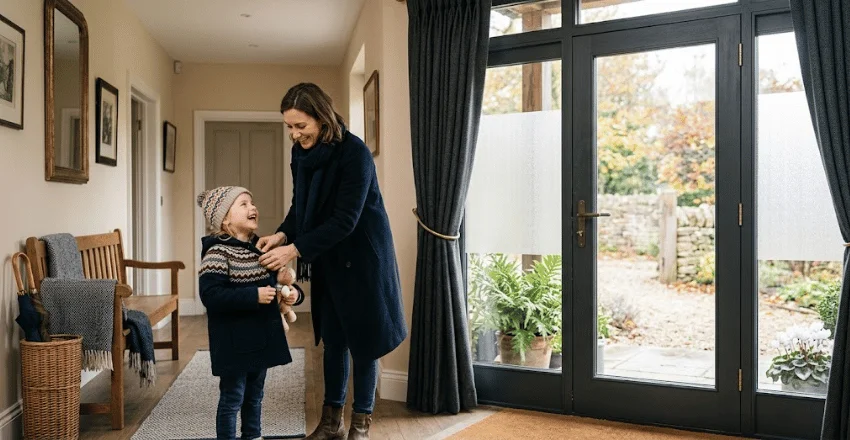
The fabric should suit the hallway rather than look like temporary winter equipment. Warm neutrals, charcoal, navy, and textured weaves work with many UK schemes. Readox’s magnolia paint guide can help when coordinating a warmer neutral entrance.
Glazed doors may need privacy and temperature control. Thermal blackout fabric offers strong screening when closed, while window film can preserve more daylight. Readox’s window film guide covers another approach for improving comfort and privacy around glass.
Common buying mistakes
- Ordering from the door leaf size instead of the fitted pole or track.
- Assuming the pack contains two panels when it contains one.
- Choosing blackout fabric when you still want daylight through glazing.
- Ignoring panel weight when selecting the pole, track, or fixings.
- Letting fabric obstruct a lock, handle, radiator, or ventilation opening.
- Expecting fabric alone to repair obvious gaps around an external frame.
Frequently asked questions
Does a door curtain keep heat in?
A lined panel can reduce heat loss across a cold doorway and improve nearby comfort. Heavy thermal fabric is more useful than a thin decorative panel. Results improve when you also draught-proof suitable gaps around the external frame.
How wide should the panel be?
Measure the fitted pole or track, not just the door. The fabric needs enough width to cover the opening and form natural folds. Check the maker’s sizing guidance because fullness rules can vary.
Should the fabric touch the floor?
Finishing close to the floor helps reduce exposed space beneath the fabric. It should not bunch where people walk or where the door moves. A small clearance may work better in a busy hallway.
Is eyelet or pencil pleat better?
Eyelets are simple when you have a suitable pole and want quick movement. Pencil pleats suit tracks and offer more adjustable gathering. Choose based on the existing fitting, stacking space, and preferred look.
Can a curtain replace proper draught-proofing?
No, fabric is an added barrier, not a fix for structural gaps. External doors may need brushes, seals, or letterbox protection. Never block fixed ventilation that the home needs for safe airflow.
Are thermal curtains useful in summer?
They can help reduce heat transfer and strong sunlight when closed during hot periods. Blackout versions can also reduce glare around glazed entrances. Results depend on the glazing, orientation, fabric, and how consistently you use the panel.
Final recommendation
Start by identifying the main problem: cold air, privacy, light, or decoration. For a draughty external entrance, choose thermal lining with enough width and a near-floor drop. For glazed entrances, thermal blackout is practical when privacy also matters.
Measure twice, confirm what the pack includes, and match the heading to your hardware. Inspect the doorway for gaps that fabric cannot solve. A well-chosen door curtain should improve comfort without affecting access, safety, or ventilation.