A wood floor sealer is a clear protective coating, usually a polyurethane lacquer, hardwax oil, penetrating oil or wax, that stops water, dirt and grit from getting into the pores of the timber. For most UK homes with solid or engineered wood floors, a water-based polyurethane lacquer gives the toughest, clearest finish for hallways and kitchens, while hardwax oil suits people who want a natural matt look that can be spot-repaired.
This guide compares the main types, shows how to tell whether your floor is already sealed, walks through application step by step, and covers drying times, common mistakes, maintenance and when to recoat.
Why sealing a wood floor matters
Timber is porous and moves as humidity changes. Without a sealed surface, spilled drinks, muddy boots and mopping water soak in and leave dark marks, raise the grain and, in the worst cases, cause cupping or rot at the edges of boards. A good sealer also takes the abrasion from grit underfoot so the wood itself does not wear, brings out the grain and colour, and makes the floor much easier to clean.
Wooden flooring specialists explain in more detail why sealing wood floors is so important, especially in high-traffic areas where unprotected boards can wear noticeably within a short time.
Is my floor already sealed? A quick test
Put a few drops of water on a worn area, such as a doorway, and on a protected area, such as under a sofa. If the water beads and sits on the surface, the floor is sealed. If it darkens the wood and soaks in within a few minutes, the finish has worn through or the floor was never sealed.
To find out what kind of finish is on it, rub a hidden spot with a cloth dampened with white spirit. If a sticky, waxy residue comes away, the floor is waxed, and wax must be fully removed before any lacquer or oil will bond. A hard, slightly plastic-feeling film that is unaffected usually indicates lacquer, while a floor that feels like bare timber but still repels water is likely oiled or hardwax-oiled. Knowing this matters, because you should maintain a floor with a product compatible with its existing finish.
Types of wood floor sealer compared
| Type | Finish | Durability | Repairs | Best for |
|---|---|---|---|---|
| Water-based polyurethane lacquer | Clear, low odour, matt to gloss | High, commercial grades very high | Worn areas usually need sanding and recoating the whole room | Hallways, kitchens, family homes, light timbers such as oak you do not want to yellow |
| Oil-based (solvent) polyurethane | Warm amber tone, deepens over time | High | As above | Traditional look on darker boards |
| Hardwax oil | Natural matt or satin, feels like wood | Good | Easy spot repairs without sanding the whole floor | Living rooms, bedrooms, people who want a natural finish |
| Penetrating oil (such as Danish or tung oil) | Very natural | Moderate, needs regular re-oiling | Easy | Low-traffic rooms, period boards |
| Wax | Soft sheen | Low, marks with water | Easy but frequent | Heritage floors where tradition matters more than toughness |
Polyurethane lacquer
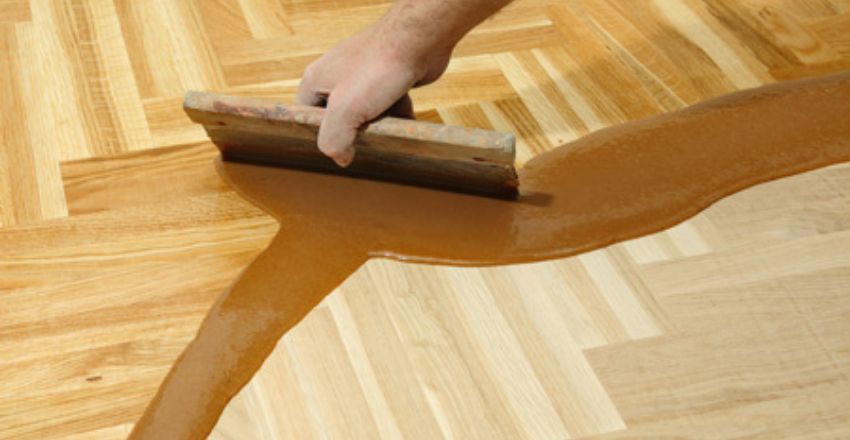
Polyurethane forms a hard film on top of the wood. Modern water-based versions dry clear, are low in odour and VOCs, and allow several coats in one day. Solvent-based versions give a warmer, amber tone that some people like on pine or walnut, but they smell strongly, take much longer to dry and tend to yellow with age. Two-part (2K) water-based lacquers, with a hardener mixed in, are the toughest option for busy hallways and are widely used by professional floor fitters.
Hardwax oil
Hardwax oils combine natural oils and waxes. The oil soaks into the fibres and the wax hardens at the surface, producing a finish that repels water but still looks and feels like timber. Their big advantage is maintenance: a scuffed patch by the back door can be cleaned, lightly sanded and re-oiled without redoing the whole room.
Oil and wax
Traditional oils and waxes give the most natural look but the least protection. Wax in particular marks easily with water and needs regular buffing and re-waxing. They remain a good choice for restoring period floors where authenticity matters more than toughness.
Choosing a sheen and the right finish for each room
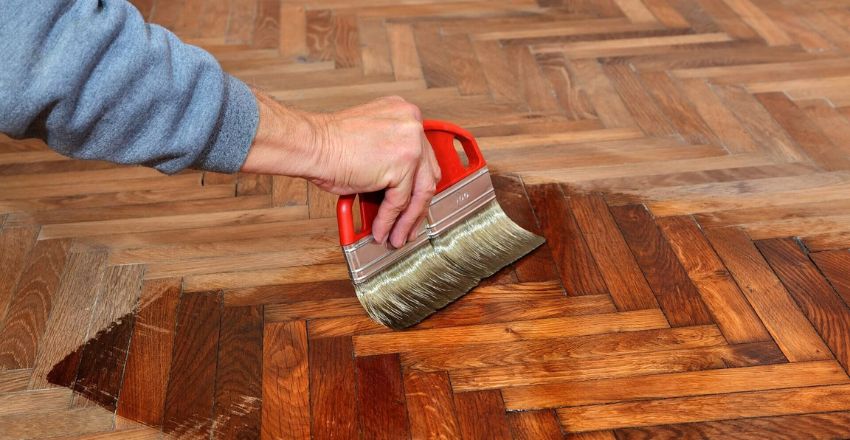
Sheen is a matter of taste, but it also affects how the floor wears visually. Matt and ultra-matt finishes hide scratches, dust and footprints best and are the most popular choice for oak today. Satin reflects a little more light, and gloss looks striking but shows every scuff.
- Hallways and kitchens: a hard-wearing water-based or 2K lacquer, matt or satin.
- Living rooms and bedrooms: hardwax oil or lacquer, depending on whether you prefer easy spot repairs or maximum toughness.
- Bathrooms: timber is not ideal next to baths and showers. If you do use it, choose a lacquer rated for wet areas and seal edges carefully. Our guide to bathroom flooring for UK homes compares more water-resistant alternatives.
- Laminate and luxury vinyl: these are not real timber on the surface and do not need, or accept, a wood floor sealer.
Tools and materials checklist
Gather everything before you start, because once the first coat is down you will not want to leave the room half finished.
- The sealer itself, with enough for every coat (check coverage on the tin against your floor area).
- A microfibre roller and extension pole for lacquer, or a spreader and lint-free cloths for hardwax oil.
- A small brush or pad for edges and corners.
- Fine abrasive paper or pads for de-nibbing between coats.
- A vacuum with a hard-floor head, plus a tack rag or lint-free cloth.
- Gap filler, a filling knife and masking tape for skirting boards.
- Gloves, eye protection and, for solvent products or sanding, a suitable dust mask or respirator.
- A metal container with a lid for used oily rags.
How to apply wood floor sealer step by step
- Clear and prepare the room: remove furniture, punch down any protruding nail heads and ventilate well. Keep children and pets out until the floor is dry.
- Sand if needed: a worn or previously waxed floor usually needs sanding back to bare wood. For a lightly worn lacquer that is still intact, a light abrade with a fine abrasive is often enough for a maintenance coat. Engineered boards can only be sanded as far as their top wear layer allows, so check its thickness first.
- Fill gaps and cracks: use a resin gap filler mixed with fine sanding dust for small gaps, or slivers of timber for wider gaps in old floorboards.
- Vacuum thoroughly: then wipe with a lint-free cloth or tack rag. Any dust left behind will be trapped in the finish.
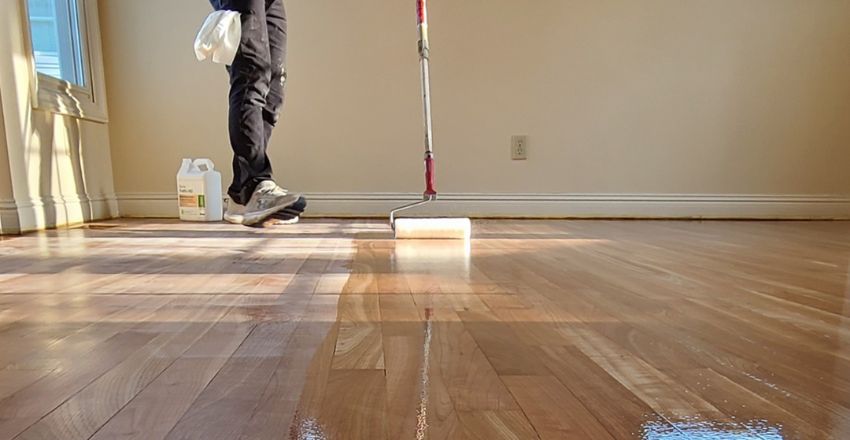
- Apply the first coat: use a microfibre roller or applicator pad for lacquer, or a spreader and lint-free cloth for hardwax oil. Work along the grain, keep a wet edge and finish at the door so you do not paint yourself into a corner.
- De-nib between coats: once dry, lightly abrade to remove raised grain, vacuum again, then apply the next coat.
- Build the right number of coats: lacquers typically need about three coats on bare wood and hardwax oils usually two thin coats, but always follow the manufacturer’s instructions.
Safety note: rags soaked in oil-based finishes such as hardwax oil or linseed oil can self-heat and catch fire as they dry. Lay them flat outdoors to dry, or keep them in a sealed metal container filled with water before disposal.
Common mistakes to avoid
- Applying thick coats: heavy coats dry slowly, stay soft and can leave puddles or a cloudy finish. Several thin coats always beat one thick one, especially with hardwax oil.
- Skipping the dust removal: sanding dust left in corners and gaps gets dragged into the wet finish and leaves a gritty surface.
- Mixing incompatible products: putting lacquer over wax, or an oil over an intact lacquer, usually leads to poor adhesion and peeling.
- Working in cold or humid conditions: low temperatures slow drying and can affect the final finish. Follow the minimum temperature on the tin.
- Putting rugs back too soon: rugs trap air and can mark or soften a finish that has not fully cured.
- Forgetting a test patch: try the product on an offcut or hidden area first to check the colour, especially on oak, which some products darken noticeably.
Drying and curing times
Drying (safe to recoat) and curing (reaching full hardness) are different. As a general guide, water-based lacquers are often recoatable within a few hours and walkable in socks the same day, while solvent-based products can take many hours per coat. Most finishes need several days to around a week before you replace rugs or drag heavy furniture back in. Cold, damp weather slows everything down, so check the tin and allow extra time in winter.
Maintaining a sealed wood floor
- Put doormats at every entrance, as grit is the main cause of wear.
- Vacuum or sweep regularly using a hard-floor head; our guide to the best vacuum cleaners in the UK covers models that are gentle on hard floors.
- Mop with a well-wrung, barely damp mop and a pH-neutral cleaner made for your finish type. Never flood the floor or use a steam mop on wood.
- Avoid harsh or acidic home remedies unless the floor manufacturer approves them; our guide to using white vinegar for cleaning explains which surfaces it can dull or damage.
- Fit felt pads to chair and table legs and lift furniture rather than dragging it.
- Use maintenance oils or refresher coats on oiled floors as recommended by the manufacturer.
How long does wood floor sealer last?
There is no single answer, because it depends on the product, the number of coats, foot traffic, pets and cleaning. A well-applied lacquer in a quiet bedroom may last many years, while a busy hallway with a dog may need a maintenance coat much sooner. The water drop test is the easiest way to decide: once water starts soaking into worn areas, it is time to recoat before the timber itself is damaged.
DIY or professional?
Applying a maintenance coat to a sound floor is a manageable DIY job for most people with patience and good ventilation. Full sanding back to bare wood is harder: drum sanders are heavy, can easily gouge a floor and create a lot of dust. Many homeowners hire a professional for the sanding and then handle maintenance themselves. Get more than one quote and ask which finish they recommend for your rooms and why.
Bottom line
For most UK homes, a water-based lacquer is the hard-wearing default and hardwax oil is the natural-looking, easy-to-repair alternative. Test what is on your floor first, prepare and clean the surface thoroughly, apply thin coats along the grain, and give the finish time to cure. Then use the water drop test once or twice a year so you recoat before the timber is damaged.
Frequently asked questions
What is the best wood floor sealer for high-traffic areas?
A water-based polyurethane lacquer, particularly a two-part (2K) commercial grade, is generally the most hard-wearing choice for hallways and kitchens.
Can I put sealer over an old waxed floor?
Not directly. Wax stops lacquers and most oils from bonding, so it must be removed completely, usually by sanding back to bare wood, before a new sealer is applied.
How many coats of floor sealer do I need?
Typically around three coats of lacquer on bare wood, or two thin coats of hardwax oil, with a light de-nib between coats. Always follow the product instructions.
How do I know when my wood floor needs resealing?
Drip a little water on worn areas. If it beads, the seal is intact. If it soaks in and darkens the wood, the finish has worn through and it is time to recoat.
Do engineered wood floors need sealing?
Most engineered boards come factory-finished with lacquer or oil. They need the same maintenance as solid wood, and unfinished engineered boards must be sealed after fitting.