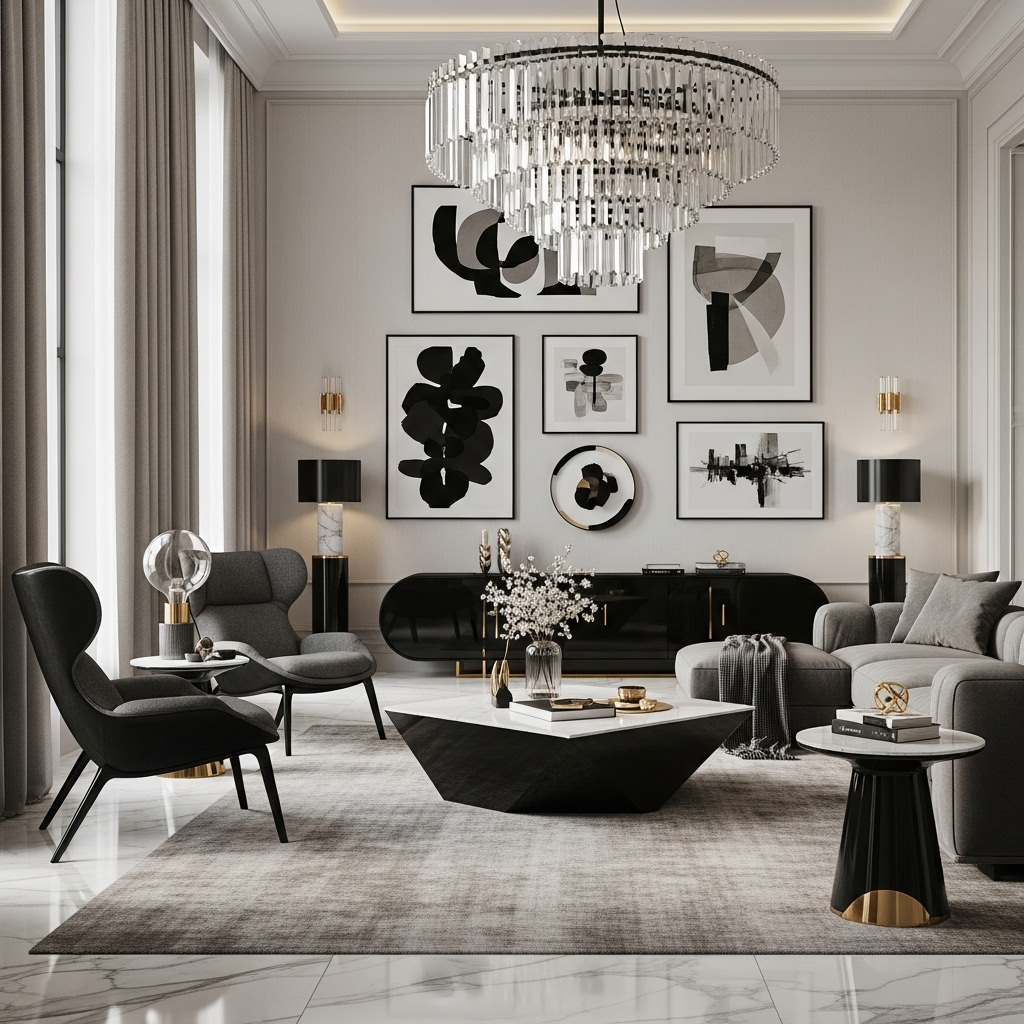
The best places to find European design inspiration for your interior are Milan, Paris, Copenhagen and Stockholm, Barcelona, London and Amsterdam. Each city has a distinct look: Milan for sleek luxury, Paris for refined elegance, Scandinavia for warm minimalism, Barcelona for colour and curves, London for eclectic mixing and Amsterdam for clever, space-saving design.
You do not need to copy any of them wholesale. The trick is to understand what defines each style, from materials and colours to furniture shapes and lighting, and then borrow the elements that suit your home, budget and way of living. This guide breaks down each design capital, compares them side by side and shows you how to blend European influences into a British home without it looking like a showroom. If you want ready-made pieces to start from, curated rugs, furniture and decor with a European feel are available at sayrug.com.
European design capitals compared
| City | Signature style | Key materials | Colour palette | Best for |
|---|---|---|---|---|
| Milan | Sleek, luxurious modernism | Marble, brass, lacquer, glass | Neutrals with deep jewel tones | Statement living rooms and kitchens |
| Paris | Refined, understated glamour | Parquet, plaster mouldings, velvet, gilt | Soft whites, greige, gold accents | Period properties and bedrooms |
| Copenhagen and Stockholm | Warm, functional minimalism | Light oak, ash, wool, linen | Whites, greys, muted earth tones | Small homes and family spaces |
| Barcelona | Vibrant Mediterranean modernism | Patterned tiles, terracotta, wrought iron | Ochre, cobalt, terracotta, white | Kitchens, bathrooms and garden rooms |
| London | Eclectic heritage meets new | Leather, wool, reclaimed brick, patterned textiles | Rich darks with bold contrasts | Victorian and Edwardian houses |
| Amsterdam | Creative, practical living | Painted wood, steel, plywood | Neutrals with bright pops | Narrow houses and flats |
Milan: the global capital of design
No conversation about European design is complete without Milan. The city hosts the Salone del Mobile, the annual furniture fair that sets the tone for interiors worldwide, and it is home to many of Italy’s best-known furniture and lighting brands. Italian design is defined by a combination of sophistication, innovation and craftsmanship.
In a Milanese interior you will typically see clean lines, generous proportions and luxurious finishes. Marble worktops and side tables, brass or bronze details, sculptural lighting and low, deep sofas are all hallmarks. Milan’s apartments often sit inside grand nineteenth- and early twentieth-century buildings, so contemporary furniture is regularly placed against classical architecture, which creates spaces that feel modern and timeless at once.
How to borrow the Milan look
- Choose one hero material, such as a marble coffee table or stone-effect worktop, rather than covering every surface.
- Invest in a sculptural floor lamp or pendant; Italian interiors treat lighting as a design object, not an afterthought.
- Keep the palette restrained and add depth with one rich colour, such as forest green, burgundy or navy.
Paris: chic elegance and timeless glamour
Paris is shorthand for elegance. Classic Parisian apartments, especially the Haussmann-era buildings, have tall windows, ornate cornicing and ceiling roses, herringbone parquet floors and marble fireplaces. The furniture inside is chosen carefully, often mixing antique pieces found at flea markets with modern designs.
Parisian decor leans towards soft whites, warm greys and creamy neutrals, lifted by gold or brass accents, antique mirrors, crystal or glass chandeliers and plush textiles like velvet and bouclé. The overall effect is what the French call effortless: the room looks refined but lived in, never overly matched.
How to borrow the Paris look
- Add panel mouldings to plain walls; it is one of the most affordable ways to create period character in a modern home.
- Hang an oversized mirror above a fireplace or console to bounce light around.
- Mix one or two vintage finds with new furniture so the room does not feel like a catalogue.
Scandinavian capitals: Copenhagen and Stockholm
If you prefer simplicity and comfort, look to Scandinavia. Copenhagen and Stockholm are at the centre of the Scandinavian design philosophy that has become popular worldwide, rooted in functionality, cosiness and a close connection to nature. The long, dark northern winters shaped interiors that make the most of natural light and feel warm and inviting.
Scandinavian rooms use whites and soft greys, pale woods such as oak, ash and birch, natural textiles like wool and linen, and furniture with organic, rounded shapes. The Danish idea of hygge (cosiness and contentment) and the Swedish idea of lagom (not too much, not too little) both encourage homes that feel calm and balanced. Scandinavian interiors prove that minimalism can still be warm, layered and personal.
How to borrow the Scandinavian look
- Layer textures rather than colours: a wool throw, a linen cushion, a sheepskin and a jute rug in similar tones.
- Use several low, warm light sources such as table lamps and candles instead of a single bright ceiling light.
- Bring in plants and natural materials, and keep surfaces clear with closed storage.
Barcelona: Mediterranean vibrance
Barcelona offers a completely different kind of inspiration, full of colour and creativity. The city’s links to Antoni Gaudí and Catalan Modernisme show in a design language that celebrates curves, mosaic patterns and playful colour.
Barcelona-inspired interiors often include bold encaustic or hydraulic floor tiles, wrought iron details, arched doorways, terracotta and handmade ceramics, and vibrant textiles. Mediterranean style also puts a lot of emphasis on natural light, open layouts and flowing indoor-outdoor living, so think about how a room connects to the garden or balcony.
How to borrow the Barcelona look
- Use patterned tiles in a contained area, such as a kitchen splashback, hallway floor or bathroom wall.
- Introduce curves through arched mirrors, rounded furniture or an arched alcove.
- Pair whitewashed walls with warm terracotta, ochre or cobalt accents for a sunny feel, even under grey British skies.
London: eclectic and innovative
London’s design scene is eclectic, diverse and always evolving. Centuries of history and multicultural influences have created interiors that blend tradition and innovation. British design is known for bold patterns, rich textiles and striking contrasts: a Chesterfield sofa next to contemporary art, or Victorian cornicing in a room with industrial lighting.
London is also home to many design studios, independent makers and design events, which makes it a place where experimentation thrives. A London-style interior is confident rather than careful. It mixes eras, collects objects with stories and is not afraid of dark walls or patterned wallpaper.
How to borrow the London look
- Try a deep paint colour in a smaller room such as a study, snug or downstairs loo.
- Combine heritage pieces, like a vintage rug or antique chest, with modern lighting and art.
- Use pattern on pattern, but keep it coherent by repeating one or two colours across the room.
Amsterdam: creative practicality
The Dutch capital combines practicality with creativity. Amsterdam’s narrow canal houses, with their steep stairs and tall windows, demand efficient use of space, and Dutch design has become known for clever storage, multifunctional furniture and witty decor.
Dutch interiors usually start from a calm, neutral base and add colourful accents: a bright chair, a graphic print or a bold lamp. Furniture often does more than one job, such as a bench with storage inside, a fold-down desk or a bed with drawers beneath. The balance of efficiency and artistic spirit makes Amsterdam a strong source of inspiration for modern urban living, especially in British flats and terraced houses.
How to borrow the Amsterdam look
- Build storage into awkward spaces like stair runs, alcoves and the area under windows.
- Choose furniture that folds, stacks or serves two purposes.
- Allow yourself one playful piece per room so a practical space still has personality.
How to bring European inspiration into your home
Drawing on these capitals does not mean recreating them exactly. The most successful interiors borrow a few elements and adapt them to the house you actually live in. Follow these steps:
- Start with your architecture. A Victorian terrace suits Parisian or London styles; a new-build flat often suits Scandinavian or Dutch approaches.
- Pick one lead style and one supporting style. For example, a Scandinavian base with Milanese lighting, or a Parisian bedroom with Barcelona tiles in the en suite.
- Define a palette of three to five colours and use it across connected rooms so the house flows.
- Choose your anchor pieces first: a rug, a sofa and a main light fitting set the tone for everything else.
- Mix old and new. Almost every European capital combines heritage with contemporary design.
- Edit regularly. Remove items that do not fit the story you are telling.
Common mistakes to avoid
- Copying a look so literally that it clashes with the building, such as heavy gilt in a low-ceilinged modern flat.
- Combining too many styles at once, which can make a room feel chaotic rather than eclectic.
- Neglecting lighting; every one of these cities uses layered lighting to create atmosphere.
- Buying everything from one range, which can make a room look flat and generic.
Where rugs fit in
A rug is one of the easiest ways to set a European mood. A flat-woven or wool rug in muted tones suits a Scandinavian room, a richly patterned or vintage-style rug works in a London or Parisian space, and a bold geometric design fits a Barcelona or Amsterdam look. Measure carefully: in a living room, the front legs of the sofa and chairs should ideally sit on the rug so the seating area feels connected.
Final thoughts on European design
From Milan’s sophistication and Paris’s elegance to Scandinavian cosiness and Barcelona’s vibrance, Europe’s design capitals offer inspiration for every taste. Choose a lead style that suits your home, borrow a few signature details from one or two other cities, and anchor the scheme with good lighting and a well-chosen rug. The result should feel personal and lived in rather than copied.
Frequently Asked Questions
What is the European design capital?
Milan is widely regarded as Europe’s design capital because it hosts the Salone del Mobile furniture fair and is home to many leading furniture and lighting brands. Paris, Copenhagen and London are also major centres, each with its own distinct style.
What is the difference between Scandinavian and Parisian interior style?
Scandinavian style focuses on light woods, simple functional furniture and calm neutral colours. Parisian style is more decorative, with period mouldings, parquet floors, gilt mirrors and a mix of antique and modern pieces.
Can I mix different European design styles in one home?
Yes. The best approach is to choose one lead style and one supporting style, then tie them together with a consistent colour palette. Mixing too many styles at once tends to look cluttered.
Which European style works best in a small flat?
Scandinavian and Dutch styles are usually the most practical for small spaces. They rely on light colours, multifunctional furniture and built-in storage, which helps compact rooms feel larger and tidier.
How can I add European style on a budget?
Focus on a few high-impact changes such as panel mouldings, a statement light, a good rug or patterned tiles in a small area. Paint colour and second-hand finds can also go a long way.