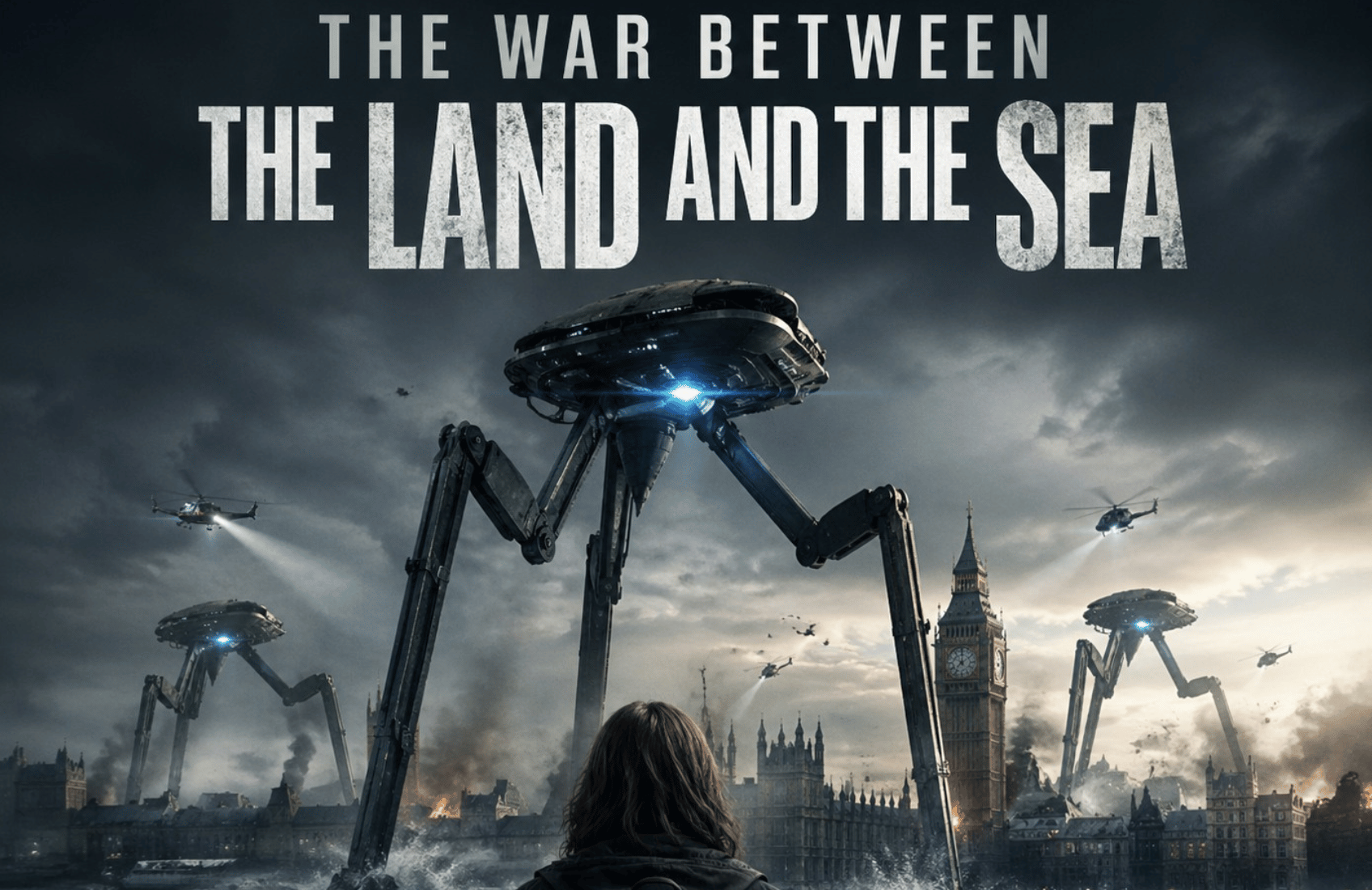
The War Between the Land and the Sea is a five-part BBC drama set in the Doctor Who universe in which the Sea Devils, an ancient reptilian species that lived on Earth long before humans, rise from the oceans and demand their share of the planet. Created by Russell T Davies and written by Pete McTighe, it stars Russell Tovey and Gugu Mbatha-Raw, with Jemma Redgrave returning as UNIT’s Kate Lethbridge-Stewart. It is available on BBC One and BBC iPlayer in the UK.
Rather than following the Doctor through time and space, the series plays as a grounded political thriller about diplomacy, fear and the way humanity treats the sea. Below you will find the cast, the premise without major spoilers, the long history of the Sea Devils, the themes the show tackles and practical advice on how to watch it.
The War Between the Land and the Sea at a glance
| Detail | Summary |
|---|---|
| Format | Five-episode drama, a Doctor Who spin-off |
| Creators | Russell T Davies (co-creator), Pete McTighe (writer) |
| Lead cast | Russell Tovey, Gugu Mbatha-Raw, Jemma Redgrave |
| Production | Bad Wolf with BBC Studios |
| UK home | BBC One and BBC iPlayer |
| Premise | The Sea Devils emerge from the oceans and challenge humanity’s claim to Earth |
| Tone | Political thriller with science fiction and environmental themes |
| Prior viewing needed? | No, the series explains everything a newcomer needs |
What is The War Between the Land and the Sea about?
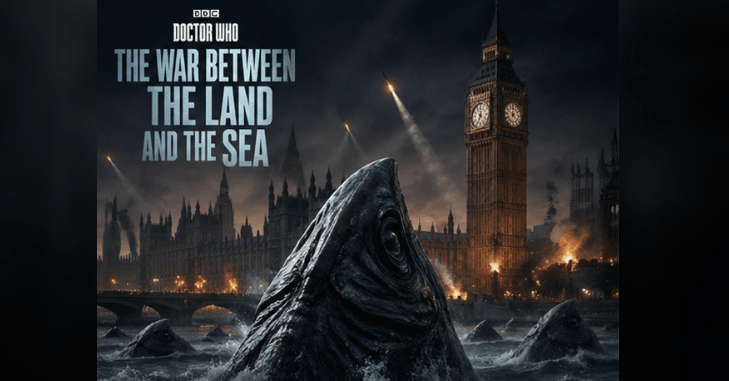
The story begins when the Sea Devils make their presence known to the world. They are not invaders from another planet. They are Earth’s older inhabitants, a species that went into hiding long before humans walked upright, and they have been watching what we have done to the oceans. Their message is blunt: the sea is theirs, and the damage has to stop.
That single idea turns a monster story into a negotiation. Instead of asking how humanity can defeat the creatures, the drama asks what humanity owes them, and whether anyone in power is willing to listen. The answer is never simple, because both sides have legitimate grievances and both sides contain people who would rather fight than compromise.
The central pairing
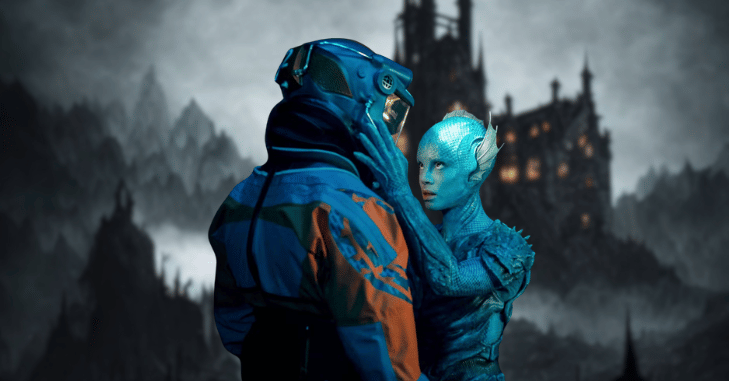
UNIT, the Doctor Who universe’s organisation for dealing with alien and unexplained threats, is responsible for the official response, while governments weigh diplomacy against force. At the heart of it all is an unlikely pairing. Russell Tovey plays Barclay, an ordinary man pulled into the role of go-between, and Gugu Mbatha-Raw plays Salt, who speaks for the Sea Devils. Their conversations carry much of the drama, and the show is at its strongest when it simply lets two people from different worlds try to understand each other.
Barclay is deliberately not a soldier, scientist or politician. He is the viewer’s stand-in: someone who has to make sense of a crisis in real time, with no special training and no time-travelling hero to save the day. That choice gives the series a very different feel from a typical Doctor Who episode, where the Doctor usually knows more than anyone else in the room.
What kind of story it is
Think of it less as an alien-invasion thriller and more as a story about a diplomatic crisis that happens to involve a non-human nation. The tension comes from deadlines, ultimatums, leaks to the press and arguments behind closed doors. There is action, but it is used sparingly, and the most important moments tend to happen across a table rather than on a battlefield.
Cast and characters
- Russell Tovey as Barclay, the everyman at the heart of the story and the audience’s way in. Tovey is no stranger to Doctor Who, having played Midshipman Frame in the 2007 Christmas special.
- Gugu Mbatha-Raw as Salt, the Sea Devils’ representative. Mbatha-Raw also has Doctor Who history, having appeared as Tish Jones in 2007.
- Jemma Redgrave as Kate Lethbridge-Stewart, head of UNIT and one of the franchise’s most familiar recurring characters.
- Alexander Devrient as Colonel Ibrahim, UNIT’s military officer, also recurring from the main series.
The casting is clever in a quiet way. Both leads have a past in the franchise, yet they are playing entirely new characters, so long-standing fans get a nod of recognition while newcomers meet everyone fresh. Redgrave and Devrient provide the continuity: as Kate and Colonel Ibrahim, they bring the institutional weight of UNIT and connect the spin-off directly to recent episodes of the main show.
Mbatha-Raw has arguably the hardest job. Playing the voice of a species that is often treated as a monster, she has to make Salt’s anger understandable without making her simply sympathetic. The performance works because the character is never just a mouthpiece for a message; she has her own pressures and her own people to answer to.
Who are the Sea Devils?
The Sea Devils are one of Doctor Who’s classic species. They are aquatic cousins of the Silurians, reptilian beings who ruled Earth long before humans and went into hibernation to escape a catastrophe they believed was coming. When they woke, they found that apes had taken over. That premise has always made them more complicated than typical monsters, because from their point of view, humans are the newcomers.
| Appearance | Year | Doctor |
|---|---|---|
| The Sea Devils | 1972 | Third Doctor (Jon Pertwee) |
| Warriors of the Deep | 1984 | Fifth Doctor (Peter Davison) |
| Legend of the Sea Devils | 2022 | Thirteenth Doctor (Jodie Whittaker) |
| The War Between the Land and the Sea | 2025 | Spin-off without the Doctor at its centre |
Both the Silurians and the Sea Devils were created by writer Malcolm Hulke in the early 1970s, and his stories deliberately refused to make them simple villains. In each, the Doctor tries to broker peace, and in each, human fear and military impatience help wreck the chance. That history is exactly why they suit a spin-off about negotiation: the question has never been whether the Sea Devils are dangerous, but whether either side can trust the other long enough to reach a settlement.
Do you need to watch the old episodes first?
No. The spin-off explains what matters and treats the Sea Devils as a fresh idea for new viewers. If you enjoy it and want more background, the 1972 serial The Sea Devils is the natural place to start, since it sets up the species and the moral dilemma at the heart of the new series. Long-time fans will spot the connections, but nothing in the plot depends on knowing them.
How it fits the wider Doctor Who universe
The series is part of a push by the BBC and Bad Wolf to widen Doctor Who into a shared universe, following Russell T Davies’s return as showrunner in 2023. UNIT gives the spin-off its link to the main show, and Kate Lethbridge-Stewart’s presence ties it directly to recent episodes.
Unlike the time-travelling main series, it is serialised and set firmly in present-day Britain, focused on politics, military pressure and human drama rather than adventure across time and space. That makes it closer in spirit to grown-up spin-offs such as Torchwood than to the Saturday teatime adventures of the parent show.
| Feature | Main Doctor Who series | The War Between the Land and the Sea |
|---|---|---|
| Lead character | The Doctor | Barclay and Salt, with UNIT in support |
| Structure | Mostly standalone episodes | One serialised story over five episodes |
| Setting | Anywhere in time and space | Present-day Britain and the oceans |
| Tone | Family adventure | Darker political thriller |
| Main tension | Monsters and mysteries | Negotiation, trust and public pressure |
Themes explored in the series
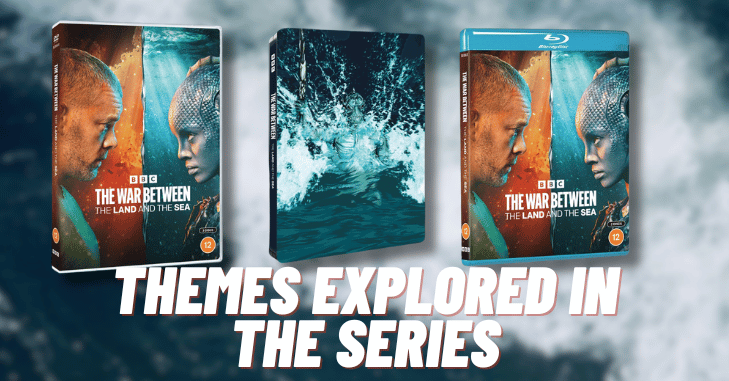
| Theme | How it shows up |
|---|---|
| Environmental responsibility | The Sea Devils’ grievance is about pollution and exploitation of the oceans, making them a voice for the sea itself. |
| Coexistence vs conflict | The drama asks whether two species with competing claims can share a planet, echoing real territorial disputes. |
| Power and ownership | Who has the right to Earth: the first inhabitants or the current ones? |
| Fear and politics | Public panic, media pressure and political calculation shape decisions as much as facts do. |
These ideas are not new to Doctor Who. The Silurian and Sea Devil stories have long been used to question who counts as the “alien”. What the spin-off adds is time. Five episodes let the negotiation unfold slowly, with room for doubts, betrayals and small human moments that a single 45-minute episode could never fit.
Real-world parallels
The Sea Devils’ complaints will sound familiar to anyone following ocean news. Plastic pollution, sewage discharges around the British coast, overfishing and the debate over mining the deep seabed for metals are all live issues, and the series leans on that recognition without turning into a lecture. It works best when it leaves the viewer uncomfortable about which side they would take, which is exactly the effect good science fiction aims for.
Why the politics feel believable
Much of the tension comes from the way institutions behave under pressure. Ministers worry about headlines, military advisers push for contingency plans, and every concession risks looking like weakness. Viewers who enjoy watching how decisions really get made, rather than who wins a fight, will find plenty to chew on here.
Production and visual style
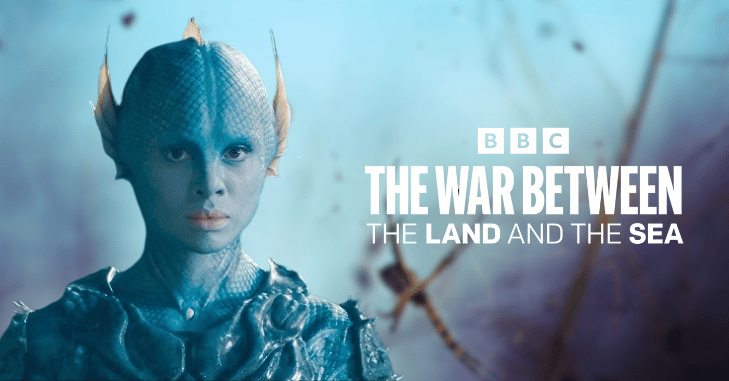
Bad Wolf, the Cardiff-based company behind modern Doctor Who, produced the series with BBC Studios. The Sea Devils have been redesigned for a modern audience, combining prosthetics with digital effects so they can carry close-up dialogue scenes rather than just menace from a distance. That matters in a story where a Sea Devil character is one of the leads, because the audience has to read emotion on her face.
Visually, the series plays on contrasts between cold ocean environments and the offices, corridors and briefing rooms where humans argue about what to do. The underwater sequences are lit in deep blues and greens, while the human world often feels cramped and artificial by comparison, a visual hint at whose side the show might be on.
How to watch in the UK
In the UK, the series was shown on BBC One and all episodes are available on BBC iPlayer, which requires a TV licence. Availability outside the UK depends on local distribution deals, so check your regional streaming services for current listings.
Before you start watching
- No homework needed. The series introduces UNIT, Kate and the Sea Devils clearly enough for newcomers.
- Expect talk as well as action. Much of the tension sits in meetings, briefings and one-to-one conversations.
- It is darker than the main show. The tone is more adult than a typical Saturday teatime episode, so parents may want to check it first before watching with younger children.
- Five episodes suits a weekend. With all episodes on iPlayer, it is easy to watch at your own pace.
- Watch in order. Because it is one continuous story, skipping episodes will leave gaps in the negotiation.
Who will enjoy it?
- Doctor Who fans curious to see a classic species explored in depth.
- Viewers who like political thrillers where the tension comes from negotiation rather than battles.
- Anyone drawn to science fiction with environmental themes.
- Fans of British genre drama with a sense of humour, such as Good Omens, or tense Whitehall-flavoured storytelling like Slow Horses.
It may be less satisfying if you want the energy of the main show, with a new planet every week and a time-travelling hero cracking jokes. This is a slower, more deliberate piece, and it rewards patience.
Why it matters for British sci-fi
British science fiction has long used imaginative premises to talk about real anxieties, from Quatermass to Black Mirror. The War Between the Land and the Sea sits in that tradition, using a fifty-year-old monster to talk about ocean health, climate and the politics of who gets to decide.
It is also a test of whether the Doctor Who universe can support stories without the Doctor in the lead. If audiences respond well, it strengthens the case for more spin-offs built around UNIT and other corners of the franchise, which will shape what the BBC commissions next. For more recommendations, see our pick of the best Netflix series of 2025 or browse the Entertainment category.
Frequently asked questions
What is The War Between the Land and the Sea about?
It is a five-part BBC Doctor Who spin-off in which the Sea Devils emerge from the oceans and challenge humanity’s claim to Earth. UNIT and world governments are forced into a tense negotiation, with an ordinary man, Barclay, caught in the middle.
Who stars in The War Between the Land and the Sea?
Russell Tovey and Gugu Mbatha-Raw lead the cast as Barclay and Salt. Jemma Redgrave returns as Kate Lethbridge-Stewart and Alexander Devrient as Colonel Ibrahim, both familiar from the main series.
Who are the Sea Devils?
They are an ancient reptilian species from Doctor Who, aquatic cousins of the Silurians, who lived on Earth before humans. They first appeared in 1972 opposite Jon Pertwee’s Third Doctor.
Is the Doctor in the series?
The series is built around new characters and UNIT rather than the Doctor, so it works as a standalone story. You can enjoy it without having followed the main show.
Where can I watch it in the UK?
It was broadcast on BBC One and is available to stream on BBC iPlayer. You need a TV licence to watch iPlayer in the UK.
How many episodes are there?
There are five episodes telling one continuous story. They are best watched in order, and the short run makes it easy to finish over a weekend.
Bottom line
The War Between the Land and the Sea takes one of Doctor Who’s most morally interesting species and gives it room to breathe. If you like slow-burning political drama with a science fiction twist, start episode one on iPlayer and judge it on the negotiation rather than the monsters; that is where the series earns its place.