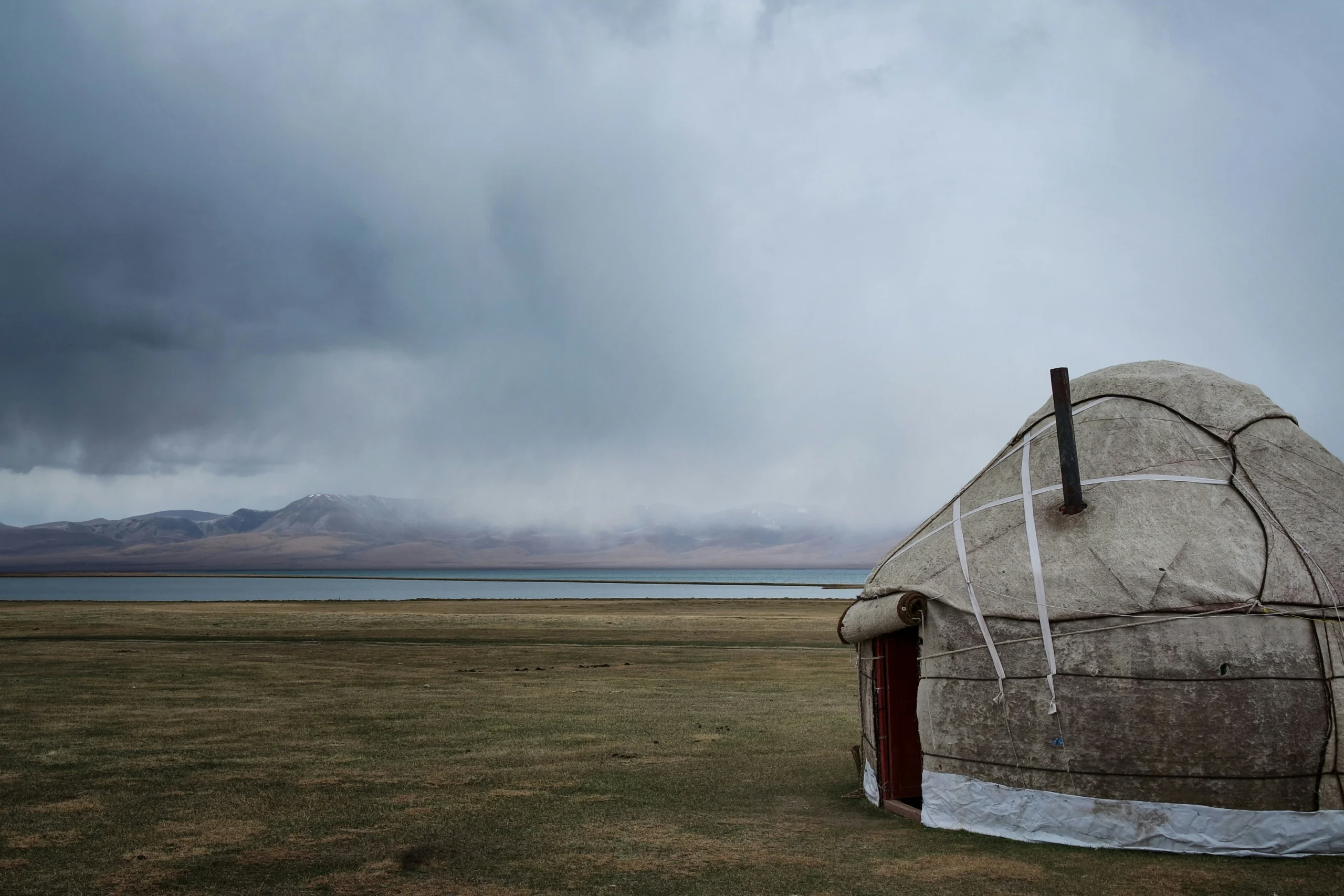
Kazakhstan deserves a place on your travel list because it packs Central Asia’s most surreal landscapes into one easy-to-travel country: the sunken forest of Kaindy Lake, the red-rock Charyn Canyon, the alpine Kolsai Lakes, the futuristic capital Astana and the leafy city of Almaty. UK passport holders can currently visit visa-free for short stays, and travel costs are modest by European standards.
Most travellers who think of the “Stans” picture Uzbekistan’s mosques or Kyrgyzstan’s mountains. Kazakhstan, the world’s ninth-largest country, is still overlooked, which is exactly why now is a good time to go. Here are seven solid reasons, plus practical advice on getting around, when to visit and what to eat.
Kazakhstan’s highlights at a glance
| Destination | Why go | Distance from Almaty | Best for |
|---|---|---|---|
| Kaindy Lake | Sunken spruce forest in turquoise water | Around 4 to 5 hours by 4×4 to the trailhead | Photographers, hikers |
| Kolsai Lakes | Three alpine lakes in pine forest | Short drive from Kaindy | Walking, rowing, cabin stays |
| Charyn Canyon | Red sandstone “Valley of Castles” | About 200 km east | Day trips, camping |
| Altyn Emel National Park | Singing Dune and steppe wildlife | Long day or overnight trip | Wildlife, desert landscapes |
| Almaty | Mountain city with markets and cafés | Base city | Food, culture, easy hiking |
| Astana | Bold modern architecture | Domestic flight | Architecture, city breaks |
1. The sunken forest of Kaindy Lake
Kaindy Lake is one of the most unusual sights in Central Asia: a submerged forest. A 1911 earthquake triggered a limestone landslide that dammed a gorge, flooding a grove of spruce trees. The water is a surreal turquoise because of dissolved minerals, and it stays very cold all year, rarely rising above about 6°C. The dead trunks, their bark and branches still intact, rise from the water like the masts of sunken ships.
You can walk around the lake’s edge in under an hour or, when operators are running, paddle among the trunks by kayak. The lake sits at roughly 2,000 metres above sea level, so the air is crisp and the mountain backdrop dramatic. Access involves a rough track best tackled in a 4×4 followed by a walk or horse ride of a few kilometres.
The easiest way to see it is to book a private tour to Kaindy Lake, which typically pairs it with the nearby Kolsai Lakes for a two-day trip and removes the stress of arranging transport on unsealed mountain roads.
Tips for visiting Kaindy Lake
- Go early in the day for still water and the best reflections.
- Wear proper walking shoes; the final path is steep and can be muddy.
- Bring layers, even in summer, because temperatures drop quickly at altitude.
- Carry cash for parking, park fees and horse hire.
2. Almaty: Central Asia’s most liveable city
Almaty, the former capital, is a green, tree-lined city in the foothills of the Zailiysky Alatau mountains. In the morning you can take the cable car up Kok-Tobe hill for panoramic views; by lunchtime you can be walking in Ile-Alatau National Park.
Evenings are for Zenkov Cathedral, a colourful wooden church in Panfilov Park that famously survived the 1911 earthquake, and the Green Bazaar, a lively market of spices, dried fruit, cheeses and horse-meat sausages. The city also has a busy café and craft beer scene and a well-regarded opera and ballet theatre. Almaty works best as your base: most of the natural highlights in this list are day or overnight trips from here.
3. Charyn Canyon: Kazakhstan’s answer to the Grand Canyon
Around 200 kilometres east of Almaty lies Charyn Canyon, a long series of red sandstone formations carved by the Charyn River. The “Valley of Castles” section is the highlight: towering cliffs that look like the walls of ancient fortresses, glowing orange and red in the afternoon sun.
You can walk down through the valley to the river, and basic yurt camps and guesthouses near the canyon make an overnight stay possible. Unlike the Grand Canyon, you will often have long stretches almost to yourself. It is an easy day trip from Almaty, but staying overnight lets you see the rocks at sunset and sunrise, when the colours are strongest, and gives you a sky full of stars.
4. Astana: a futuristic capital
Astana became the capital in 1997 and was renamed Nur-Sultan in 2019 before reverting to Astana in 2022, so you will still see both names on older maps and guides. Whatever your view of its politics, the city is an architectural showpiece.
Highlights include the golden-topped Bayterek Tower, inspired by a Kazakh folk tale; the pyramid-shaped Palace of Peace and Reconciliation, designed by Norman Foster’s practice; and Khan Shatyr, a giant transparent tent housing a shopping and leisure centre with an indoor beach. Walking around the city feels like stepping onto a science fiction set. Love it or not, you will not forget it. Astana is far from Almaty, so most visitors fly between the two.
5. The Kolsai Lakes: three pearls of the northern Tien Shan
A short drive from Kaindy Lake, the Kolsai Lakes are a chain of three alpine lakes in a forested valley. The lowest lake is reachable by car and has guesthouses, yurts and a small café. The second lake involves an uphill walk of a few hours there and back, rewarded by still water reflecting the pines. The third lake is a long trek for fit, experienced hikers, and close to the border area, so check current access rules locally.
On the lower lake you can hire a rowing boat, walk through fragrant pine forest and stay overnight in a wooden cabin. Combining Kaindy and Kolsai into one multi-day trip is the classic way to see Kazakhstan’s alpine side.
6. The endless steppe and unique wildlife
Most of Kazakhstan is steppe, semi-desert and desert. That sounds empty until you realise what lives there. The saiga antelope, with its distinctive bulbous nose, roams parts of the steppe, and its numbers have recovered strongly in recent years after severe declines.
In Altyn Emel National Park you may see kulan (Asiatic wild asses) and gazelles, and Przewalski’s horses have been reintroduced to the region. The park’s most famous sight is the Singing Dune, a large sand dune that produces a low humming or rumbling sound when the sand moves in dry, windy conditions. This is not a typical safari, which is the appeal: raw, strange and uncrowded. A local guide and a sturdy vehicle are essential, as distances are long and facilities sparse.
7. Good value and easy travel
Kazakhstan offers good value without many of the hassles found elsewhere in the region. Mid-range hotels in the cities are generally cheaper than their UK equivalents, ride-hailing apps make city taxis inexpensive and simple to use, and public transport in Almaty and Astana is reliable.
Cash machines are widespread in cities, mobile data coverage is good in urban areas and along main roads, and airports and major attractions often have signs in English. For a first visit to Central Asia, Kazakhstan is a comfortable gateway: adventurous enough to feel exotic, but easy enough to avoid culture shock.
Practical checklist before you go
- Check the latest FCDO travel advice and entry rules for UK citizens.
- Get travel insurance that covers hiking at altitude and any horse riding.
- Download an offline Russian translation pack and maps.
- Carry some Kazakhstani tenge in cash for rural areas, markets and park fees.
- Book mountain and canyon trips through a reputable operator if you are not confident driving rough roads.
Bonus: the food will surprise you
Kazakh cuisine is not only horse meat, though beshbarmak, the national dish of boiled meat and flat noodles, is worth trying once. You will also find plov (rice pilaf with meat and carrots), manty (steamed dumplings filled with lamb or pumpkin), samsa (flaky baked pastries with meat or potato) and shashlik (grilled meat skewers). For something sweet, try chak-chak (fried dough with honey), and if you are curious, kurt, dried salty yoghurt balls that are an acquired taste.
Vegetarians will find more choice in Almaty and Astana than in rural areas, where meals are meat-heavy. Salads, bread, rice, potatoes and dairy are widely available.
Frequently asked questions
Do UK citizens need a visa for Kazakhstan?
UK citizens can currently visit visa-free for short stays, generally up to 30 days. Entry rules change, so check the latest FCDO advice and Kazakh government guidance before you book.
Is Kazakhstan safe for tourists?
Kazakhstan is generally considered safe for visitors, and violent crime against tourists is uncommon. Watch for pickpockets in crowded markets and use licensed taxis or ride-hailing apps at night.
How do I get to Kaindy Lake?
Most visitors travel from Almaty in a 4×4, which takes around four to five hours to the trailhead, followed by a short hike or horse ride. A guided tour handles transport and logistics and is usually combined with the Kolsai Lakes.
What is the best time to visit Kazakhstan?
Late spring (May to June) and early autumn (September to early October) are the most comfortable. July and August suit the mountains but are hot on the steppe, and winters are very cold.
What language is spoken in Kazakhstan?
Kazakh is the state language and Russian is widely used across the country. English is limited outside hotels and tour companies, so a few Russian phrases and a translation app are very helpful.
Can I use cards in Kazakhstan?
Cards are widely accepted in Almaty and Astana. Carry tenge in cash for rural areas, markets, parking and national park fees.
Final verdict: go before everyone else does
Kazakhstan combines dramatic nature, unusual cities and good value, yet it remains blissfully uncrowded. Fly into Almaty, give yourself at least a week, and build your trip around Kaindy Lake, the Kolsai Lakes and Charyn Canyon before adding Astana or Altyn Emel if time allows.