Metabolic age is a figure, reported by many body composition scales, that compares your estimated basal metabolic rate (BMR) with the average BMR of people at different ages. If your metabolic age is lower than your actual age, the scale is estimating that your body burns energy at rest like a younger person’s, usually because you carry more muscle and less fat. It is a handy motivational marker, but it is a manufacturer’s estimate rather than a medical test.
The rest of this guide explains where the number comes from, why it can jump around from one morning to the next, how it compares with better-established health checks, and the practical changes that move it in the right direction.
Metabolic Age at a Glance
| Question | Short answer |
|---|---|
| What is it? | An age-matched comparison of your estimated resting calorie burn |
| Where does it come from? | Bioelectrical impedance (BIA) scales and analysers, such as those made by Tanita and InBody |
| What drives it? | Mainly muscle mass, body fat, height, weight, sex and age |
| Is it a diagnosis? | No. It is a manufacturer estimate and varies between devices |
| Can you change it? | Yes, mostly by building muscle and reducing excess body fat |
| How fast? | Usually over months rather than weeks |
What Metabolic Age Actually Means
Your basal metabolic rate is the energy your body uses at complete rest simply to keep you alive: breathing, pumping blood, holding body temperature steady and repairing cells. For most people it accounts for the largest share of the calories they burn each day, larger than exercise for anyone who is not training for hours. BMR tends to drift downwards with age, and a large part of that decline comes from the way many people lose muscle and gain fat as the decades pass.
A scale that reports metabolic age first estimates your BMR, then looks up which age group has an average BMR closest to yours. A 45-year-old whose estimated BMR matches the typical 38-year-old would see a metabolic age of 38. Someone of the same age, height and weight but with less muscle and more fat might see 52. The number is therefore really a shorthand for body composition, expressed in years because years are easier to understand than kilocalories.
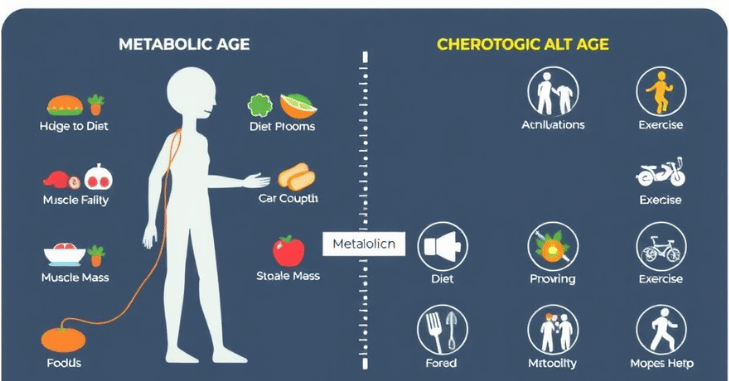
That framing matters. A metabolic age of 52 at 45 does not mean your organs are seven years older than they should be. It means the device thinks your resting energy use is lower than average for your age, which in practice usually points to lower muscle mass. That is useful to know, because muscle is something you can build at any age.
How Metabolic Age Is Calculated
There are two steps, and both rely on estimates rather than direct measurement.
Step 1: Estimate BMR
Body composition scales send a small, harmless electrical current through the body, usually from the feet (and on some models the hands as well). Muscle holds more water than fat, so it conducts electricity more easily, and the device uses the resistance it measures to estimate how much of your weight is fat-free mass. It then combines that estimate with the height, age and sex you enter, plus your measured weight, to calculate BMR.
Without a scale, you can work out a rough BMR from a standard formula. The widely used Mifflin-St Jeor equation is:
- Men: (10 x weight in kg) + (6.25 x height in cm) minus (5 x age) + 5
- Women: (10 x weight in kg) + (6.25 x height in cm) minus (5 x age) minus 161
For example, a 40-year-old woman who is 165 cm tall and weighs 70 kg would have an estimated BMR of 700 + 1,031 minus 200 minus 161, or about 1,370 calories a day. This formula has no idea how much of your weight is muscle, which is exactly the gap a body composition scale tries to fill. Two people with identical height, weight and age get the same formula result, even if one lifts weights three times a week and the other rarely leaves the sofa.
Step 2: Compare With Age Averages
The device then compares your estimated BMR with its own reference data for each age group. Manufacturers do not generally publish these tables in full, and they use their own populations and equations, so two brands can give the same person different metabolic ages on the same morning. That is the main reason to pick one device and watch the trend, rather than treating any single reading as precise or comparing your gym’s analyser with your bathroom scale.
How Accurate Is Metabolic Age?
Home BIA scales are sensitive to anything that changes how much water is in your body and where it sits. Hydration, a recent meal, exercise, alcohol, a hot bath and even the time of day can all shift a reading. A measurement taken after a workout or a salty takeaway can differ noticeably from one taken first thing in the morning, and that change has nothing to do with your real body composition.
To get numbers you can actually compare from week to week:
- Weigh at the same time of day, ideally in the morning after using the toilet and before eating or drinking.
- Stand barefoot with clean, dry feet placed squarely on the electrodes.
- Avoid measuring straight after exercise, a sauna, a hot shower or drinking alcohol.
- Keep the scale on a hard, level floor rather than carpet.
- Use the same user profile every time, and update your age when it changes.
- Track a weekly or monthly average rather than reacting to daily swings.
People with a pacemaker or other implanted electronic device, and those who are pregnant, are usually advised by manufacturers not to use BIA scales, so check the instructions before you start.
Common Mistakes When Reading the Number
- Switching devices. Moving from one brand to another can change your metabolic age by several years overnight. Restart your baseline if you change scales.
- Using athlete mode incorrectly. Many scales have an “athlete” setting that uses different equations. Using it when you do not train regularly, or forgetting it when you do, skews the result.
- Chasing a single day. A dramatic drop after a weekend of eating less is mostly water, not new muscle.
- Ignoring the other numbers. Waist size, strength and fitness tell you far more together than metabolic age alone.
Metabolic Age vs Other Health Markers

Metabolic age works best alongside simpler, better-established measures. The NHS suggests that, for most adults, keeping your waist measurement to less than half your height is a healthy target, and waist size is a useful sign of visceral fat stored around the organs. A tape measure costs a couple of pounds and is often a more honest guide than any smart scale.
| Marker | What it tells you | How to get it |
|---|---|---|
| Metabolic age | Estimated resting energy use compared with age groups | BIA scale or gym analyser |
| Waist-to-height ratio | Central fat, linked to heart and diabetes risk | Tape measure |
| Blood pressure | Strain on the heart and blood vessels | Home monitor, pharmacy or GP |
| HbA1c / blood sugar | Longer-term blood glucose control | Blood test via GP or NHS Health Check |
| Fitness | Heart and lung capacity, strength | Simple walking or strength tests over time |
If you are aged 40 to 74 in England and have no existing heart disease, diabetes or kidney disease, you are normally eligible for a free NHS Health Check every five years, which covers several of these markers and gives you a proper conversation with a health professional about your results.
What Causes a Higher Metabolic Age?
- Low muscle mass, often from inactivity, which lowers estimated BMR.
- Higher body fat, particularly around the middle.
- Sedentary routines, such as long hours sitting at a desk or in the car.
- Poor sleep and chronic stress, which can affect appetite, food choices and how active you are.
- Heavy drinking and smoking.
- Repeated crash dieting, which tends to strip muscle along with fat.
- Medical factors, such as an underactive thyroid, which can lower metabolic rate.
Slim people are not automatically in the clear. Someone with a low body weight but little muscle can still get a high reading, a pattern sometimes described as “skinny fat”. Equally, a heavily muscled person can score a younger metabolic age despite a high BMI, which is one reason BMI and metabolic age sometimes disagree.
How to Improve Your Metabolic Age
1. Build and Keep Muscle
Muscle is the lever you have most control over. The UK Chief Medical Officers’ physical activity guidelines recommend strengthening activities on at least two days a week, working all the major muscle groups. That can mean free weights, resistance bands, gym machines, bodyweight exercises such as squats, lunges and press-ups, or heavy gardening and carrying shopping. Progress gradually by adding repetitions, sets or load every week or two, because muscles only adapt when they are asked to do a little more than last time.
A simple starting routine for a beginner is two full-body sessions a week of five or six exercises, two or three sets each, stopping a couple of repetitions short of failure. Twenty-five to forty minutes is enough.
2. Move More Every Day
The same guidelines recommend at least 150 minutes of moderate activity, such as brisk walking or cycling, or 75 minutes of vigorous activity, each week. Breaking up long periods of sitting also helps: stand for phone calls, take the stairs, or set a reminder to walk for a few minutes every hour. Interval training can be efficient if you are short on time, but consistency over months matters far more than intensity in any one session.
3. Eat to Support Muscle and a Healthy Weight
Include a source of protein at each meal (eggs, fish, poultry, beans, lentils, tofu or dairy) to support muscle repair, particularly on training days. Build meals around vegetables, fruit and wholegrains, use unsaturated fats such as olive oil (see our guide to the best olive oils), and cut back on sugary drinks and ultra-processed snacks. Batch cooking makes this far easier on busy weekdays; a slow cooker is handy for high-protein stews, chillies and soups that last several meals.
If you need to lose fat, aim for a modest, steady deficit rather than a drastic cut. Crash diets tend to remove muscle as well as fat, which lowers BMR and can push metabolic age the wrong way even as the scale weight falls.
4. Sleep Well
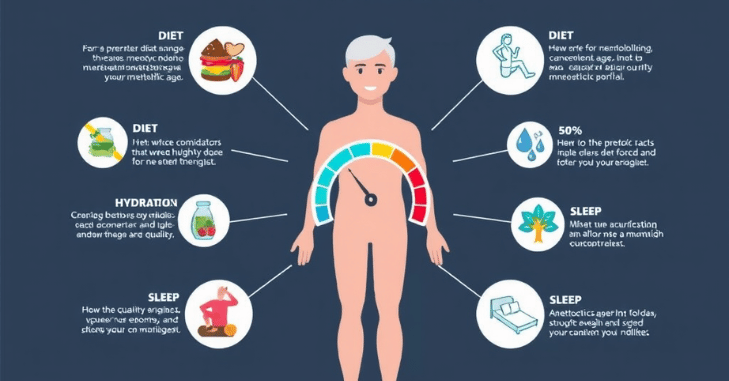
Most adults need roughly seven to nine hours of sleep. Short sleep is linked to increased appetite and makes it harder to recover from training and stay active the next day. A regular bedtime and wake time, a dark and cool bedroom, and less screen time late at night all help.
5. Manage Stress, Alcohol and Smoking
Regular activity, time outdoors and relaxation techniques can all help manage stress. UK guidance advises not regularly drinking more than 14 units of alcohol a week, spread over three or more days. Stopping smoking is one of the best things you can do for your overall health, and free NHS stop smoking support is available through local services and pharmacies.
6. Stay Hydrated
Water supports normal body function, and hydration directly affects BIA readings, so staying consistently hydrated also makes your numbers more reliable. Swapping sugary drinks for water is an easy win; if you live in or visit the capital, our guide on whether you can drink tap water in London covers water quality and safety.
A 12-Week Plan to Move the Number
- Week 1: Take a baseline reading on three mornings under identical conditions and note the average. Measure your waist at the level of your belly button.
- Weeks 1 to 4: Start two full-body strength sessions a week and add a daily brisk walk. Add protein to breakfast if it is currently missing.
- Weeks 5 to 8: Increase load or repetitions on each exercise. Aim for 150 minutes of moderate activity across the week and set a fixed bedtime.
- Weeks 9 to 12: Consider a third strength session or longer walks. Cut back on alcohol and ultra-processed snacks if they are still regular.
- Week 12: Repeat the three-morning reading and the waist measurement. Judge progress on the trend across both, plus how much stronger you feel.
How Long Does It Take to Change?
Because metabolic age depends mostly on body composition, it changes as quickly as muscle and fat do, which is slowly. Many people see a shift over three to six months of consistent training and better eating, but results vary with age, starting point, sleep and genetics. Measure monthly under the same conditions and focus on the direction of travel rather than any one figure.
When to See a GP
A high metabolic age on its own is not a reason to worry. Speak to your GP if you notice unexplained weight gain or loss, persistent tiredness, feeling cold all the time, excessive thirst or passing urine often, as these can point to conditions such as thyroid problems or diabetes that need proper testing rather than a scale reading.
Frequently Asked Questions
What is a good metabolic age?
A metabolic age equal to or below your actual age is generally seen as a good result. The trend over time on the same device matters more than any single reading, so focus on whether the number is stable or falling.
Is metabolic age accurate?
It is an estimate. Readings depend on the device’s own formula and on hydration, food and exercise, so different scales can give different results for the same person on the same day.
What is the fastest way to lower metabolic age?
Strength training at least twice a week, enough protein, regular daily activity and gradual loss of excess fat. There is no quick fix, and crash diets can make it worse by reducing muscle.
Can a thin person have a high metabolic age?
Yes. A person with low body weight but little muscle can have a lower estimated BMR and therefore a higher metabolic age than their real age.
How do I measure my metabolic age?
Use a body composition scale that reports it, or an analyser at a gym, pharmacy or clinic. Measure at the same time of day under the same conditions each time so the readings are comparable.
Does metabolic age affect life expectancy?
Metabolic age is not a validated predictor of life expectancy. The habits that lower it, such as strength training, regular activity and a healthy waist size, are linked to better long-term health.
Bottom Line on Metabolic Age
Treat metabolic age as a rough progress gauge for your muscle-to-fat balance, not a verdict on your health. Pick one scale, measure under the same conditions, pair it with a tape measure and an NHS Health Check where eligible, and put your effort into twice-weekly strength training, daily movement, protein at every meal and good sleep. If those habits are in place, the number usually follows.
This article is general information, not medical advice. Speak to your GP or a qualified health professional about your own health.