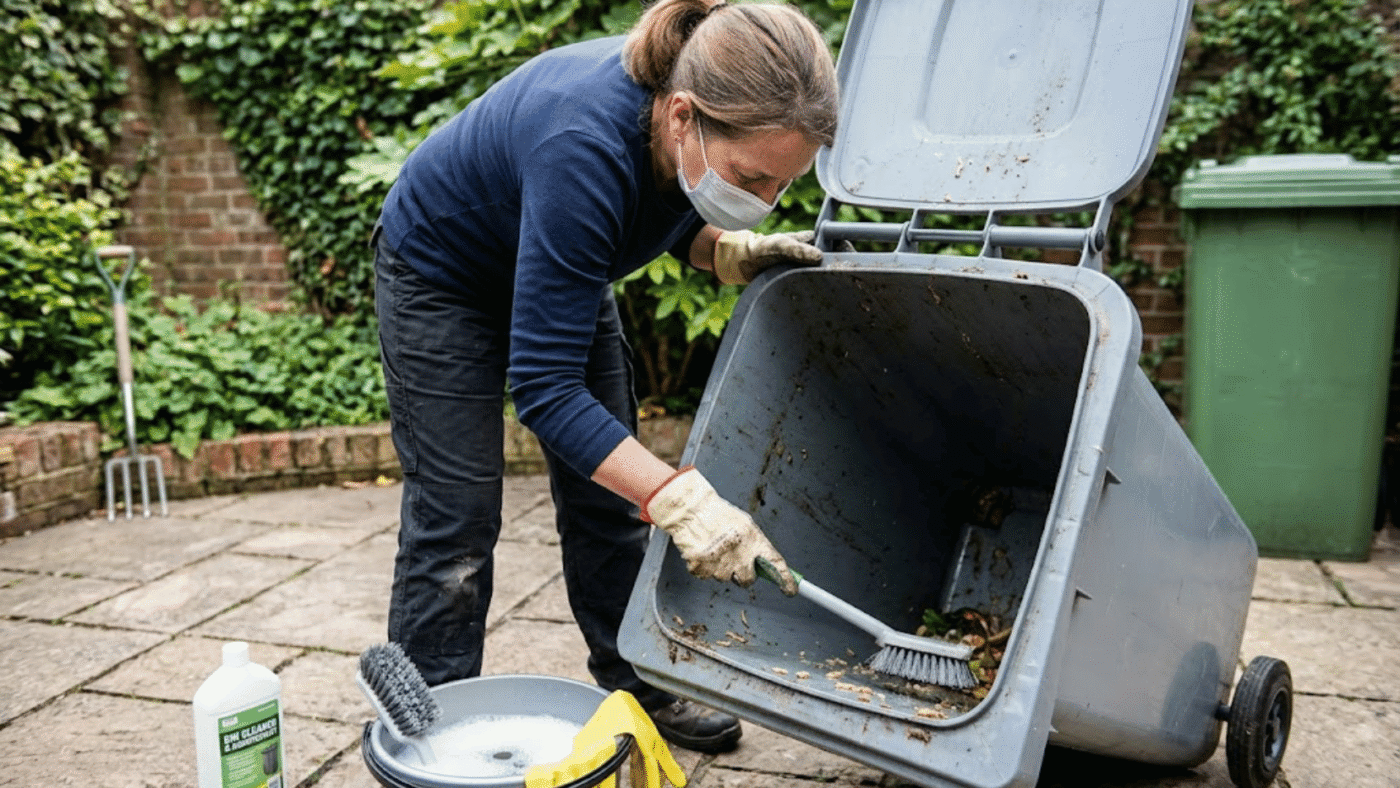
Finding maggots in bin waste is unpleasant, but the problem is usually straightforward to solve. They appear when flies reach food or other organic waste and lay eggs. Removing them, cleaning the container, and blocking future fly access can usually stop the cycle.
Direct answer: Remove accessible waste, then kill remaining maggots with boiling water or a suitable household product, following the label instructions. Clean the empty bin thoroughly and let it dry. Keep food waste securely wrapped, close the lid fully, and store the bin away from direct sunlight where possible.
| Quick guide | What to do |
|---|---|
| Why maggots appear | Flies have reached food or other suitable waste |
| Fast first step | Wait for collection or remove safely accessible waste |
| Killing remaining larvae | Use boiling water or a suitable labelled cleaning product |
| Cleaning afterwards | Wash the empty bin and remove food residue |
| Main prevention method | Stop flies reaching exposed waste |
| Hot-weather precaution | Keep the bin shaded and tightly closed |
| Important safety point | Never mix bleach with vinegar or other cleaners |
Why Do Maggots Appear in Household Bins?
Maggots are the larval stage of flies, so they don’t come from the rubbish itself. Adult flies are attracted to food residue, meat, fish, nappies, and other decomposing material. They can lay eggs when suitable waste is exposed.
Warm conditions can speed up the process considerably. Several UK councils warn that fly eggs can hatch within about 24 hours during suitable weather. This explains why a clean-looking bin can develop a problem surprisingly quickly.
A longer gap between collections is not always the main cause. Flies only need access to suitable waste for the cycle to begin. Preventing that access is more effective than focusing solely on collection frequency.
What to Do About Maggots in Bin Waste
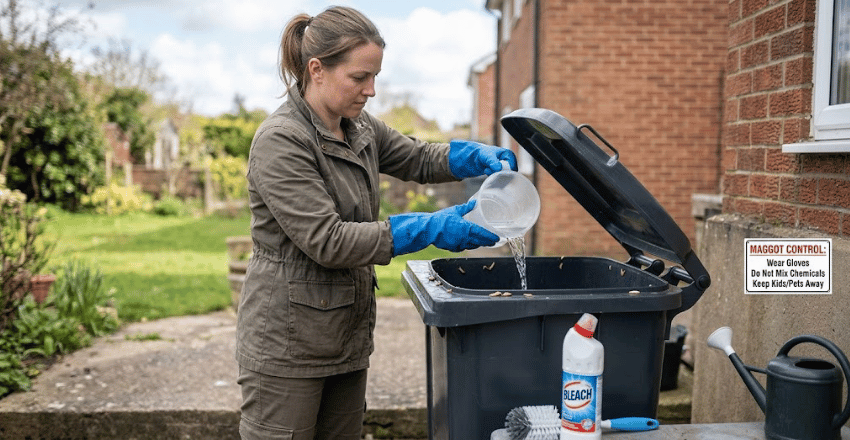
The safest approach is to deal with the waste first, then clean the container. Avoid reaching into a heavily contaminated bin with bare hands. Keep children and pets away while you deal with the problem.
If collection day is close, allowing the bin to be emptied may be the simplest option. UK council guidance notes that most larvae leave when the bin is collected. You can then clean the empty container more thoroughly.
If you need to address the infestation sooner, use a method suited to your bin and circumstances. Do not mix several household chemicals in hopes they will work faster. Chemical mixtures can create much more serious risks than the insects themselves.
1. Keep the Bin Closed Until You Are Ready
Close the lid properly to keep more flies out. Moving an open bin can also spread odours and attract further insects. Prepare your cleaning supplies before opening it again.
Wear household gloves if you will touch the bin or contaminated bags. Avoid direct contact with waste, leaking liquids, or cleaning chemicals. Wash your hands thoroughly when you’re finished.
2. Remove or Secure Exposed Waste
Tie any loose rubbish securely if you can reach it without unnecessary contact. Contain food waste rather than leaving it exposed inside the wheelie bin. Damaged bags may need a new bag.
Do not overfill the container until the lid stays partly open. A small gap can give flies easy access to food waste. It can also allow odours to escape and attract more insects.
3. Kill Remaining Maggots
Several UK councils recommend boiling water for larvae left inside an emptied bin. Use it carefully, as hot water can cause serious burns. Check that your container can tolerate the treatment before using large quantities.
Some councils also mention suitable disinfectants or insect-control products. Always follow the manufacturer’s directions and safety warnings. More product does not automatically produce a better result.
Salt is also mentioned in some council guidance as an option for killing larvae. It can help if you want to avoid stronger chemicals. You will still need to clean away residue and contaminated material afterwards.
4. Wash the Bin Thoroughly
Cleaning matters because food residue can continue attracting flies after the visible larvae disappear. Focus on the base, corners, lid, rim, and any grooves holding liquid. Warm water and a suitable cleaner can remove remaining grime.
Readox’s White Vinegar for Cleaning guide explains where vinegar can be appropriate around the home. Vinegar should never be combined with household bleach. GOV.UK warns that mixing acidic products with sodium hypochlorite can release chlorine gas.
The same principle applies to other cleaning products. Use one suitable treatment at a time unless the label explicitly says otherwise. Following the manufacturer’s instructions is safer than mixing homemade chemical solutions.
5. Let the Container Dry
Leave the cleaned bin to drain and dry where this can be done safely. Removing standing liquid helps reduce lingering smells and dirty residue. Replace the lid once the container is ready for normal use.
Check the area around the bin while it dries. Leaking bags can leave food residue on paving, walls, or storage areas. Cleaning those spills can reduce the chance of flies returning immediately.
How to Stop Maggots Coming Back
Prevention depends mainly on denying flies access to suitable material. A closed wheelie bin alone may not be enough when bags leak, or food is already exposed. The waste inside also needs to be handled sensibly.
UK council guidance consistently recommends tying rubbish bags securely. Food scraps, pet waste, and nappies need particular care because they can attract flies. Double wrapping especially unpleasant waste may help during warm periods.
Seal Food Waste Properly
Put food waste into an appropriate bag, liner, or food-waste container promptly. Squeeze excess air from general rubbish bags before tying them securely. This can also reduce odours from decomposing waste.
Meat, fish, dairy residue, and pet food deserve extra attention. Do not leave them uncovered in the kitchen before disposal. Flies can lay eggs on food before it ever reaches the outdoor bin.
Where your council provides a separate food-waste service, follow its local instructions. Collection systems differ between UK authorities, including accepted liners and containers. Your council’s rules should take priority over general advice.
Keep the Lid Fully Shut
A lid that cannot close is one of the easiest entry points for flies. Avoid packing waste above the bin’s normal capacity. Use the correct local arrangements for excess rubbish rather than balancing bags on top.
Check whether the lid or hinge is damaged if it keeps opening. Report communal bins to the landlord, managing agent, or local authority if they need repair. A functioning lid makes prevention much easier.
Store the Bin in Shade
Direct sunlight can heat the contents and increase smells from decomposing food. Several councils advise keeping bins out of strong sunlight where practical. A cooler location can make the container less attractive to flies.
Shade does not replace good waste handling. Flies can still reach exposed rubbish in a cool area. Combine sensible placement with sealed bags and a properly closed lid.
Rinse Food Containers Before Disposal
Food left on tins, bottles, trays, or jars can also attract flies. Follow your council’s recycling instructions when preparing packaging. A quick rinse may reduce residue where local rules allow it.
Keeping recycling cleaner also reduces unpleasant smells around storage areas. This is especially helpful when collections are less frequent during warm weather. Avoid wasting excessive water for containers that only need a light rinse.
Should You Use Bleach, Vinegar or Disinfectant?
Cleaning products can help, but they need careful handling. Bleach-based products may suit some containers when their labels allow it. Disinfectants can also help remove contamination after the waste has gone.
Vinegar is sometimes suggested as an alternative household cleaner. Readox’s cleaning guidance explains that acidic cleaners are not suitable for every material. Test suitability before using any cleaner on a surface you are unsure about.
Never mix vinegar with bleach. GOV.UK states that acidic solutions can react with sodium hypochlorite and release chlorine gas. Never mix bleach with ammonia-based products either.
Readox’s Sugar Soap guide makes a similar broader point about cleaning products. The product label should determine its safe uses and dilution. Stronger cleaning is not automatically safer or more effective.
Are Maggots in a Bin Dangerous?
Several UK councils describe bin maggots as unpleasant rather than a direct health problem. The more practical hygiene concern is the waste and the flies it attracts. Both can transfer contamination onto hands or nearby surfaces.
Avoid handling decomposing rubbish without suitable protection. Wash your hands after touching bins, waste bags, or cleaning equipment. Clean any contaminated household surfaces separately from the outdoor bin.
Take extra care around children and pets during treatment. Keep cleaning products stored securely after use. Follow medical or product advice if accidental chemical exposure occurs.
What If Maggots Are Still There After Collection?
A few larvae may remain in corners or beneath the rim after the bin is emptied. Wash those areas carefully and remove any stuck food residue. Check beneath the lid and around hinges where dirt can collect.
Repeated infestations usually mean flies still have access to a food source. Look for split rubbish bags, an overflowing lid, dirty recycling, or exposed pet food. Fixing that source is more useful than repeatedly treating larvae.
Persistent fly activity may also come from somewhere beyond the wheelie bin. Check outdoor food spills, pet waste, compost areas, and nearby rubbish. A professional pest-control service may be appropriate for a wider or unexplained infestation.
A Simple Routine for Warmer UK Weather
A small routine can prevent most summer bin problems. Tie food waste securely each time you dispose of it. Check that the wheelie-bin lid closes completely afterwards.
Wipe spills before they dry onto the sides or bottom. Give the container a fuller clean after collection whenever residue starts building up. Keeping the bin shaded can provide another useful layer of prevention.
For larger household clear-outs, don’t pack ordinary bins beyond capacity. Readox’s Solutions for When the Trash Piles Up covers sensible ways to manage larger waste volumes. Keeping waste controlled also makes pest prevention easier.
Frequently Asked Questions
Why did I suddenly get maggots in my bin waste?
Flies have probably reached food or another suitable organic material and laid eggs. Warm weather can speed up egg development. Check for loose food, leaking bags, or a lid that does not close.
Will the council still empty a bin containing maggots?
Policies vary between councils, so check your local authority’s collection rules. Several councils say they can still empty affected bins normally. Most larvae are usually removed with the waste during collection.
Does boiling water kill maggots?
Several UK councils recommend boiling water for remaining larvae in an appropriate empty bin. Use it cautiously to avoid burns and splashing. Always consider the container’s material and condition first.
Can I pour bleach and vinegar into the bin together?
No, you should never mix bleach with vinegar. The acid can react with sodium hypochlorite and release dangerous chlorine gas. Use cleaning products separately and follow their labels.
Why do maggots keep returning?
Flies are probably still gaining access to suitable waste. Check food bags, nappies, pet waste, dirty recycling, and the bin lid. Removing the source and blocking fly access usually matters more than repeated treatment.
Can I prevent maggots without using chemicals?
Yes, prevention mainly depends on waste handling, not chemicals. Seal food securely, close the lid, clean spills, and keep the container shaded. Regularly clean the bin after collection to make it less attractive to flies.
Keep the Problem From Starting Again
It’s easier to prevent a maggot problem once you understand why it happens. Keep flies away from food waste, tie bags securely, and close the bin after every use. Clean residues after collections instead of waiting for smells to develop.
Treat chemicals cautiously when cleaning the container. Never combine products unless the manufacturer specifically instructs you to do so. Good waste handling usually provides the strongest long-term defence against flies and larvae.
If you’re dealing with other household cleaning problems, Readox’s White Vinegar for Cleaning and Sugar Soap guides offer further UK-focused advice. The wider Home Improvement section also covers practical cleaning and maintenance topics for everyday homes.