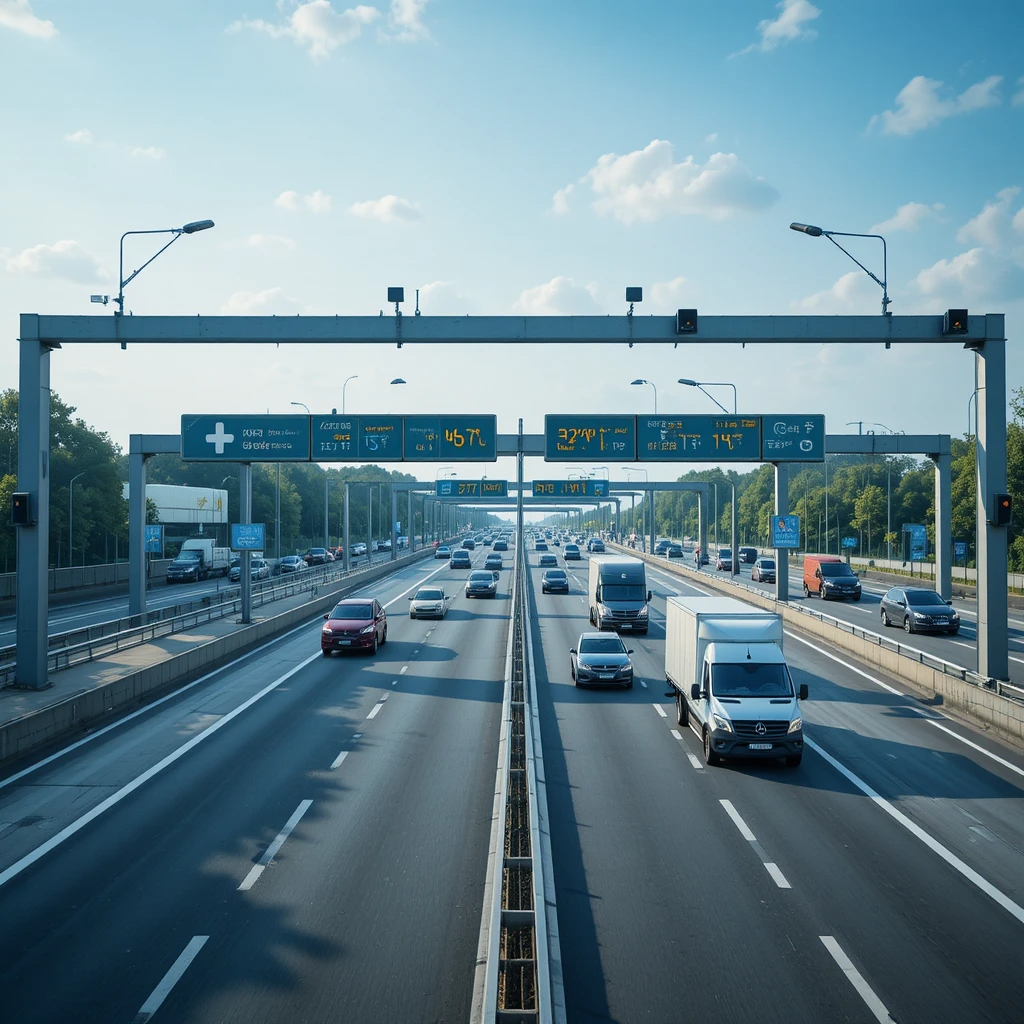
Digital road access systems replace paper vignette stickers and toll booths with an electronic record linked to your number plate. You buy access online, the authority stores it in a central database, and cameras along the motorway check your plate against that record automatically. For drivers, the practical consequence is simple: if the plate entered when you bought the permit is wrong, the system treats you as unpaid.
This shift is part of a wider move towards digital infrastructure in public services across Europe. Below we explain how these systems work, which models countries use, what can go wrong, and how drivers from the UK can plan a continental road trip without unexpected penalties.
From Stickers to Databases: How Road Access Has Changed
For decades, motorway access in many central European countries depended on a physical sticker on the windscreen. Enforcement meant officers spotting cars without one, often at border crossings or roadside checks. Over the past decade, much of that has moved online.
In an electronic system, the permit is no longer an object. It is a database entry tied to a vehicle registration number, a country of registration and a validity period. Cameras positioned along motorways, either fixed gantries or mobile units, read plates and query the database in real time. Routine traffic stops become unnecessary, and the administration of printing, distributing and selling stickers largely disappears.
| Feature | Traditional sticker vignette | Electronic vignette |
|---|---|---|
| How you buy it | Petrol stations, border shops, post offices | Online or at sales points, linked to your plate |
| Proof of purchase | Sticker on the windscreen | Database record, plus a receipt |
| Enforcement | Visual checks by officers | Automatic number plate recognition cameras |
| Changing vehicle | New sticker needed | Depends on national rules, often not transferable |
| Common errors | Sticker not fixed properly, wrong year | Mistyped plate, wrong country or start date |
The Main Models of Motorway Charging in Europe
Not every country uses the same approach. Broadly, European road charging falls into three groups:
- Time-based vignettes: you pay for a period of access regardless of distance. Several central European countries use this model, including Czechia, Austria, Slovakia, Hungary and Slovenia, and electronic versions have replaced or supplemented stickers in many of them.
- Distance-based tolls: you pay per journey or per kilometre, collected at toll plazas or electronically. France, Italy and Spain are familiar examples for UK drivers.
- Free-flow tolling: there are no barriers. Cameras record your plate and you pay online afterwards or through a registered account. The UK’s Dartford Crossing works this way.
EU rules have also been moving heavy goods vehicle charging away from time-based vignettes towards distance-based charging, reflecting a broader push to link road costs more closely to actual use and emissions.
Short-Term Mobility and Flexible Access
Modern travel patterns vary widely. Some drivers need motorway access only for a single transit journey, perhaps crossing one country on the way to another. Others cross borders every week for work or logistics. A well-designed system has to serve both without creating unnecessary cost or paperwork.
For short trips, a time-limited road vignette lets drivers buy authorisation that matches the length of their journey, from a short stay to a full year. The system then evaluates whether a vehicle is authorised automatically, based on the validity period recorded for its plate.
From a technology standpoint, this resembles subscription-based access to software: rights are granted for a defined timeframe, and the system validates them in real time each time a check takes place. There is no grace for intent. Either the record exists and is valid at the moment the camera reads the plate, or it does not.
Choosing the right duration
- Map your route and note every country where you will use motorways or expressways.
- Count the days you will actually be on those roads, not the length of the whole holiday.
- Compare the available validity periods for each country and pick the shortest one that safely covers your dates.
- Check whether the validity counts from a chosen start date or covers fixed calendar days, as this differs between systems.
- If your plans may change, consider a slightly longer option rather than risking a gap.
Automation, Data Integrity and Compliance
The efficiency of electronic access systems depends on accurate data. Because enforcement is automated, the system does not interpret context or intent. It simply checks whether the registration number matches an active authorisation at the moment of detection.
This makes small errors costly. A mistyped character, a missing letter, the wrong country of registration or a start date set for the following day can all lead to a recorded violation. Plates with characters that look alike, such as O and 0 or I and 1, are a frequent source of trouble.
This strictness mirrors good practice in enterprise IT, where authentication works only on the parameters stored in the system. The upside is consistency and speed; the downside is that the responsibility for accuracy sits with the person entering the data.
Pre-purchase checklist for drivers
- Copy the plate exactly as it appears on the vehicle registration document.
- Select the correct country of registration, especially for hire cars registered abroad.
- Set the start date and time to cover the moment you join the motorway.
- Save the confirmation email or receipt and keep it accessible during the trip.
- Buy from the official national channel or a clearly identified authorised seller, and compare any service fees before paying.
What UK Drivers Should Know
Many UK motorists first meet digital road charging at home without realising it. The Dartford Crossing uses number plate recognition with no barriers, and drivers pay online. London’s congestion and emission charges work in a similar camera-based way. Continental e-vignettes follow the same principle, but with an important difference: you usually need to pay before you drive on the road, not afterwards.
If you are taking your own car to Europe, you also need to think about your UK sticker or UK identifier on the number plate, insurance cover abroad and the specific equipment rules of each country you pass through. Rental cars can complicate matters further, because a car hired in one country may already have a vignette for that country but not for its neighbours. Always check with the rental company rather than assuming.
Infrastructure Transparency and Information Sources
As digital infrastructure grows more sophisticated, clear information becomes just as important as the technology itself. Drivers planning international journeys benefit from understanding both the rules and the logic behind automated checks, so they know what the camera is actually verifying.
One useful reference for structured information on motorway authorisation formats and duration options in Czechia is dalnicniznamka.cz, which explains how the electronic system manages road access and which validity periods are available. For any country, it is sensible to cross-check details against the official national road authority before you set off, since prices and rules can change.
The Broader Picture: Digital Infrastructure in Public Services
Electronic road authorisation is one part of a much wider digitisation of public infrastructure. Central databases, automated validation and scalable monitoring are becoming standard across transport, from low-emission zones to parking enforcement and public transport ticketing.
The benefits for authorities are clear: lower administrative cost, fewer manual checks, better data on traffic flows and faster enforcement. For drivers, the benefits are convenience and speed, since you can buy access from your phone before leaving home. The trade-offs involve privacy, as plate data is collected continuously, and fairness, because automated systems are less forgiving of honest mistakes. Most systems offer an appeal or correction process, but it is far easier to get the data right first time.
Bottom Line
Digital road access systems have made European motorway travel quicker to arrange and easier to enforce. The technology is straightforward: your plate is your permit. Before any cross-border drive, check which countries use time-based vignettes, buy the right duration through an official channel, and double-check the plate, country and start date. Those few minutes of care are what keep an automated system working in your favour.
Frequently Asked Questions
What is an electronic road vignette?
An electronic road vignette is a motorway access permit stored in a database and linked to your number plate rather than printed as a sticker. Cameras read your plate and check it against the database to confirm you have paid.
How do cameras check if I have paid?
Automatic number plate recognition cameras read the plate of passing vehicles and query the central database. If an active authorisation exists for that plate at that moment, nothing happens; if not, a violation may be recorded.
What happens if I enter my number plate incorrectly?
The system will not recognise your vehicle as authorised, which can lead to a fine. If you spot a mistake, contact the official operator straight away, as many systems have a correction or appeal process.
Do UK drivers need a vignette to drive in Europe?
It depends on the country. Several central European countries require a vignette for motorways, while others such as France, Italy and Spain mainly charge tolls by distance. Check the rules for every country on your route before travelling.
Can I use one e-vignette for different cars?
Usually not, because the permit is tied to a specific registration number. Rules vary by country, so check whether changing the plate is allowed before buying if you might switch vehicles.
Where should I buy an electronic vignette?
Buy through the official national channel or a clearly identified authorised seller. Compare any service fees and keep your confirmation in case you need to prove payment later.