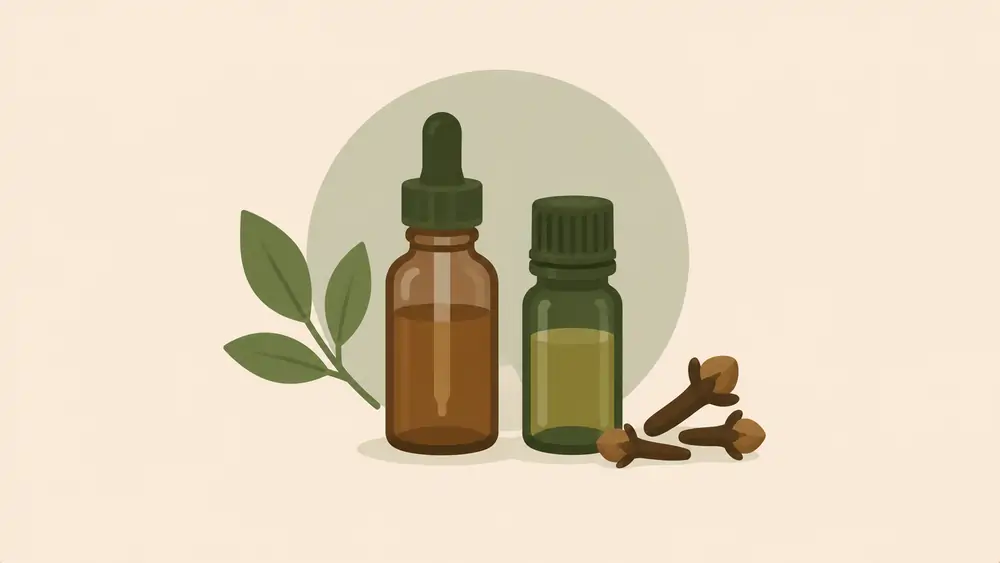
Clove tincture and clove oil are not the same product and should never be swapped for each other. A clove tincture is a diluted liquid herbal extract made by soaking clove in a solvent such as alcohol, glycerin or water, and is used in measured servings. Clove oil is a concentrated essential oil, usually steam-distilled and very rich in eugenol, so a single drop is far stronger than a drop of tincture.
Both come from the same plant, both smell strongly of clove and both are sold in small dropper bottles, which is exactly why people confuse them. A clove tincture is a liquid herbal supplement intended for label-directed use, whereas clove essential oil belongs to a different category with a very different safety profile. This guide explains the difference, how to tell them apart on the label and the mistakes to avoid.
This article is general information, not medical advice. Clove products are not intended to diagnose, treat, cure or prevent any condition. If you are pregnant or breastfeeding, under 18, taking medication, preparing for surgery or managing a health condition, speak to a GP or pharmacist before using any clove product.
Clove Tincture vs Clove Oil: Quick Comparison
| Feature | Clove tincture | Clove oil |
|---|---|---|
| Product category | Liquid herbal extract or supplement | Essential oil |
| How it is made | Clove soaked in alcohol, glycerin, water or a mix | Usually steam distillation of clove buds, leaves or stems |
| Base | Mostly solvent with dissolved plant compounds | Almost entirely volatile oil |
| Eugenol level | Relatively low, varies with extract strength | Very high; eugenol is the main component |
| Typical use | Measured drops or droppers as directed on the label | Aroma, diluted topical use or formulation, depending on the label |
| Taken internally? | Only as directed on the product label | Not without product-specific professional advice |
| Main mistake | Assuming all clove liquids are equivalent | Using it as if it were a tincture |
Is Clove Tincture the Same as Clove Oil?
No. The two products share a plant name but differ in how they are made, how concentrated they are and how they are meant to be used.
A clove tincture extracts some of clove’s compounds into a liquid base. Most of what is in the bottle is that base, so the clove compounds are spread through a much larger volume. Serving sizes are set by the manufacturer and printed on the label.
Clove oil is the concentrated aromatic fraction of the plant. Distillation pulls out the volatile oil and leaves the rest of the plant material behind, so what remains is essentially pure aromatic compounds. That is why essential oils are typically measured in drops and diluted before any contact with skin.
Why the Same Plant Name Misleads Buyers
Clove comes from the dried flower buds of Syzygium aromaticum. That name can appear on spice jars, teas, capsules, tinctures, liquid extracts, dental products, fragrance materials and essential oils. The botanical name confirms the plant, but it says nothing about the format or strength of the product.
A useful habit is to read every clove label in two steps:
- What plant is this? Look for Syzygium aromaticum to confirm it is clove.
- What form is this? Look for words such as tincture, extract, supplement, essential oil, bud oil or steam-distilled. This second answer matters far more for how you use it.
What Is Clove Tincture?
A clove tincture is made by steeping clove plant material in a solvent for a period of time, then straining it. The solvent might be alcohol (the traditional choice), glycerin (used in alcohol-free “glycerites”), water or a combination.
Tinctures vary in strength. Some labels give an extract ratio, such as 1:2 or 1:5, which describes how much plant material was used relative to the finished liquid. A lower second number generally means a stronger extract. Not every product lists a ratio, so compare serving sizes and suggested use instead.
A good tincture label should tell you:
- The plant part used, such as clove bud.
- The solvent base and, for alcohol tinctures, the alcohol content.
- The serving size in drops or millilitres.
- How often to use it and any maximum daily amount.
- Whether it is a single-herb tincture or a blend with other herbs.
- Warnings and who should not use it.
Even though tinctures are much less concentrated than essential oils, they still need care. Clove has a strong, warming taste, alcohol-based tinctures contain alcohol, and combining several clove products can add up to more than you intended.
What Is Clove Oil?
Clove oil is an essential oil, most commonly produced by steam distillation of clove buds. Oils can also be distilled from clove leaves or stems, and these grades can differ in composition, so it helps to know which part was used.
The defining feature of clove oil is its high eugenol content. Eugenol is usually the dominant component, making up the large majority of a typical clove bud oil. That gives the oil its sharp, medicinal smell and its numbing, warming sensation on contact, and it is also the main reason the oil needs careful handling.
Clove oil is not a food spice and not a tincture. Used undiluted or in the wrong way, it can irritate skin, gums and other sensitive tissues. Swallowing it is particularly risky, and the US National Center for Complementary and Integrative Health notes that clove oil ingestion has caused serious harm, especially in young children.
Why Eugenol Concentration Matters
The key difference between these products is not the plant but the dose of active aromatic compounds each one delivers.
| Clove form | Relative eugenol exposure | Notes |
|---|---|---|
| Ground or whole clove in food | Low | Small culinary amounts, mixed with food |
| Clove tea | Low | Water extracts a limited fraction |
| Clove tincture | Low to moderate | Depends on extract strength and serving |
| Clove oil, diluted | Moderate to high | Depends on dilution percentage |
| Clove oil, undiluted | Very high | Concentrated volatile oil |
That is why “it is only one drop” is not a reliable safety argument. One drop of essential oil can contain far more eugenol than one drop of tincture, or even a whole serving of tincture.
Why a Drop of Oil Is Not Like a Drop of Tincture
A drop of tincture is mostly solvent with a small amount of dissolved plant compounds. A drop of essential oil is concentrated oil. The drops look similar in size, but the contents are not comparable.
This is one of the most common clove mistakes: someone runs out of a tincture, finds a bottle of clove oil in the cupboard and assumes a few drops will do the same job. They will not, and the risks are very different. Never replace a tincture serving with essential oil drops, and do not add clove oil to water, tea, capsules or a tincture routine unless a qualified professional has given you product-specific advice.
How Labels Reveal the Difference
| Label clue | Likely tincture | Likely essential oil |
|---|---|---|
| Ingredients | Clove bud extract plus alcohol, glycerin or water | Clove bud oil or Syzygium aromaticum oil only |
| Production words | Extract, tincture, glycerite | Essential oil, steam-distilled, volatile oil |
| Directions | Drops or droppers per serving, as a supplement | Dilution guidance, aroma or external-use wording |
| Texture | Thin, watery or syrupy liquid | Oily, highly aromatic liquid |
| Warnings | Supplement-style cautions | Do not ingest, keep away from eyes, dilute before use |
If a bottle gives dilution percentages for skin, mentions diffusers or says “for external use only”, it is an essential oil product, whatever the front label suggests.
Why “Food Grade” Does Not Make Clove Oil a Tincture
Some clove oils are labelled food grade, culinary or flavour grade. That wording reflects use in commercial flavouring, where tiny, controlled amounts are blended into large batches of food. It does not mean the oil is meant to be self-dosed as a supplement.
If the bottle contains essential oil, treat it as essential oil. A food-related label does not turn it into a tincture or make internal use safe without professional guidance.
Clove Spice Is a Different Category Again
Whole and ground cloves used in cooking are another separate category. A pinch of ground clove in a curry, mulled wine or Christmas baking delivers a small amount of clove compounds mixed through food.
Being comfortable eating cloves does not mean concentrated extracts or oils can be used freely. Each format of clove, whether spice, tea, tincture or essential oil, needs to be judged on its own terms.
Using Clove Tincture Responsibly
Tinctures are the gentler of the two products, but sensible use still matters:
- Follow the label serving. Use the stated number of drops or droppers and do not exceed the daily maximum.
- Dilute as directed. Many tinctures are taken in a little water rather than neat.
- Avoid overlap. Do not stack a clove tincture with clove capsules, teas or blends that also contain clove without checking the total.
- Check the base. If you avoid alcohol, look for a glycerin-based product.
- Stop if you react. Mouth irritation, stomach upset or a rash are signs to stop and seek advice.
- Ask a pharmacist if you take regular medication, especially blood thinners or diabetes medicines.
Using Clove Oil Safely
If you have clove essential oil at home for aromatic or diluted topical use, keep these points in mind:
- Always dilute for skin use. Use a carrier oil and follow the dilution guidance on the product; clove oil is known as one of the stronger, more irritating essential oils.
- Patch test first on a small area and wait before wider use.
- Keep it away from eyes and mucous membranes.
- Do not apply neat to gums or teeth. For toothache, see a dentist rather than relying on clove oil, which can irritate the soft tissue of the mouth.
- Never swallow it unless a qualified professional has given product-specific guidance.
- Store it securely, with a child-resistant cap, out of reach of children and pets.
Storage and Shelf Life
How you store each product affects both its quality and its safety. Tinctures and essential oils age differently, so it is worth treating them separately.
- Tinctures: alcohol-based tinctures generally keep well when sealed and stored away from heat and light. Glycerin-based extracts tend to have a shorter shelf life. Follow the best-before date on the label and discard any product that smells off, turns cloudy or grows mould.
- Clove oil: essential oils can oxidise over time once opened, especially when exposed to air, light and warmth. Oxidised oils may be more likely to irritate skin, so keep the cap tight and use the oil within the period the manufacturer recommends.
- Both: store in dark glass bottles in a cool cupboard, keep child-resistant caps fully closed, and never decant either product into unlabelled containers or food bottles.
Labelling matters at home too. If you keep both a clove tincture and a clove oil, store them in different places so nobody reaches for the wrong bottle in a hurry.
Who Should Be Extra Careful with Clove Products?
Extra caution applies to:
- Children and teenagers.
- People who are pregnant or breastfeeding.
- Anyone taking blood-thinning medication or with a bleeding disorder, as eugenol may affect blood clotting.
- People preparing for surgery.
- People taking diabetes medication.
- People with liver disease.
- Anyone with sensitive skin, allergies or a chronic health condition.
Clove oil deserves even more caution than tincture for all of these groups because of its concentration. If you are in any of these categories, take the exact product label to a pharmacist or GP before use.
Why Children Need Special Caution
Children are not small adults. Their smaller body size means a small amount of a concentrated oil represents a much larger dose, and accidental swallowing of essential oils is a recognised cause of poisoning in young children.
Keep both tinctures and essential oils locked away. If a child swallows clove oil, or any essential oil, get medical help immediately: in the UK call NHS 111 for advice, or 999 if the child is drowsy, struggling to breathe or having a fit. Take the bottle with you so clinicians can see exactly what was swallowed.
How to Compare a Clove Tincture and Clove Oil Label
Use this checklist before buying or using any clove liquid:
- Product type: does it say tincture, liquid extract, supplement, essential oil, bud oil or steam-distilled?
- Base: is there a solvent such as alcohol, glycerin or water, or is it oil only?
- Botanical name: does it confirm Syzygium aromaticum, and which plant part was used?
- Directions: are they supplement servings, or dilution and external-use instructions?
- Warnings: are there “do not ingest” or “keep away from eyes” cautions?
- Intended use: supplement, topical, aromatic, flavouring or professional-use ingredient?
- Storage: does it have a child-resistant cap and dark glass to protect it from light?
Common Mistakes to Avoid
- Thinking all clove liquids are the same. Tinctures, extracts, essential oils and flavourings are different categories.
- Using essential oil as a tincture substitute. Clove oil is far more concentrated and should never replace a tincture serving.
- Trusting “one drop” logic. A drop of oil can contain much more eugenol than a full tincture serving.
- Applying neat clove oil to gums. This can irritate or damage soft tissue.
- Skipping the intended-use section. The directions tell you which category the product really belongs to.
- Doubling up on clove. Using several clove products at once can add up quickly.
Key Terms Explained
- Syzygium aromaticum: the botanical name for clove.
- Tincture: a liquid herbal extract made by steeping plant material in a solvent.
- Glycerite: an alcohol-free extract that uses glycerin as the solvent.
- Essential oil: a concentrated aromatic oil containing a plant’s volatile compounds.
- Eugenol: the main aromatic compound in clove oil, responsible for its scent and much of its strength.
- Extract ratio: the amount of plant material relative to finished liquid, such as 1:5.
- Carrier oil: a neutral oil, such as almond or jojoba, used to dilute essential oils.
If you are comparing other herbal formats, the same logic applies to lavender tincture vs lavender essential oil.
Bottom Line on Clove Tincture vs Clove Oil
The choice between clove tincture and clove oil is a choice between two different product categories, not two strengths of the same thing. Tinctures are diluted extracts used in label-directed servings; clove oil is a concentrated, eugenol-rich essential oil that needs dilution and should not be swallowed without professional advice. Read the label for the product type, base and directions before you use either, and never substitute one for the other.
FAQs
Is clove tincture the same as clove oil?
No. Clove tincture is a liquid herbal extract made with a solvent such as alcohol, glycerin or water. Clove oil is a concentrated essential oil, usually steam-distilled, that contains far higher levels of eugenol.
Can I use clove oil instead of clove tincture?
No. Clove oil is much more concentrated than a tincture, so a few drops of oil are not equivalent to a tincture serving. Do not substitute one for the other.
Why is clove oil stronger than clove tincture?
Distillation concentrates clove’s volatile compounds, mainly eugenol, into the oil. A tincture spreads a smaller amount of those compounds through a large volume of solvent, so it is much weaker drop for drop.
Can I take clove essential oil internally?
Do not take clove essential oil internally unless a qualified healthcare professional has given you product-specific advice. Swallowing clove oil has caused serious harm, particularly in children.
Is clove tincture safer than clove oil?
Clove tincture is usually far less concentrated, but it still needs to be used as directed on the label. People taking medication, pregnant or breastfeeding, or with health conditions should check with a pharmacist or GP first.
Can I put clove oil on a sore tooth?
Clove oil can irritate the gums and soft tissues of the mouth, especially if used undiluted. Tooth pain usually needs a dentist to find and treat the cause, so book an appointment rather than relying on clove oil.