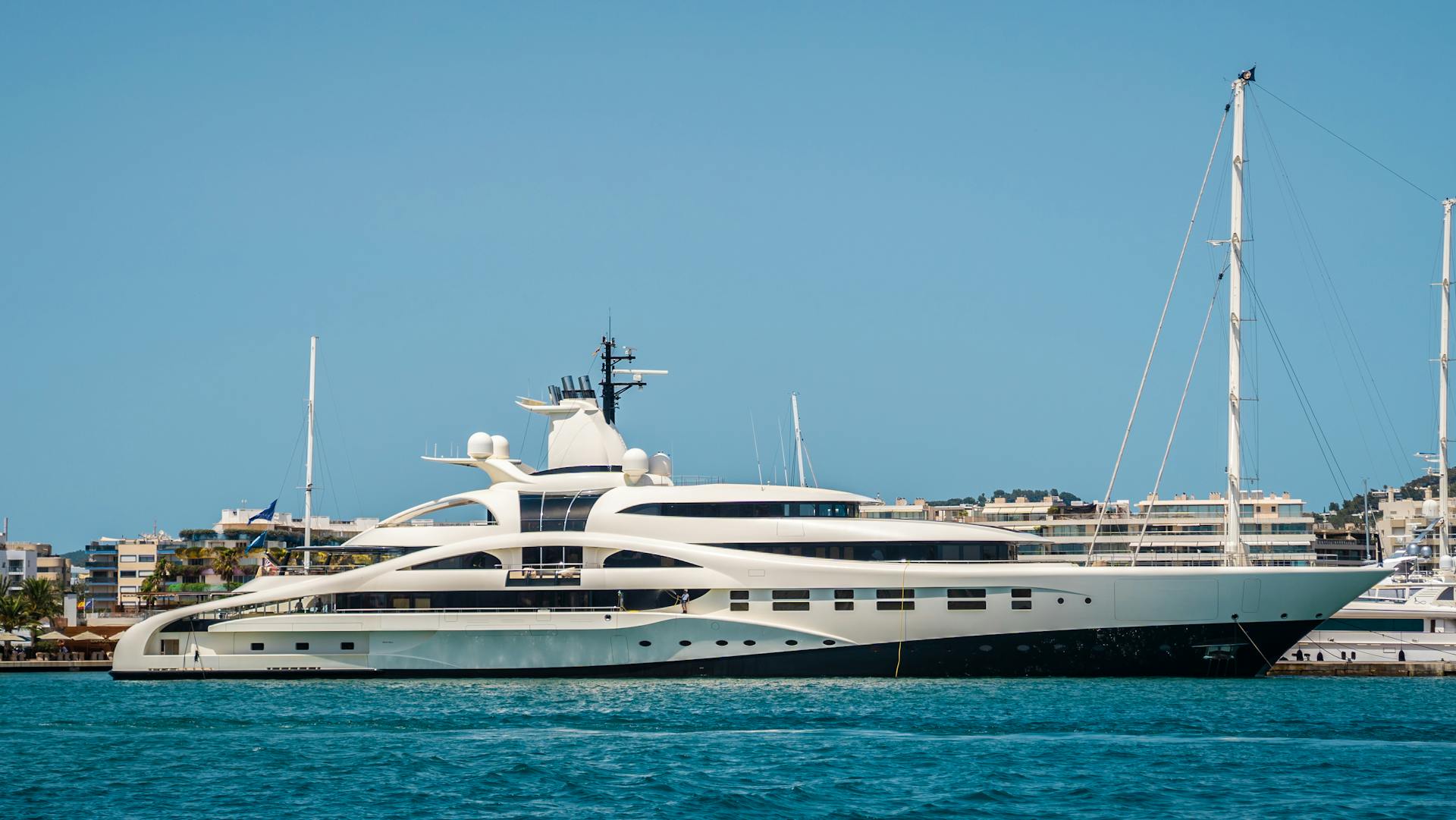
More travellers now charter a superyacht rather than buy one because chartering delivers the same experience (a professional crew, private itineraries and access to the world’s best cruising grounds) without the purchase price, depreciation, crew payroll and year-round running costs of owning a superyacht. A widely quoted industry rule of thumb is that a superyacht costs around 10% of its purchase price every year just to operate, whether or not the owner steps aboard.
For anyone who spends only a few weeks a year on the water, chartering is usually far more cost-effective and flexible. This guide compares the two options side by side, explains how charter pricing really works, and sets out a step-by-step plan for a first charter.
Chartering vs owning a superyacht at a glance
| Factor | Chartering | Owning |
|---|---|---|
| Upfront cost | None beyond the booking | Purchase price, often many millions |
| Annual running costs | None; you pay per trip | Commonly estimated at around 10% of the yacht’s value per year |
| Depreciation | Not your concern | Most yachts lose value over time |
| Crew | Included, managed by the owner and captain | You employ, house and manage them year round |
| Choice of yacht | Different yacht for each trip and group size | One yacht, unless you sell and buy again |
| Destinations | Charter where the yacht is based each season | Go anywhere, but repositioning costs time and fuel |
| Availability | Peak weeks must be booked well ahead | Yours whenever you want it |
| Admin | Minimal | Registration, insurance, berthing, refits, compliance |
The real cost of owning a superyacht
The purchase price is only the beginning. Owning a superyacht means running what is effectively a small business with its own staff, premises and regulatory obligations. Owners pay for:
- Crew: salaries, food, training, insurance and rotation for a captain, engineers, deckhands, stewards and a chef. Larger yachts can carry crews of 20 or more.
- Berthing: marina fees in popular Mediterranean and Caribbean harbours are substantial, especially in summer, and prime berths can be hard to secure at all.
- Maintenance and refits: annual servicing, repainting, and periodic major refits to keep class certification.
- Insurance, fuel and management fees: plus the cost of a management company to handle compliance, accounts and crew contracts.
- Repositioning: moving the yacht between seasons, often across an ocean, which costs fuel, crew time and sometimes shipping.
Many owners charter their yachts out when they are not aboard to offset some of these costs. That is a big reason the charter market exists at all: the yachts you book are often privately owned vessels whose owners would rather they earn income than sit idle in a marina.
The cost of time, not just money
Ownership also takes time. Decisions about refits, crew changes, insurance claims and flag registration land on the owner’s desk, even with a good management company. For busy people, the appeal of chartering is as much about avoiding that workload as about saving money.
Why chartering appeals to modern luxury travellers
Flexibility
Charter guests can choose a different yacht for every trip: a sailing yacht for a relaxed couples’ week, a larger motor yacht with a beach club and water toys for a family holiday, or an expedition-style vessel for remote cruising. Group size, budget and style can change from year to year without selling anything.
Following the seasons
Superyachts follow the weather. The Mediterranean season runs roughly from May to October, with the French Riviera, the Balearics, Italy’s Amalfi Coast and Sardinia, Croatia and the Greek islands among the favourites. In winter, much of the fleet moves to the Caribbean, where the British Virgin Islands, St Barts, Antigua and the Bahamas are popular. Charterers simply book where the yacht will be; owners have to pay to move theirs.
Privacy and service
A crewed charter offers the privacy of a private villa with the ability to move every day. The crew handle navigation, meals, housekeeping and water sports, and a good chef will plan menus around your preferences. Many guests say the crew make or break a charter, which is why crew reputation matters as much as the yacht’s specification.
Experiences over assets
Luxury travel has shifted towards experiences rather than visible ownership. For many high-net-worth travellers, a carefully planned week in a quiet Greek anchorage is more appealing than the responsibilities of a large asset. Much like choosing a motorhome rental for a flexible Costa Blanca road trip rather than buying a campervan, chartering lets you enjoy the lifestyle only when you want it.
How superyacht charter pricing works
Charter prices are usually quoted as a weekly base rate, and headline figures range from tens of thousands to well over a million euros per week for the largest yachts. The base rate is not the total cost. In the Mediterranean, many charters use industry-standard terms where guests also pay the following:
| Cost element | What it covers | Typical guidance |
|---|---|---|
| Base charter fee | Use of the yacht and crew wages | Quoted per week; higher in July and August |
| Advance Provisioning Allowance (APA) | Fuel, food, drinks, marina fees and other running expenses | Often around 30% to 40% of the base rate, paid in advance and reconciled at the end |
| VAT | Tax on the charter | Varies by country and cruising area |
| Crew gratuity | Tip for the crew | Customary, commonly 10% to 20% of the base rate, at the guests’ discretion |
| Delivery fees | Moving the yacht to a different start port | Only if you start away from its base |
Unused APA is refunded, and the captain should provide receipts for every expense. Always ask your broker for a full estimate, including VAT and APA, rather than comparing base rates alone.
How to keep charter costs under control
- Choose the yacht’s home cruising area to avoid delivery fees.
- Consider shoulder-season weeks such as late May, June or September, when rates are often lower and anchorages quieter.
- Plan shorter daily passages, since fuel is usually one of the largest APA costs on a motor yacht.
- Spend some nights at anchor rather than in high-end marinas, which can be expensive in peak season.
- Agree with the captain how you want to track APA spending during the week, so there are no surprises at the end.
How to plan your first superyacht charter
- Use an experienced broker. Specialist firms such as 212 Yachts can match you to suitable yachts, check crew reputations and negotiate terms.
- Decide on dates and region early. Peak summer weeks in the Mediterranean and the Christmas and New Year period in the Caribbean book up many months ahead.
- Agree your group and style. Number of guests and cabins, motor or sail, how much time at anchor versus in port, and the water toys you want.
- Complete a preference sheet. Share dietary needs, favourite foods and drinks, activities and any celebrations so the crew can prepare.
- Plan a realistic itinerary. Build in slower days and let the captain adjust for weather. Trying to see too much means more time under way and less time relaxing.
- Review the contract and insurance. Understand cancellation terms, what happens if weather disrupts plans, and consider appropriate travel insurance.
Before signing, ask the broker for a sample charter contract and a written cost estimate, so you can see exactly how payments, cancellations and weather delays are handled. Reading these documents carefully is the simplest way to avoid disputes later and to compare competing yachts on a fair, like-for-like basis.
Choosing the right type of yacht
| Yacht type | Strengths | Best for |
|---|---|---|
| Motor yacht | More interior space, faster passages, beach clubs and large sun decks | Families, groups, guests who want to cover more ground |
| Sailing yacht | Quieter, traditional feel, gentle wind-led itineraries | Couples and guests who love being on the water |
| Catamaran | Stable, lots of deck space, shallow draught for beaches | Families and Caribbean island-hopping |
| Explorer yacht | Long range, extra storage for tenders and equipment | Remote and adventurous itineraries |
Also check the number of cabins and how beds can be configured, the crew-to-guest ratio, the tenders and water toys included, and whether the yacht has stabilisers that work at anchor. A good broker will present a shortlist that balances these features against your budget and the itinerary you have in mind, and can often arrange a video tour or a meeting with the captain before you commit.
Common first-charter mistakes
- Comparing yachts on base rate alone and being surprised by APA and VAT.
- Packing too many destinations into one week.
- Overlooking the crew’s track record in favour of the yacht’s photos.
- Booking peak weeks too late and having to compromise on the yacht or region.
Safety and comfort on board
Professionally crewed charter yachts operate under maritime safety rules and carry safety equipment for every guest, and the crew will give a safety briefing when you arrive. If you are travelling with children or less confident swimmers, ask about properly fitting life jackets; our guide to the Chelsea life jacket covers what to look for in water safety gear. Mention any seasickness concerns to your broker, as larger yachts and sheltered itineraries can make a big difference.
When owning a superyacht might still make sense
Ownership can suit people who plan to spend many weeks a year aboard, want a yacht built or customised exactly to their taste, or value having it available at short notice. Even then, many owners use charter income and professional management to balance costs. A sensible middle path for anyone considering a purchase is to charter several different yachts first, which shows you what size, layout and crew style you actually enjoy before you commit to buying one.
For most travellers, though, chartering a few weeks a year delivers the superyacht experience with far less financial risk and administration. For more travel ideas, read 7 reasons why Kazakhstan should be your next destination or browse our Travel category.
Frequently asked questions
Is it cheaper to charter or own a superyacht?
For most people, chartering is far cheaper. Owners pay the purchase price plus annual running costs often estimated at around 10% of the yacht’s value, while charterers pay only for the weeks they use.
What is APA on a yacht charter?
APA stands for Advance Provisioning Allowance. It is paid on top of the base rate to cover fuel, food, drinks and port fees, and any unused amount is refunded at the end of the charter.
How much should you tip a yacht crew?
Crew gratuities are customary and commonly range from 10% to 20% of the base charter fee. The amount depends on the service you received and local custom.
When is the best time to charter a superyacht?
The Mediterranean season runs roughly from May to October, and the Caribbean season from December to April. Shoulder months often offer better availability and calmer anchorages.
How far ahead should you book a yacht charter?
For peak summer or festive weeks, booking many months ahead is wise. Shoulder-season and last-minute availability can be found, but the choice of yachts is more limited.
Bottom line
Unless you plan to spend many weeks a year aboard, chartering beats owning a superyacht on cost, flexibility and effort. Work with a reputable broker, budget for the base rate plus APA, VAT and gratuity, and book peak weeks early to get the yacht and crew you want.