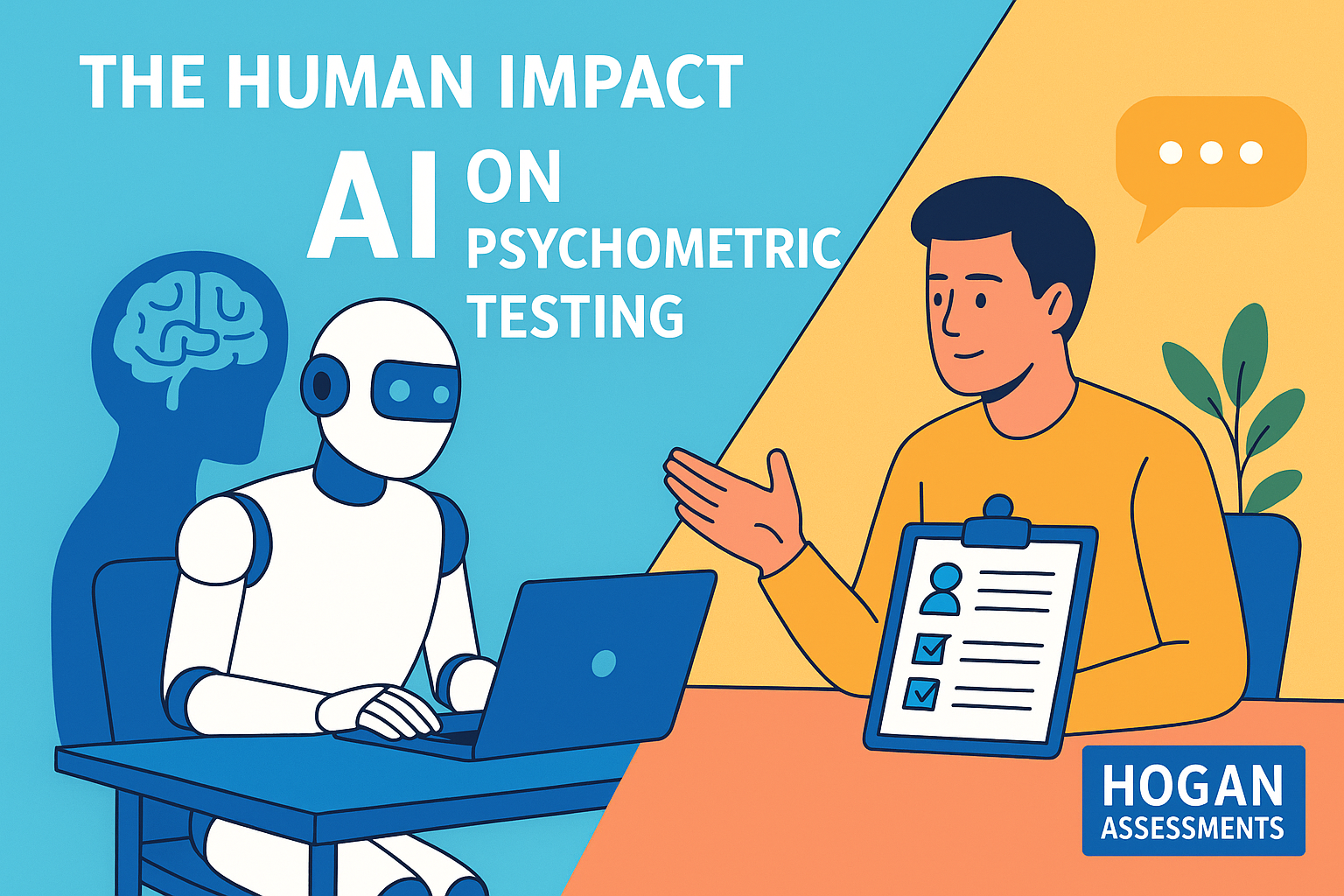
As artificial intelligence continues to transform business landscape, the use of AI in psychometric testing highlights the continuing importance of human judgment. While AI technologies such as ChatGPT are often celebrated for their potential to streamline workflows and enhance efficiency, organizations must approach their integration with caution and discernment.
Innovative as these tools are, they cannot replicate the subtlety and depth of human interaction. Over-reliance on AI for psychometric assessments could compromise the integrity of results and potentially damage the relationships that underpin effective talent management.
The use of tools such as Hogan’s psychometric assessments demonstrates the critical need for careful, personal administration. Mishandling these assessments can undermine their validity, emphasizing why organizations must prioritize thoughtful, human-centered engagement throughout the process.
Navigating the AI Revolution with Care
There is no denying that AI has brought significant advantages to the workplace. From processing large volumes of data to automating routine tasks, AI offers efficiency and scalability that would be difficult to achieve through human effort alone. However, its efficiency in data processing does not equate to proficiency in areas that require emotional insight or personalized interaction. Personality assessments are a prime example of where human involvement remains essential.
AI adoption should be approached as an enhancement to human expertise rather than a replacement. Allison Howell, MS, Vice President of Market Innovation at Hogan Assessments, acknowledges the valuable contributions AI can make in business, but she stresses the unwavering importance of quality and scientific rigor. In personality assessment, the combination of robust methodology and human judgement ensures that evaluations are both accurate and meaningful.
While AI can analyze patterns and generate reports quickly, it lacks the nuanced understanding necessary to fully interpret human behaviour. This is particularly true in scenarios where individuals may respond to assessments in ways influenced by context, stress, or subtle interpersonal dynamics. The human touch in interpretation is critical to ensuring that results are fair, actionable, and ethically sound.
Preserving Human Connection
In any professional setting, the human element is central to effective communication and development. This is especially true when delivering coaching and feedback based on psychometric assessments. While AI can generate generic reports and insights, it cannot replicate the subtleties of face-to-face interaction or the empathetic understanding that human evaluators provide.
Maintaining a human focus in psychometric testing brings several advantages:
- Immediate and Contextual Feedback: In-person discussions enable participants to seek clarification on assessment outcomes in real-time. This immediate exchange ensures understanding and reduces the risk of misinterpretation.
- Emotional Intelligence: Human evaluators can perceive and interpret emotional cues, including hesitation, tone of voice, and body language. These cues often provide critical context for understanding responses that AI cannot fully grasp.
- Customized Feedback: Unlike AI-generated reports, which are necessarily generalized, human-led feedback can be tailored to the individual. This personalized approach increases relevance, enhances engagement, and supports meaningful development.
- Minimizing Misinterpretation: Without personal interaction, there is a higher risk of misunderstandings, which can lead to demotivation or disengagement. Human facilitators can proactively address questions and provide guidance to ensure the assessment experience is constructive.
The human-centered approach also fosters trust and rapport, essential components of any successful coaching or development programmed. These relationships not only support immediate learning but also lay the foundation for sustained personal and professional growth.
Ethical Considerations in AI-Driven Hiring
The use of AI in hiring and talent development introduces ethical challenges. Concerns around privacy, bias, and trust are particularly relevant when AI tools replace human judgement in assessments. Impersonal algorithms can inadvertently perpetuate bias or erode confidence in the fairness of the process.
Hogan’s assessments are built on rigorous psychometric research designed to ensure accuracy and fairness. Their use highlights the necessity of upholding ethical standards, particularly in situations that affect career progression and workplace relationships. Organizations must be mindful that AI alone cannot safeguard against ethical pitfalls. Human oversight is required to interpret results responsibly and ensure that the application of psychometric tools aligns with both scientific standards and organizational values.
The Continued Importance of Human Oversight
Even as AI technologies advance, the role of human oversight in psychometric testing remains crucial. AI can provide data quickly and efficiently, but it cannot replace the discernment, experience, and contextual awareness that trained professionals bring to the evaluation of Hogan Assessments and Hogan Personality Assessments.
Leaders and HR practitioners are responsible for interpreting scores thoughtfully, considering the complexities of behavior, motivation, and interpersonal dynamics. This approach is especially critical in recruitment, where understanding a candidate’s potential requires more than an algorithmic result.
Integrating professional guidance through Hogan Certification ensures that feedback is both accurate and actionable. Human evaluators help organizations make ethical, informed decisions while supporting employee development and engagement. By embedding human judgement at the centre of psychometric testing, businesses protect the integrity of assessments and provide a solid foundation for career progression and leadership growth.
Advancing with Hogan Certification
While AI can deliver benefits in many areas, its role in psychometric testing requires careful management. Misinterpretation or over-reliance on AI-generated outputs can compromise assessment accuracy and potentially lead to poor talent decisions.
Awair, an authorized distributor of Hogan Assessments in the UK, offers comprehensive workshops on the administration and interpretation of these tools. Hogan Certification equips professionals with the skills and knowledge to apply assessments thoughtfully, ensuring that the human element remains central.
Engaging with Hogan Certification through Awair allows organizations to combine scientific accuracy with the essential human touch. This balanced approach maximizes the insights gained from assessments, supporting the development of employees, the effectiveness of leadership, and the overall success of the organization.
By embracing a human-centric approach to psychometric testing, businesses can navigate the integration of AI responsibly. They can leverage technological efficiencies while ensuring that human insight, ethical standards, and personalized engagement remain at the heart of talent management practices.
For organizations looking to explore Hogan Certification and harness the full potential of the Hogan suite of assessments, contacting Awair represents the next step. This engagement promises not only robust and scientifically grounded evaluations but also the critical human element that underpins effective talent development and sustainable organizational success.
Want to know about Why More Schools Are Choosing Modular Classrooms Over Traditional Builds Check out our Education category.