Ronan O’Gara’s height is usually listed at 1.83 m, which is 6 ft 0 in, with a reported playing weight of roughly 83 to 84 kg. That put him squarely within the typical frame for an international fly-half of his era: tall enough to see the field and kick over a rushing defence, light enough to stay quick on his feet.
Height is only a small part of his story, though. Below we look at how his build shaped the way he played, then cover his age, early life, education, record with Munster, Ireland and the Lions, his coaching career in France and New Zealand, his family, and what is and is not publicly known about his finances.
Ronan O’Gara at a Glance
| Detail | What is widely reported |
|---|---|
| Height | 1.83 m (6 ft 0 in) |
| Playing weight | Roughly 83 to 84 kg (about 13 st) |
| Date of birth | 7 March 1977 |
| Age in 2026 | 49 |
| Birthplace | San Diego, California, USA (raised in Cork, Ireland) |
| Schools and university | Presentation Brothers College, Cork; University College Cork |
| Position | Fly-half (out-half) |
| Teams | Munster, Ireland, British and Irish Lions |
| Ireland caps | 128, with 1,083 Test points |
| Coaching roles | Racing 92 (assistant), Crusaders (assistant), La Rochelle |
| Family | Married to Jessica O’Gara (née Daly); five children |
Ronan O’Gara’s Height in Different Units
Rugby profiles quote height and weight in a mix of metric and imperial units, which can make his listed figures look inconsistent from one source to another. They all describe the same frame:
| Measurement | Metric | Imperial |
|---|---|---|
| Height | 1.83 m / 183 cm | 6 ft 0 in |
| Playing weight | about 83–84 kg | about 13 st / 183–185 lb |
Small differences between sites, such as 1.82 m or 1.84 m, usually come from rounding or from measurements taken at different stages of his career, rather than genuine disagreement.
How His Height and Build Suited a Fly-Half
At 6 ft, O’Gara was never the biggest man on a rugby pitch, and he did not need to be. Fly-halves are picked for decision-making, passing range and goal-kicking rather than raw size. His frame was lean and balanced rather than heavily muscled, which suited a player whose job was to stand flat, take the ball under pressure and choose between running, passing and kicking in a split second.
The leading No. 10s of his generation sat in a similar band. Jonny Wilkinson and Dan Carter are both commonly listed a few centimetres shorter than O’Gara, while his long-time Ireland rival and successor Johnny Sexton is usually listed slightly taller. The spread is small, which says a lot about the position: it rewards timing and vision far more than height.
Where his build helped
- Kicking out of hand – an upright posture gives a kicker a better view of the space behind the defence and room to swing through the ball. His tactical kicking to the corners was a trademark of Munster’s game for a decade.
- Goal-kicking – repeatable technique matters more than power, and a consistent frame helps. His accuracy under pressure is a big reason he passed 1,000 Test points.
- Durability – a lighter build and a smart, low-contact style helped him stay available at the top level for well over ten years.
Where it was tested
- Defence – the area critics raised most often. Opponents regularly ran big ball carriers down the 10 channel, and he had to rely on positioning and support from his back row rather than size.
- Physical modern midfields – as centres grew bigger through the 2000s, smaller and lighter playmakers had to work harder to protect themselves in contact.
Age and Early Life
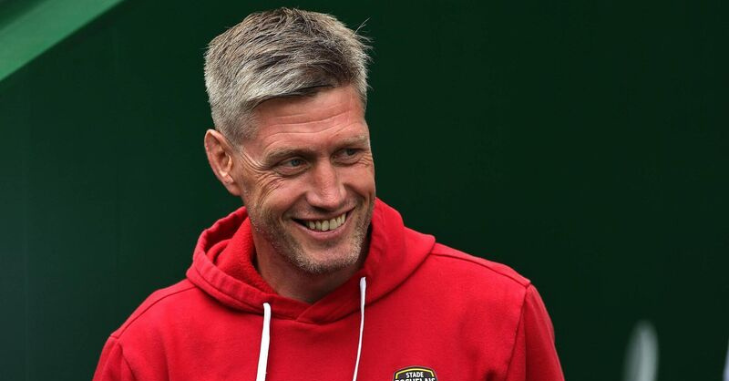
Ronan O’Gara was born on 7 March 1977 in San Diego, California, where his father was working at the time, which makes him 49 in 2026. The family returned to Ireland when he was a young child and he grew up in Cork, the city that shaped his rugby life. His father, Fergal O’Gara, is a microbiologist who worked as an academic at University College Cork, so education was taken seriously at home alongside sport.
Because of his birthplace, he is sometimes described as having a connection to the United States, but his rugby identity was entirely Irish and specifically Munster. He came through the Cork schools system just as the province was building the professional squad that would go on to dominate Europe in the following decade.
Education
O’Gara attended Presentation Brothers College, widely known as “Pres”, in Cork, one of the strongest rugby schools in the province, where he played Senior Cup rugby. He then studied commerce at University College Cork while playing for Cork Constitution in the All-Ireland League. Combining a degree with emerging professional rugby was normal for Irish players of his generation, before academy pathways became as structured as they are now.
Playing Career
Munster
O’Gara made his Munster debut in the late 1990s and spent his whole professional club career with the province, retiring in 2013. He is reported to have made around 240 appearances and scored more than 2,600 points for Munster. The high points were the Heineken Cup wins of 2006, against Biarritz, and 2008, against Toulouse, both in Cardiff. They came after painful near-misses, including final defeats in 2000 and 2002, and that long climb is a big part of the Munster story he is associated with.
For many years he was the leading points scorer in the history of the European Cup, and he is still regularly cited as one of the competition’s defining players.
Ireland and the British and Irish Lions
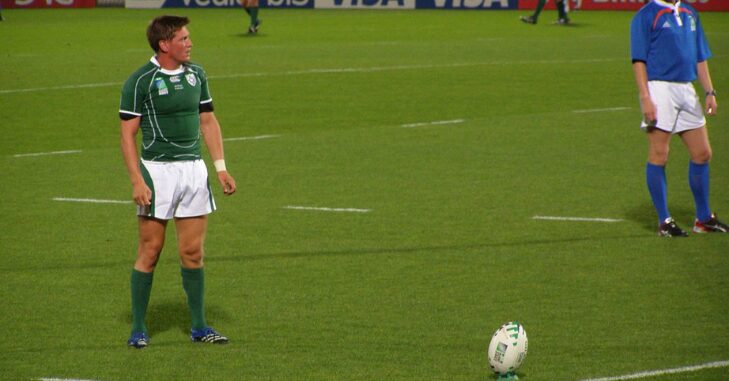
O’Gara won his first Ireland cap in 2000 and went on to earn 128 caps, scoring 1,083 Test points. His best-remembered moment is the late drop goal against Wales in Cardiff in March 2009 that sealed Ireland’s first Grand Slam since 1948. He also toured with the British and Irish Lions in 2001, 2005 and 2009, though he played a limited Test role on those tours.
| Achievement | Year(s) |
|---|---|
| Heineken Cup winner with Munster | 2006, 2008 |
| Six Nations Grand Slam with Ireland | 2009 |
| British and Irish Lions tours | 2001, 2005, 2009 |
| Retired as a player | 2013 |
What made him stand out as a player
Statistics only tell part of the story. Team-mates and opponents tend to describe the same qualities: a calm head in the final minutes of tight matches, a willingness to take responsibility for the big kick, and a very clear understanding of how to play territory. Munster sides of that era were built around a strong pack, and O’Gara’s role was to turn their possession into field position and points. That partnership, more than any single physical trait, explains his success.
Coaching Career
O’Gara moved straight into coaching after retiring, and he made an unusual choice: rather than staying in Ireland, he went to France and joined Racing 92 (then Racing Métro) as an assistant coach. Working in a second language in the Top 14 gave him a very different view of the game. In 2018 he moved to New Zealand as an assistant with the Crusaders, who won Super Rugby titles during his time there.
He returned to France in 2019 to join La Rochelle and later took overall charge of the club’s rugby programme. Under his leadership La Rochelle won the European Champions Cup in 2022 and retained it in 2023, beating Leinster in both finals, which gave the wins extra resonance in Ireland given the old Munster–Leinster rivalry. The club also reached Top 14 finals during that period. His candid, sometimes combative media style has made him one of the most quoted coaches in European rugby.
| Role | Club | Notes |
|---|---|---|
| Assistant coach | Racing 92 (France) | First coaching job after retiring in 2013 |
| Assistant coach | Crusaders (New Zealand) | Joined in 2018; part of a title-winning set-up |
| Head coach / director of rugby | La Rochelle (France) | Joined in 2019; Champions Cup winners in 2022 and 2023 |
Family
O’Gara is married to Jessica O’Gara (née Daly), whom he has known since his student days in Cork. The couple are reported to have five children. The family moved with him to Paris, Christchurch and La Rochelle, and he has spoken in interviews about what those moves asked of them and about balancing a demanding coaching job with family life abroad. Beyond that, the family keeps a fairly low public profile.

Net Worth: What Is Actually Known
O’Gara has not published his personal finances, and the figures quoted online vary widely without verifiable sources, so treat any exact number as guesswork. What can be said with confidence is where his income has come from:
- Playing contracts with Munster and the IRFU over a long professional career, plus Lions tour fees.
- Coaching contracts in France and New Zealand, with a senior role at a leading Top 14 club likely to be the best paid of these.
- Books and media – two autobiographies, newspaper columns and broadcast punditry.
- Commercial work of the kind most high-profile Irish players take on during their careers.
Rugby salaries are modest compared with football, so even very successful players and coaches tend to have wealth measured in the low millions rather than the huge sums seen in other sports. If you are interested in how public figures’ wealth is estimated and why published numbers differ so much, our breakdown of Amol Rajan’s net worth looks at the same problem from a media angle.
Legacy and Other Facts
- Books – he published Ronan O’Gara: My Autobiography in 2008 and a second memoir, Unguarded, after retiring.
- Languages – years in the Top 14 have made him comfortable working and giving interviews in French.
- Style – his directness, as a player and in press conferences, is a large part of his public profile.
- Standing – he is widely ranked among Ireland’s greatest fly-halves and is one of a small group to win the European Cup as both a player and a head coach.
Bottom Line
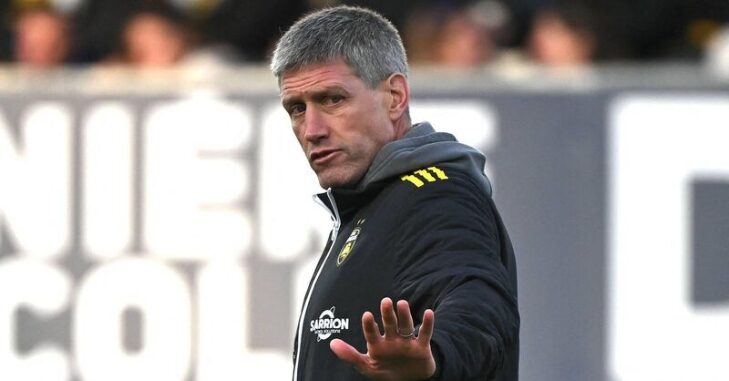
Ronan O’Gara stands about 1.83 m (6 ft) tall, a standard fly-half frame that suited a game built on kicking, game management and nerve rather than size. What sets him apart is what he did with it: 128 Ireland caps, two Heineken Cups, a Grand Slam-winning drop goal and back-to-back Champions Cups as a coach. For more profiles of well-known names, see our piece on Vanessa Hudgens’ net worth or browse the Entertainment category.
FAQs
How tall is Ronan O’Gara?
Ronan O’Gara is listed at 1.83 m, or 6 ft 0 in. His reported playing weight was around 83 to 84 kg, which is about 13 stone.
How old is Ronan O’Gara?
He was born on 7 March 1977 in San Diego, California, so he is 49 years old in 2026. He grew up in Cork after his family returned to Ireland.
How many caps did Ronan O’Gara win for Ireland?
He won 128 caps for Ireland between 2000 and 2013 and scored 1,083 Test points. He also toured three times with the British and Irish Lions.
What has Ronan O’Gara won as a coach?
With La Rochelle he won the European Champions Cup in 2022 and 2023. Before that he was an assistant coach at Racing 92 and at the Crusaders in New Zealand.
Is Ronan O’Gara married?
Yes. He is married to Jessica O’Gara (née Daly), whom he met during his student days in Cork, and the couple are reported to have five children.
What is Ronan O’Gara’s net worth?
His net worth has not been publicly disclosed. Figures online are unverified estimates, so treat any exact number with caution.