The global tech trends shaping 2025 and beyond come down to five shifts: AI moving from pilot projects into everyday operations, intelligent automation across business and engineering workflows, security rebuilt around zero trust, cloud estates spreading across multiple providers and the edge, and enterprise software becoming modular and API first. This guide explains each trend in practical terms, what it means for UK and international organisations, and how to decide where to invest first, drawing on what engineers at PowerGate Software see while building products for clients in finance, health and other regulated sectors.
Tech trends 2025 to 2026 at a glance
| Trend | What is changing | Who feels it most | First practical step |
|---|---|---|---|
| AI in daily operations | AI moves from chat experiments to embedded assistants inside core workflows | Operations, customer service, finance, healthcare | Pick one high-volume, rules-heavy process and measure time saved |
| Intelligent automation | RPA combines with AI models so workflows adjust themselves | Retail, logistics, back office teams | Map a process end to end before automating any part of it |
| Zero trust security | Identity and device checks replace the idea of a trusted internal network | Every organisation handling personal or financial data | Enforce multi-factor authentication and least-privilege access |
| Multi-cloud and edge | Workloads spread across providers and closer to users | Businesses with global users or strict uptime needs | Audit cloud spend and identify single points of failure |
| Modular, API first software | Monolithic systems give way to services that can be replaced one at a time | Scale-ups and enterprises with legacy platforms | Document existing integrations and agree an API standard |
1. AI blending into everyday operations
From helper to co-worker
Artificial intelligence is spreading into areas that people once considered too sensitive or too human for software. Many companies no longer treat AI as a novelty tool bolted onto the side of a product. Instead it sits inside the workflow: drafting replies for support agents, summarising documents for analysts, flagging anomalies in transactions and suggesting the next best action to a sales team. The pattern is the same in each case. The AI learns from existing data and processes, proposes something, and a person approves, edits or rejects it.
Where adoption is moving fastest
Healthcare and fintech show the shift most clearly. Hospitals and clinics use AI for diagnostic support and triage, lenders run risk scoring with more signals than a manual process could handle, and retailers personalise product suggestions in real time. These are also the sectors with the heaviest regulation, which is why governance, audit trails and human oversight matter as much as model accuracy. In the UK, organisations using personal data in AI systems still need to meet UK GDPR obligations, and the Information Commissioner’s Office publishes guidance on explaining automated decisions to the people affected.
“At PowerGate Software, we have observed these changes while building AI tools for enterprise clients. Some of these solutions start small, then suddenly explode into full systems once teams realize how much time they save,” says Dustin Hemesath – Head of Solution Strategy, North America at PowerGate Software.
How to start with AI without wasting budget
- Choose a narrow use case: a process with high volume, clear rules and measurable output, such as invoice matching or ticket categorisation.
- Check your data first: AI output is only as good as the records behind it. Incomplete or inconsistent data is the most common reason pilots stall.
- Keep a human in the loop: especially for decisions affecting customers, patients or credit.
- Define success before you build: hours saved, error rate, response time or conversion, measured against a baseline.
2. Intelligent automation and the push for higher output
A new level of automation
Automation is climbing to another level. Robotic process automation (RPA) on its own follows fixed scripts, which breaks when a form or screen changes. Combined with AI models, workflows can read unstructured documents, make simple judgements and trigger each other. For example, a modern retail platform can adjust inventory levels and reorder triggers automatically when a forecasting model predicts a sudden spike in demand, rather than waiting for a buyer to spot the trend in a weekly report. The same thinking is spreading into physical operations, as covered in our look at how mobile and quadruped robots are changing industrial automation.
Software teams are moving faster
Engineering teams feel this acceleration directly. AI code assistants draft the first version of a feature or a test suite, automated testing catches regressions before they reach users, and DevOps pipelines report performance and cost with far more clarity than a few years ago. The result is not fewer engineers but a different mix of work: less boilerplate, more review, architecture and product thinking. Teams that adopt these tools well usually also tighten code review, because generated code still needs a human to check security, licensing and edge cases.
Impact on MVP timelines
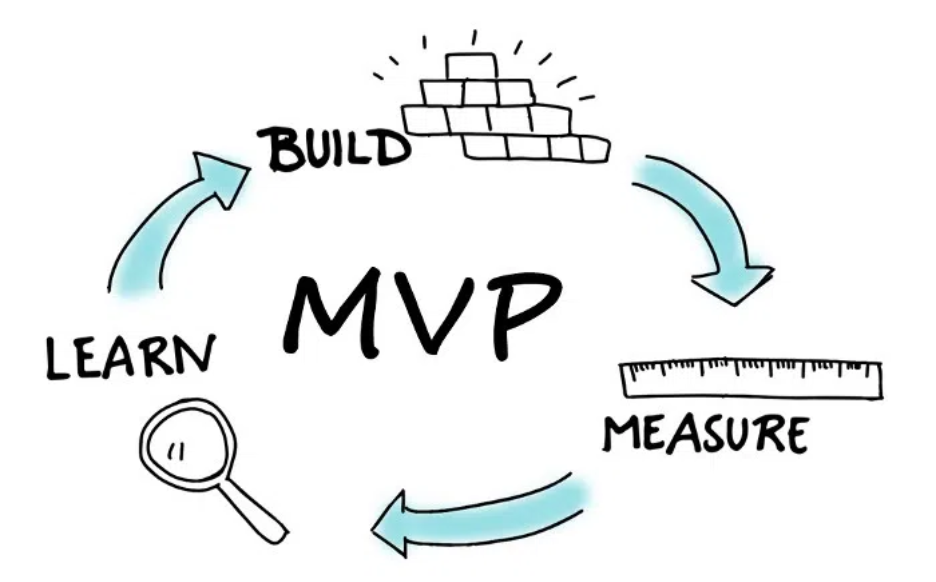
For product engineers, the biggest change is speed. Minimum viable products move from idea to working prototype faster than before, which lets founders test demand before committing a large budget. Some founders tell PowerGate Software it feels like shaving weeks off their delivery time without stretching their spend. The trade-off is discipline: a fast prototype still needs a plan for security, scaling and maintenance before it becomes a production system.
3. Security under pressure
Growing threats
With more intelligent systems handling sensitive data, trust becomes harder to maintain. Attackers now use AI to clone voices, write convincing phishing emails, forge documents and automate password attacks. A finance team receiving a call that sounds exactly like the chief executive is no longer a far-fetched scenario, which is why verification procedures for payments and access changes matter as much as technical controls.
Zero trust gains momentum
More companies are adopting zero trust, a model where no user, device or network location is trusted by default. Every request is checked for identity, device health and context. The transition is rarely smooth, because older applications often assume anyone inside the office network is safe. A realistic path is to start with strong multi-factor authentication, remove standing admin rights, segment the most sensitive systems and log access centrally. UK organisations can use the National Cyber Security Centre’s Cyber Essentials scheme as a baseline before moving to more advanced controls. Many of these gaps overlap with the issues in our guide to what most organisations get wrong about critical technology infrastructure.
Why certifications matter
ISO 27001 is widely recognised as evidence of a structured approach to information security: documented risk assessment, defined controls and regular audit. When choosing a software partner, certification is not a guarantee, but it shows the partner has processes that a buyer’s own security team can review. At PowerGate Software, ISO 27001 certification supports work with partners that require strong security controls, particularly in regulated industries such as finance and healthcare.
4. Cloud modernisation keeps evolving
Rising multi-cloud adoption
Multi-cloud strategies are growing because global companies want flexibility when a provider suffers an outage or raises prices. Running across two or more providers also helps with data residency, for example keeping UK or EU customer data in specific regions. The cost is complexity: more tooling, more skills and more places for misconfiguration. A sensible middle ground for many businesses is to standardise on containers and infrastructure as code, so workloads can move if they need to, without running everything everywhere.
Serverless and edge growth
Serverless functions are now a normal way to run event-driven workloads, because teams pay only for execution time and avoid managing servers. At the same time, some logic is moving to edge locations close to users to reduce latency for things like personalisation, video and IoT data processing. PowerGate Software’s cloud teams often notice that once an organisation begins modernising, it rarely stops halfway. A single migration tends to grow into a full architectural refresh, so it pays to plan the target architecture early.
5. Enterprise software is turning modular
Systems are shifting towards modular, API first setups. Instead of one large platform that must be upgraded all at once, companies want services they can replace or update independently without breaking everything else. This makes it easier to add AI features, switch payment or messaging providers, or connect with partners. It also changes procurement: buyers increasingly ask how well a product integrates, not just what it does out of the box. If you are weighing vendors, our guide on how to choose the right procurement software company for your business covers the integration questions worth asking.
AI native SaaS is emerging alongside this. More products will adapt their interface and recommendations based on how each user works, which puts extra weight on clean data models and clear permissions. For technology leaders, the shift means choosing the right integration layer, agreeing API standards across teams and designing systems that can evolve rather than be rebuilt every few years.
Why the product studio model fits 2025 and 2026
Traditional outsourcing, where a client writes a full specification and a vendor builds it, can feel too slow for founders who want to test ideas quickly. The product studio model combines research, design, development and iteration in one continuous team. Discovery comes first, then a rapid prototype, then short build cycles informed by real user feedback.
“Our product studio model relies on multi-functional teams, rapid prototypes, and thoughtful discovery phases. Many early-stage founders who work with us reach the market faster than they expected,” says Dustin.
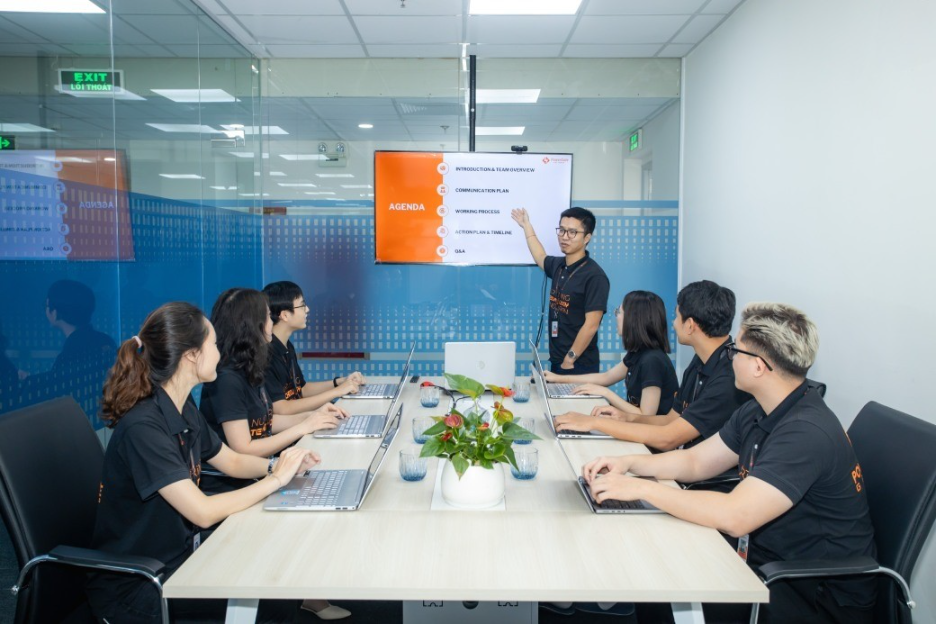
PowerGate Software is a software development company based in Vietnam with over 14 years of engineering practice and a UK office for local collaboration. It works on full-cycle development for sectors such as FinTech, GreenTech, digital health and AI, giving clients access to Vietnam’s growing pool of technical talent. Website: https://powergatesoftware.com/
How to prioritise these trends for your business
- Secure the basics first. Multi-factor authentication, patching, backups and access reviews protect every other investment.
- Fix data quality. AI and automation both depend on accurate, well-structured data.
- Run one measurable AI or automation pilot. Prove value on a single process before scaling.
- Plan cloud and architecture together. Modernisation works best when it moves towards a clear, modular target.
- Choose partners carefully. Look for relevant sector experience, security certification and a transparent delivery process.
The next two years will not be quiet. Technology will keep changing in ways that are hard to predict, but organisations with a clear plan and the right partners can adopt new tools steadily without feeling overwhelmed.
Frequently asked questions
What are the biggest tech trends for 2025 and 2026?
AI embedded in everyday operations, intelligent automation, zero trust security, multi-cloud and edge computing, and modular API first software are the trends shaping most business technology decisions.
What is zero trust security?
Zero trust is a security model in which no user, device or network is trusted by default. Every access request is verified using identity, device health and context.
Why are companies moving to multi-cloud?
Multi-cloud reduces dependence on one provider, helps with outages and pricing changes, and can support data residency rules, although it adds operational complexity.
What is a product studio model?
A product studio combines discovery, design, development and iteration in one team, so founders can move from idea to tested prototype faster than with traditional outsourcing.
Why does ISO 27001 matter when choosing a software partner?
ISO 27001 shows a partner runs a structured, audited information security management system, which is especially important for projects in finance and healthcare.