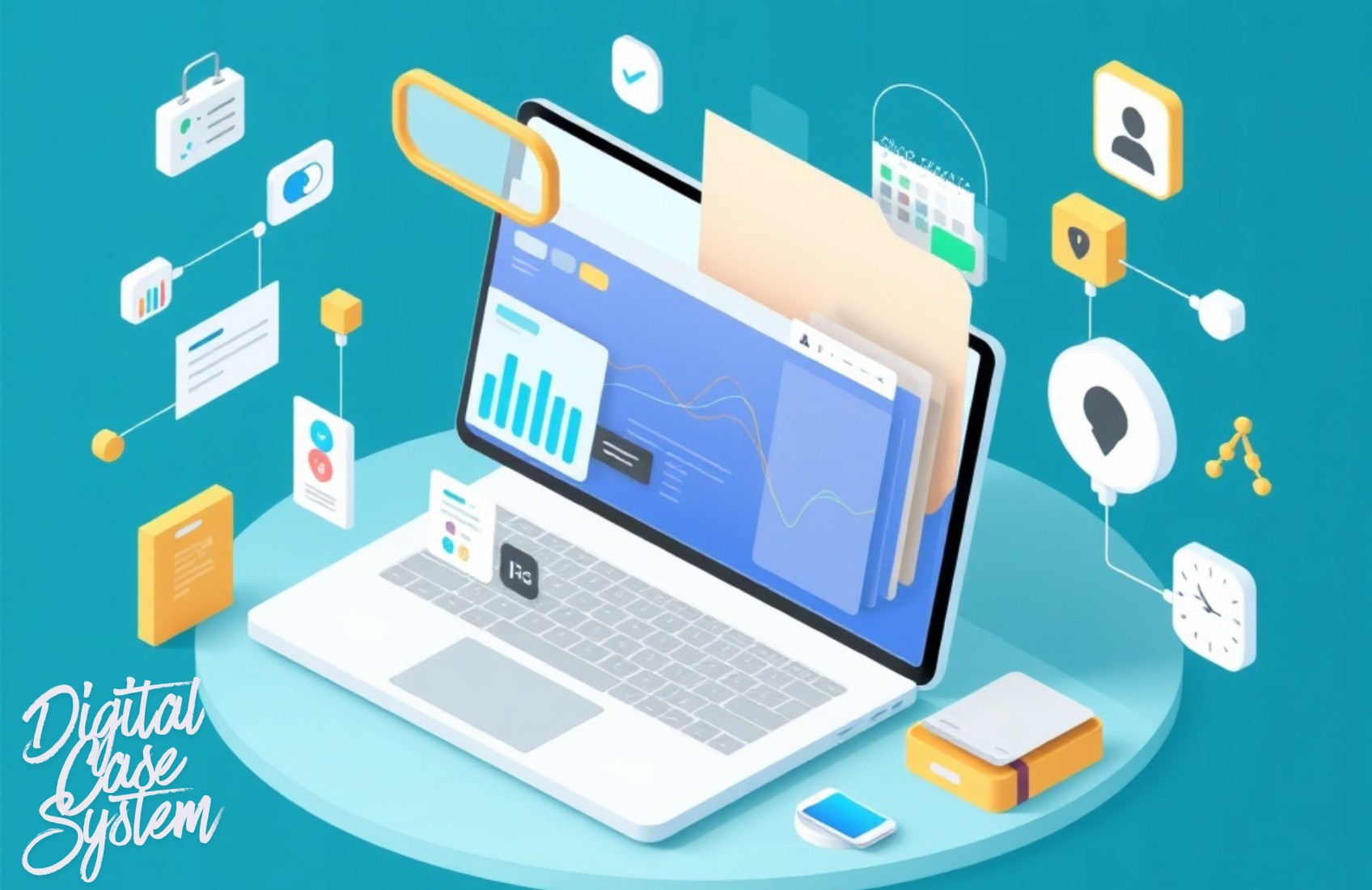
A Digital Case System (DCS) is a modern software solution designed to manage the complete lifecycle of cases, matters, or incidents across industries such as legal services, healthcare, government, and insurance. By replacing traditional paper-based processes, it centralizes case data, streamlines workflows, and enhances collaboration among stakeholders.
With features like automation, secure document management, and real-time communication, a DCS improves efficiency, accuracy, and decision-making. As organizations increasingly rely on digital transformation, these systems play a critical role in handling complex, data-driven operations while ensuring compliance and security.
| Category | Summary |
| Digital Case System | Case lifecycle management software |
| Key Function | Data centralization & workflow automation |
| Core Features | Intake, documents, tasks, communication |
| Automation | Workflow & process automation |
| Integration | APIs, external systems connectivity |
| Security | Encryption, access control, audit logs |
| Users | Legal, healthcare, and government sectors |
| Productivity Impact | Efficiency, reduced errors |
| Analytics | Reporting, BI, predictive insights |
| Accessibility | Mobile & remote access |
| Compliance | GDPR, HIPAA, regulatory standards |
| Main Benefit | Faster, smarter case management |
Digital Case System
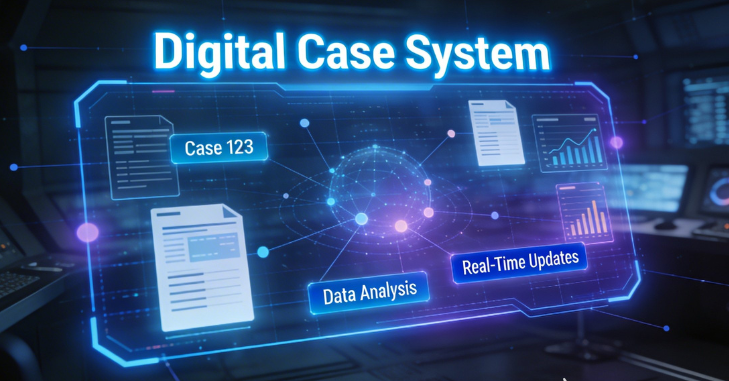
A digital case system (DCS) is a software platform designed to manage the lifecycle of cases, matters, or incidents across organisations such as law firms, courts, government agencies, healthcare providers, insurers, and social services.
It replaces or supplements paper-based workflows by centralising case data, automating routine processes, and enabling collaboration among stakeholders. Modern digital case systems vary from practice management suites tailored to legal workflows to configurable case management platforms used in the public sector and regulated industries.
Key Features and Core Functionalities
Case Intake
A DCS begins with case intake: capturing initial client or matter information, generating unique case identifiers, and recording essential metadata. Intake modules often support multiple channels web forms, email ingestion, scanned documents, staff telephone entry, and API-based intake from other systems. Intelligent intake can include triage logic that automatically routes matters based on type, urgency, jurisdiction, or risk indicators.
Document Management
Central to most DCS platforms is document management. This includes secure storage, indexing, full-text search, metadata tagging, and version control to track revisions. Advanced systems provide optical character recognition (OCR) for scanned documents, automatic classification, and extraction of key data fields, reducing manual data entry. Integration with office suites (e.g., Word, Outlook) and drag-and-drop upload streamlines document handling.
Workflow and Business Process Automation
Workflows enforce standardised processes, route tasks, and trigger notifications. Business process automation (BPA) in a DCS allows organisations to model multi-step procedures such as approvals, evidence collection, hearings scheduling, or benefits assessments and automate repetitive steps. Conditional logic and rules engines support branching workflows, service-level agreement (SLA) timers, escalations, and exception handling.
Task and Calendar Management
Task management features enable assignment, prioritisation, and tracking of activities tied to cases. Calendar integration helps schedule events, set deadlines, and send reminders. Systems often include shared team views, workload balancing, and personal to-do lists, ensuring that all case-related tasks are visible and accountable.
Communications and Collaboration Tools
Secure messaging, in-platform commenting, redaction-aware notes, and collaboration spaces let teams communicate about cases without resorting to insecure email threads. Some DCS products include client portals for secure exchange of documents and messages, as well as e-signature integration for executing forms and agreements remotely.
Contacts, Parties, and Relationship Mapping
A robust contacts module tracks individuals, organisations, witnesses, experts, opposing parties, and third parties. Relationship mapping visualises connections between entities (e.g., family links, corporate hierarchies, prior representation), which is especially valuable in complex litigation, child protection, fraud investigations, or regulatory enforcement.
Evidence and Intake of Multimedia
Modern cases often rely on multimedia evidence, such as photos, videos, audio recordings, CCTV, body-worn camera footage, and forensic files. A DCS should support secure ingestion, transcoding, redaction, and timestamped chain-of-custody logging for such media. Integration with forensic tools, secure streaming, and previewing avoids unnecessary downloads while preserving evidentiary integrity.
Matter Financials and Billing
For legal and professional services, a DCS frequently incorporates matter-based billing, time recording, disbursement tracking, invoicing, and financial reporting. Integration with accounting systems supports trust accounting, client billing rates, retainer management, and compliance with professional accounting rules.
Integration and Interoperability
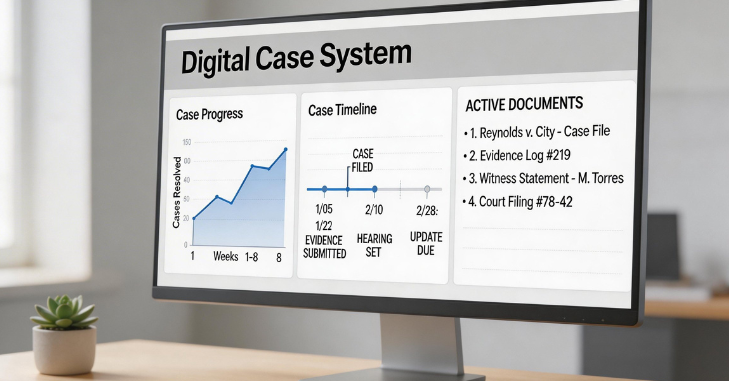
- APIs and Connectors: Interoperability with external systems is critical. RESTful APIs, webhooks, and pre-built connectors enable data exchange with court systems, CRM, accounting software, document repositories, e-discovery tools, email systems, identity providers (SSO), and third-party workflow engines. Open APIs support automation and integration into an organisation’s broader IT ecosystem.
- Standards and Data Exchange Protocols: Compliance with industry data standards (e.g., NIEM for justice data, HL7/FHIR for health records, or LEAP/LegalXML in legal tech contexts) simplifies cross-system data sharing and reduces the need for bespoke integrations. Standardised export/import mechanisms, along with support for common file formats (PDF/A, XML, CSV), are helpful for long-term accessibility.
- Interfacing with Public Sector and Court Systems: In legal, regulatory, and social services contexts, interfacing with public-sector case repositories, e-filing portals, or national registers is often required. Secure, auditable submission channels and automated status updates reduce manual re-keying and speed case progression.
Cloud-Based Digital Case Systems
Many modern digital case systems are now delivered through cloud-based platforms, allowing organizations to access case information securely from any location with an internet connection. Cloud deployment reduces the need for expensive on-site infrastructure, simplifies software updates, and improves scalability as case volumes grow. It also supports remote and hybrid work environments by enabling authorized users to collaborate in real time, access documents, and monitor case progress from multiple devices. For organizations managing large workloads, cloud-based solutions offer greater flexibility while maintaining security, reliability, and business continuity.
User Experience and Productivity Impacts
A well-designed DCS provides role-based interfaces tailored to job functions—such as triage officers, caseworkers, solicitors, judges, or administrators that present relevant controls and data. Personalization options (saved searches, favourite filters, dashboard widgets) increase efficiency and reduce cognitive load.
Mobile-responsive design or dedicated apps empower staff to access cases on the go, record interviews, capture multimedia, and update records in the field. Offline capabilities with secure syncing are important for remote or low-connectivity environments.
Automation of routine tasks (document assembly, reminders, data validation) and auto-population of forms reduces manual work and human error. Templates and precedents accelerate document creation, while workflows prevent missed deadlines and ensure consistency.
Security and Privacy Considerations
Access Controls and Identity Management
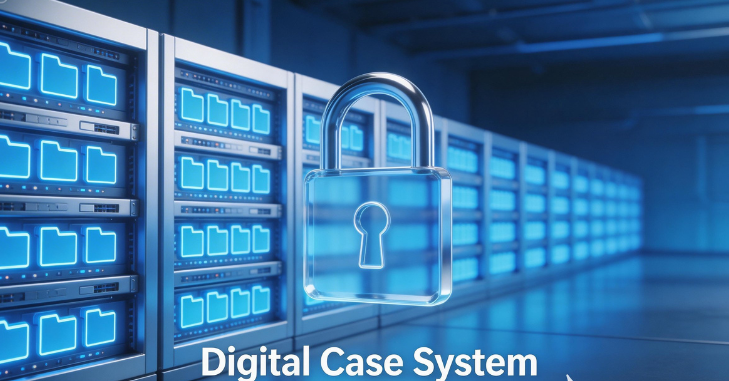
Strong access controls are foundational. Role-based access control (RBAC), attribute-based access control (ABAC), and least-privilege principles limit who can view or modify case data. Integration with single sign-on (SSO), multi-factor authentication (MFA), and identity providers (SAML, OAuth) enhances access security and simplifies credential management.
Encryption and Secure Storage
Data should be encrypted both in transit (TLS/HTTPS) and at rest. For highly sensitive records, field-level encryption or client-side encryption may be used. Secure key management practices and separation of duties help safeguard encryption keys.
Audit Trails and Forensic Logging
Comprehensive audit logs record who accessed or changed records, timestamps, IP addresses, and actions taken. Immutable logging and tamper-evident storage are important for compliance, investigations, and the maintenance of evidentiary integrity. Logs should be retained in accordance with policy and be accessible for audits.
Data Segregation and Multitenancy
For cloud-hosted DCS platforms serving multiple organisations, logical or physical data segregation prevents cross-tenant access. Multi-tenant architectures must enforce strict isolation by design and demonstrate compliance through certifications and third-party audits.
Privacy by Design and Data Minimisation
Privacy principles collecting only what’s necessary, defining clear retention schedules, and providing data subject rights handling—should be embedded in the system. Features enabling redaction, pseudonymisation, and controlled disclosure help meet regulatory obligations such as the UK GDPR, GDPR, HIPAA (for US healthcare contexts), or sector-specific rules.
Reporting, Analytics, and Decision Support
- Operational Reporting: Standard reports provide metrics such as caseload by stage, average time in stage, backlog volumes, clearance rates, and resource utilisation. These reports help managers allocate resources and identify bottlenecks.
- Business Intelligence and Visualisation: Integration with BI tools (e.g., Power BI, Tableau) or built-in visualisation modules supports deeper analysis. Custom dashboards can reveal trends, outlier cases, and performance against targets.
- Predictive Analytics and Machine Learning: Some advanced DCS platforms incorporate machine learning to predict outcomes (e.g., case resolution times and escalation risk), recommend next-best actions, or prioritise caseloads. Text analytics can surface sentiment, extract entities from documents, and assist triage.
Conclusion
Digital case systems are powerful enablers for organisations that manage complex, regulated, and document-intensive processes. By centralising data, automating workflows, strengthening security and auditability, and delivering analytics, a well-implemented DCS can reduce administrative burden, improve service quality, and enable data-driven decision-making.
However, success depends on careful requirements gathering, rigorous attention to privacy and security, robust integration, thoughtful change management, and ongoing governance. As AI, low-code tooling, and richer multimedia support continue to evolve, digital case systems will become even more capable, supporting smarter triage, faster case resolution, and better outcomes for organisations and the people they serve.
Want to know about How a British Company Can Collect a Debt from a Croatian Company Check out our Law category.
FAQs
Protection mechanisms include role-based and attribute-based access controls, SSO and MFA, encryption in transit and at rest, field-level encryption for highly sensitive fields, segregation for multi-tenant environments, audit logging, and privacy-by-design features (redaction, pseudonymisation).
Common issues include unclear requirements, underestimating data migration complexity, over-customisation, inadequate change management and training, and insufficient security or compliance planning.
Migration involves data discovery and mapping, cleansing and deduplication, pilot migrations, validation, and final cutover. Retention and archival of legacy records should be planned carefully.