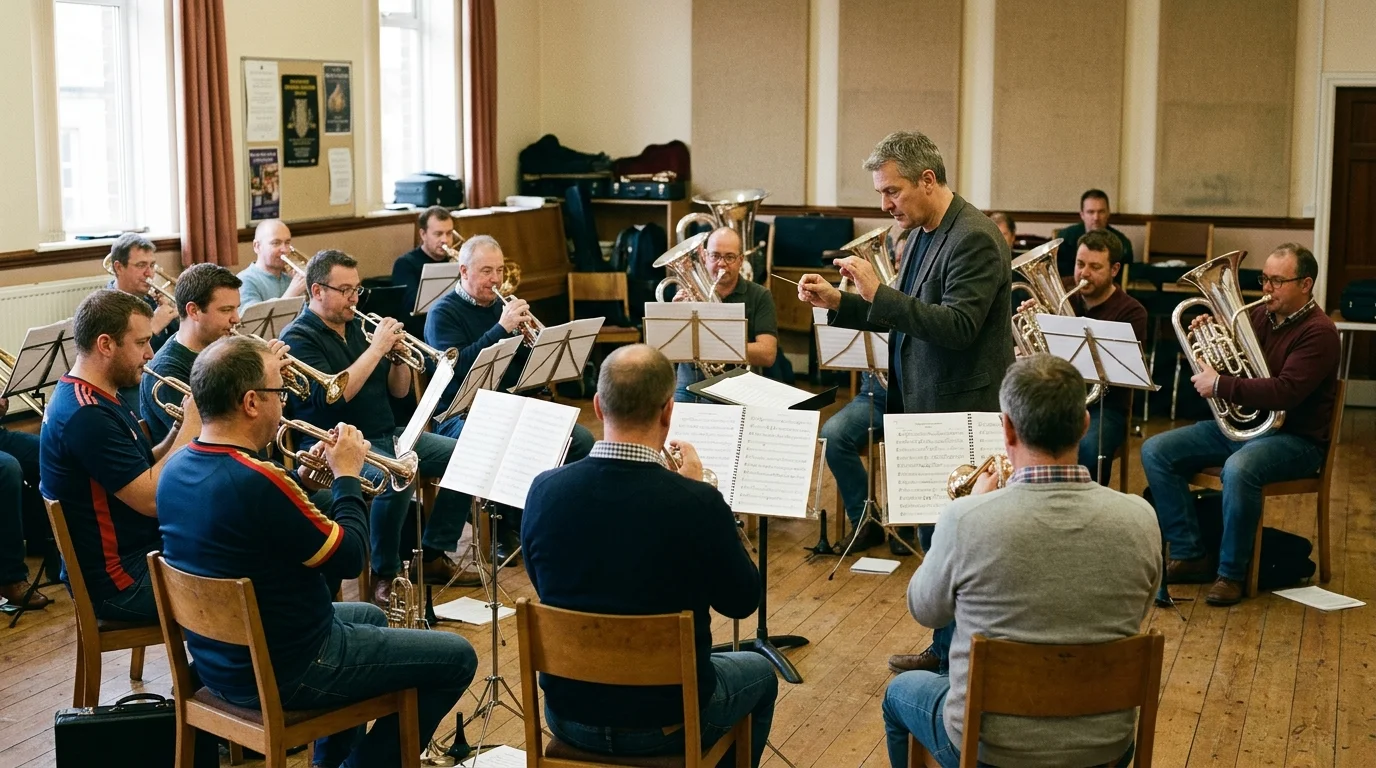
The Brighouse and Rastrick Brass Band has been part of British musical life for more than 140 years. Based in West Yorkshire, the ensemble combines local roots with an international reputation for contest and concert performances. Its story stretches from Victorian community music to major championship victories and a famous UK chart hit.
For many British listeners, the band remains closely associated with The Floral Dance. Yet its achievements extend far beyond that memorable 1977 recording. The group remains active today, performing concerts and competing at the highest levels of brass banding.
| Key fact | Details |
|---|---|
| Formed | 1881 |
| Home | Brighouse, West Yorkshire, England |
| Original background | Temperance movement |
| Famous recording | The Floral Dance |
| UK chart peak | Number 2 |
| Recent major achievement | 2025 British Open Champions |
| Principal conductor | Professor David King |
| Funding tradition | Public subscription and independent support |
| 2027 European appearance | Montreux, Switzerland |
Direct answer: The Brighouse and Rastrick Brass Band is a historic championship ensemble from West Yorkshire. Formed in 1881, it became nationally famous through major contest victories and The Floral Dance. It remains an active concert and competition band, winning the British Open Championship again in 2025.
How the Brighouse and Rastrick Brass Band Began
The band’s origins date to 1881 and the Victorian temperance movement. It began as the Brighouse and Rastrick Brass and Reed Temperance Band. Local people helped establish and maintain the organisation through public subscriptions.
This funding model became an important part of its identity. The organisation still describes itself as a public subscription band rather than a commercially sponsored ensemble. That independence connects the modern group with the community tradition that shaped its earliest years.
Brass bands flourished across industrial northern England during the nineteenth century. Yorkshire communities supported bands, choirs, orchestras, and other amateur musical organisations. Brighouse and neighbouring Rastrick provided the setting for one ensemble that would eventually gain recognition far beyond the region.
From Local Yorkshire Band to National Contender
The band’s first decades were rooted mainly in local music making and competitions. Its reputation began growing more noticeably during the early twentieth century. By the 1920s, significant contest successes were placing the group among Britain’s prominent brass ensembles.
A particularly important moment arrived in 1929. The band won major July and September contests at Belle Vue in Manchester during the same year. This success strengthened a competitive reputation that would continue across later generations.
The post-war period brought further milestones. In 1946, the band became National Champion of Great Britain under conductor Eric Ball. More national and international successes followed as its profile expanded.
Its competitive record also reflects the distinctive culture of British brass banding. Contest performances require ensembles to combine technical accuracy, balance, interpretation, and musical character. Winning major events therefore became central to the band’s reputation among dedicated brass audiences.
Why The Floral Dance Became So Famous
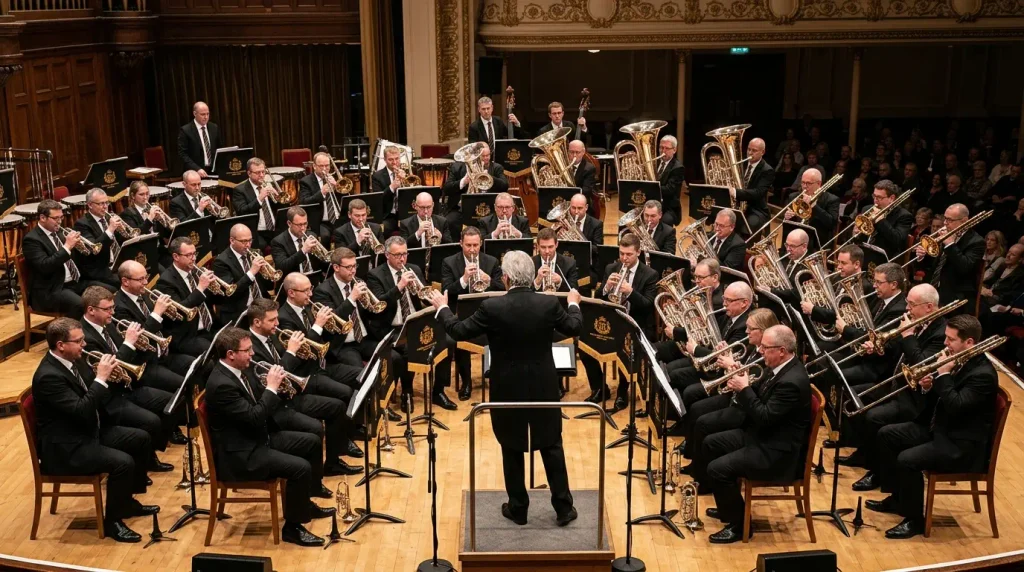
No account of the group is complete without The Floral Dance. The recording became an unexpected mainstream success in 1977. It reached number two on the UK singles chart and remained there for nine weeks.
The achievement brought brass band music to listeners who might never have attended a contest or traditional concert. More than a million copies were sold, according to the band’s historical account. Gold and Silver discs followed the recording’s commercial success.
The arrangement was created by Derek Broadbent, who was the band’s resident conductor. The original song had been written by Katie Moss and carried strong associations with Cornwall. Broadbent’s brass arrangement gave the familiar melody a distinctive new life.
Its importance now reaches beyond its chart position. The piece became an unofficial signature tune and remains closely linked with the ensemble’s public identity. For generations of British listeners, hearing its opening phrases can immediately evoke the Brighouse name.
Major Championships and Contest Success
Championship competition has remained another defining part of the band’s history. Its record includes National, European, British Open, and other major contest successes. Different conductors and generations of players have contributed to that long competitive tradition.
The band became National Champion in 1946, 1973, and 1980, with further victories following later. It also won the European Brass Band Championship in 1981. Another European title arrived in 1998 during a particularly successful period.
More recently, the ensemble won both the British Open and Brass in Concert titles in 2022. That double demonstrated that its historical reputation was matched by contemporary results. It continued competing among leading British and European bands afterward.
The 2025 British Open Victory
The 2025 British Open provided another major chapter in the band’s story. Conducted by Professor David King, Brighouse and Rastrick finished first at Symphony Hall in Birmingham. The contest took place on 6 September 2025.
Competitors performed Stephen Roberts’ Star Crossed Lovers. Brighouse and Rastrick took first place ahead of Brass Band Treize Etoiles and Cory. The result gave the Yorkshire ensemble another British Open championship title.
Two players also received individual awards at the event. Ashley Marston received the Brian Evans Memorial Trophy for Best Soprano Cornet. Chris Robertson received the Geoffrey Whitham Memorial Trophy for Best Euphonium.
The result also brought an important future opportunity. The band received an invitation to represent England at the 2027 European Brass Band Championships. That competition is scheduled to take place in Montreux, Switzerland.
What Makes the Band Distinctive?
Longevity alone does not explain the band’s place in British musical culture. Its history connects community music, elite competition, recordings, broadcasting, and mainstream entertainment. Few brass ensembles have crossed between those audiences so visibly.
Its public subscription tradition is especially distinctive. The organisation has retained financial independence rather than becoming identified permanently with a major industrial sponsor. Supporters and patrons therefore remain important to the band’s continuing work.
The repertoire has also helped the group reach different audiences. Championship test pieces demand precision and musical depth, while concert programmes can include accessible arrangements and familiar favourites. This flexibility helps explain its appeal beyond specialist brass band followers.
Collaborations have widened that audience further. The band has worked with performers including folk group The Unthanks and singer Kate Rusby. Such projects demonstrate how the sound of a traditional brass ensemble can fit comfortably alongside other British musical styles.
Brighouse, Rastrick and a Strong Yorkshire Identity
The band’s identity remains closely connected with its West Yorkshire home. Brighouse sits within Calderdale, while Rastrick lies nearby across the River Calder. Both communities form part of an area with deep industrial and musical traditions.
That geography matters because British brass band culture developed strongly in northern industrial towns. Bands often grew around workplaces, churches, temperance organisations, and community groups. Music offered recreation while also creating strong local identities.
Brighouse’s ensemble followed that tradition but eventually reached an unusually wide audience. Its name still carries its geographical origins wherever the musicians perform. The connection between place and music has therefore survived despite international recognition.
Readers interested in other British cultural personalities can also explore Readox’s coverage of George Michael’s career and musical legacy. Readox also covers major UK events through features such as its Wilderness Festival guide.
Hearing the Band Live in 2026 and Beyond
The ensemble maintains an active concert schedule alongside its contest commitments. Its official programme lists performances around England throughout late 2026. Venues include churches, civic halls, major concert spaces, and specialist music venues.
Scheduled autumn appearances include Bury Parish Church and Huddersfield Town Hall. The band is also listed to perform at Leeds’ Howard Assembly Room. Further concerts follow in Ulverston, Otley, Gateshead, Skipton, Rochdale, Bradford, and other locations.
Christmas performances remain an important part of the programme. Dates listed for December 2026 include Brighouse, Huddersfield, Bradford, Rochdale, and Harrogate. These concerts give audiences a different experience from the formal championship environment.
The calendar continues into 2027 with concerts across England. The schedule also includes the European Brass Band Championships in Montreux on 30 April 2027. Anyone planning to attend should check the band’s official events information before travelling because schedules can change.
Why The Floral Dance Still Matters
A chart hit from 1977 could easily have become a historical curiosity. Instead, The Floral Dance remains a useful doorway into the wider story of British brass music. It shows how an established community tradition can reach a mainstream popular audience.
The recording also introduced the ensemble to people who knew little about championship banding. Some listeners first encountered brass music through the single rather than a concert hall. Its cultural value therefore extends beyond sales figures and chart statistics.
Yet reducing the band’s story to one recording would miss its larger achievement. Decades of competition success came before and after the hit. The 2025 British Open victory demonstrates how the organisation continues to perform at championship level.
A Living Part of British Brass Band Culture
The band’s history offers a window into a musical tradition that remains important across the UK. Brass banding combines community participation with demanding competitive performance. Leading ensembles can therefore represent both their home towns and a highly specialised musical discipline.
Brighouse and Rastrick has occupied both roles for generations. It carries a strong Yorkshire identity while performing for national and international audiences. Its continuing concert schedule keeps that connection alive rather than leaving its reputation in the past.
For newcomers, a live performance can reveal much more than recordings alone. The contrast between powerful full-band passages and quiet solo playing is especially striking inside a concert hall. Attending a performance can also introduce listeners to repertoire extending far beyond familiar marches.
Frequently Asked Questions
When was the Brighouse and Rastrick Brass Band formed?
The Brighouse and Rastrick Brass Band traces its formation to 1881. Its beginnings were connected with the temperance movement in Victorian Yorkshire. The organisation later developed into one of Britain’s prominent contest and concert bands.
Where is Brighouse and Rastrick Band based?
The band is based in Brighouse, West Yorkshire. Its name also reflects the neighbouring community of Rastrick. The ensemble has retained this local identity throughout its national and international career.
What is Brighouse and Rastrick famous for?
It is famous for championship brass performances and its 1977 recording of The Floral Dance. The single reached number two in the UK charts and sold more than one million copies. Major contest victories have also shaped the band’s reputation.
Did Brighouse and Rastrick win the 2025 British Open?
Yes, the band won the 2025 British Open Brass Band Championship at Symphony Hall in Birmingham. Professor David King conducted its performance of Star Crossed Lovers. The victory also led to an invitation to represent England at the 2027 European Championships.
Who conducts Brighouse and Rastrick?
Professor David King is listed as the band’s principal conductor. He conducted the ensemble during its successful 2025 British Open performance. Conductors have played an important role throughout the group’s long contest history.
Can you still see Brighouse and Rastrick live?
Yes, the band continues to maintain an extensive performance schedule. Concerts are listed at venues across Britain during 2026 and 2027. Check current official event information before booking tickets or arranging travel.
More Than a Famous Yorkshire Name
More than a century after its formation, this Yorkshire ensemble remains active rather than surviving only through recordings and memories. Its history links Victorian community music with championship performance and British popular culture. Few moments illustrate that range better than The Floral Dance and the 2025 British Open victory.
For UK listeners, the next step is simple: hear the musicians rather than only read about them. Check the current concert programme and choose a performance within travelling distance. A live concert offers the clearest explanation of why the Brighouse name has endured for generations.