Paul McCartney’s net worth is £1.055 billion according to the Sunday Times Rich List 2026, published on 15 May 2026. Forbes, however, has never accepted that he is a billionaire, and the gap between the two estimates is roughly half a billion pounds. The difference comes down to method: the Rich List counts McCartney and his wife, Nancy Shevell, as one household, while Forbes values him on his own. Either way, the bulk of the fortune does not come from Beatles royalties. It comes from music publishing he bought rather than wrote.
The Rich List has named him Britain’s wealthiest musician every year since it launched in 1989, and in May 2024 it became the first to assess a British musician at a billion pounds. Below we break down where the money actually came from, the one court-verified figure in the public record, why the major trackers disagree, and what happened in 2025 and 2026 that could push the number higher: a finished four-year world tour, a new Beatles anthology, a UK number one album at 83, and four Hollywood films that will license the catalogue on an unprecedented scale.
Paul McCartney at a Glance
| Fact | Detail |
|---|---|
| Full name | Sir James Paul McCartney |
| Born | 18 June 1942, Walton Hospital, Liverpool |
| Age in 2026 | 84 (from June 2026) |
| Bands | The Beatles (1960–1970), Wings (1971–1981) |
| Main company | MPL Communications, reported to have access to more than 25,000 copyrights |
| Spouse | Nancy Shevell (married 2011) |
| Children | Heather, Mary, Stella, James and Beatrice |
| Sunday Times Rich List 2026 | £1.055 billion (assessed jointly with Nancy Shevell) |
| Forbes position | Not a billionaire; roughly $650 million in its last published estimate |
| Only verified figure on record | £387,012,000 personal net assets, disclosed in court in 2008 |
| Latest album | The Boys of Dungeon Lane, 29 May 2026, UK number one |
From Liverpool to Billionaire Contender: A Brief Career Overview
McCartney was born in Liverpool in June 1942 and grew up in a working-class family; his father, Jim, was a cotton salesman and amateur jazz musician, and his mother, Mary, was a nurse and midwife who died when he was 14. In 1957 he met John Lennon at a church fete in Woolton and joined Lennon’s skiffle group, the Quarrymen, which evolved into the Beatles. After residencies in Hamburg and Liverpool’s Cavern Club, the band signed to EMI’s Parlophone label in 1962 and became the most commercially successful act in popular music.
When the Beatles split in 1970, McCartney was already one of the most famous people in the world, but far from the wealthiest. His income at that stage relied on royalty rates set in the early 1960s and on songs whose publishing he no longer controlled. The following five decades turned fame into durable capital: Wings in the 1970s, a solo career that has produced nineteen studio albums, classical and film work, and the steady acquisition of copyrights through MPL. He was knighted in 1997 for services to music, and his long career means his name still sells concert tickets and records to listeners born more than half a century after the Beatles’ final album.
What makes his financial story unusual is not the size of the income but its structure. Plenty of stars of his era earned similar sums at their peak and later sold their rights or spent heavily. McCartney kept almost everything he made after 1970 and bought more, which is why his wealth kept growing into his eighties rather than plateauing.
Net Worth by Source: Why the Numbers Differ by £500 Million
Most celebrity net worth pages pick one number and present it as settled. With McCartney that would be misleading. Two respected organisations have studied the same man and produced answers that differ by more than most successful musicians earn in a lifetime. The reason is not mysterious; it is about what each one chooses to count.
| Source | Figure | What it measures |
|---|---|---|
| Sunday Times Rich List 2026 | £1.055 billion | Identifiable UK-linked assets, assessed jointly with Nancy Shevell |
| Sunday Times Rich List 2024 | £1.0 billion | First British musician assessed at a billion pounds |
| Forbes, most recent published estimate | About $650 million | Individual assets only; has never listed him as a billionaire |
| High Court disclosure, 2008 | £387,012,000 | Personal net assets sworn during divorce proceedings |
The Sunday Times Rich List measures identifiable wealth and has long treated McCartney and Shevell as a single unit. Shevell’s family owns a New Jersey trucking business reported to turn over more than $300 million a year, so pooling the two makes a material difference. Forbes looks at individuals. Its position, stated publicly as early as 2013 and not changed since, is that once his own assets are separated from his wife’s, the figure falls well short of a billion dollars, never mind a billion pounds. As of 2025 he had still not appeared on the Forbes World’s Billionaires list.
The one number McCartney signed off
The 2008 figure is the most reliable data point anyone has, yet it is rarely mentioned. During his divorce from Heather Mills, McCartney disclosed personal net assets of £387,012,000, worth around $600 million at the exchange rate of the time. Every estimate published since is an outsider’s projection layered on top of that base: eighteen years of touring income, royalties, catalogue appreciation and property inflation, minus spending, tax and philanthropy. Any precise 2026 figure that does not acknowledge those assumptions claims more certainty than exists.
What the divorce cost
The same 2008 proceedings also put a public price on the end of the marriage. The High Court awarded Heather Mills a settlement reported at around £24.3 million, with separate arrangements for their daughter, Beatrice. Mills had sought a far larger sum, and the judge largely accepted McCartney’s account of his assets, much of which pre-dated the marriage. Relative to the disclosed net assets, the payout was a modest share, and it barely interrupted the long-term growth of his wealth. It does, however, show how well protected his core assets were: MPL, the catalogues and most of the property sat outside the settlement because they were built long before 2002. For anyone trying to model his fortune, it is a useful reminder that the publishing business has survived a high-profile divorce essentially intact, which is one reason trackers treat it as such a stable foundation.
The wider Rich List context
The 2026 Rich List valued Britain’s 350 richest individuals and families at a combined £784 billion, up 1.4 per cent on the previous year and equivalent to roughly a quarter of UK GDP. Editor Robert Watts noted that a number of wealthy residents had left the country after the tax changes announced by Chancellor Rachel Reeves. McCartney was not among them.
Where the Money Comes From
| Income source | Estimated share of wealth | How it earns |
|---|---|---|
| Music publishing owned through MPL | Roughly 35–45 per cent | Owns songs written by others and collects the publisher’s share every time they are used |
| Beatles and solo recording and songwriting royalties | Roughly 20–25 per cent | Performance, mechanical, sync and streaming income |
| Touring and live performance | Roughly 15–20 per cent | Ticket sales, merchandise and sponsorship |
| Property and land | Roughly 10–15 per cent | Homes and farmland in the UK and the United States |
| Art, investments and other assets | Remainder | A long-held, private and largely undisclosed portfolio |
These percentages are estimates, but the order is not seriously disputed by anyone who follows music finance. Owning publishing, not simply being famous, is what moved McCartney from very rich musician to billionaire contender. A single data point shows the scale: he was reported to have earned £40 million in 2003, the highest income of anyone in British media that year, in a year with no major tour and no new studio album. That is what a large, owned catalogue does. It pays whether or not the owner is working.
Writer’s share, publisher’s share and masters explained
To follow McCartney’s story you need to know the three ways a song earns money. The distinction explains why he lost so much control in 1969 and why his later business decisions made him so wealthy.
| Right | Who usually holds it | What it pays for |
|---|---|---|
| Writer’s share (songwriting) | The songwriter, for life and passed to their estate | A portion of every performance, broadcast, stream and licence of the composition |
| Publisher’s share (publishing) | Whoever owns the copyright in the composition | The other portion of composition income, plus the power to approve and price licences |
| Master recording | Usually the record label, unless the artist owns it | Income from the specific recording: sales, streams and sync of that version |
A writer who keeps only the writer’s share earns well but has no say over how the song is used. An artist who owns the publishing and the masters earns several times more from the same song and decides who can use it. Most of McCartney’s career after 1969 can be read as an effort to sit on the owner’s side of that table.
The Beatles Years and the Publishing Mistake
The Beatles’ sales in the 1960s were unprecedented, but the contracts of the period were heavily weighted against artists. Early royalty rates were a fraction of what a comparable act would negotiate today. Touring in the mid-1960s made little money by modern standards: small venues, primitive sound systems and almost no merchandise operation.
The defining moment was what happened to the songwriting copyrights. Lennon and McCartney’s songs were placed in Northern Songs, a company floated on the London Stock Exchange in 1965 in which the two writers held minority stakes. When ATV gained control of Northern Songs in 1969, the pair lost ownership of the publishing on their own work. They still received the writer’s share, which is substantial, but not the publisher’s share, and they had no say over licensing.
That episode shaped everything that followed. Setting up MPL, buying other writers’ catalogues and keeping ownership of his solo work were all direct responses to losing the rights to his own songs at 27.
ATV, Michael Jackson and Sony
In 1985 Michael Jackson bought ATV Music for a reported $47.5 million, outbidding other interested parties including McCartney himself. With hindsight, the price looks remarkably low. Jackson merged the business with Sony’s publishing arm in 1995 to form Sony/ATV, and after his death Sony bought the estate’s remaining half in 2016 in a deal reported at around $750 million.
Throughout all of this McCartney kept collecting the writer’s share on every Lennon-McCartney song. Spread across some of the most licensed compositions in history, that alone produces very large annual income. What he lacked was control, and control is what he worked for decades to win back.
How He Regained the US Rights: The 2017 Settlement
The route back ran through American copyright law. The US Copyright Act of 1976 lets authors terminate earlier copyright grants after a set period, typically 56 years for works created before 1978, and reclaim the US rights whatever the original contract said. McCartney began filing termination notices in the 2000s as songs approached their eligibility dates.
Sony/ATV disputed how those notices interacted with earlier UK litigation, and McCartney sued in New York in 2017. The case settled confidentially later that year, and neither side has disclosed the terms. The practical result, widely reported since, is that US rights in the Lennon-McCartney catalogue have been reverting to him on a rolling basis as each song reaches its termination date.
The timing makes this more valuable than it first looks. Because the clock runs 56 years from the original grant, the reversions are happening now. Songs written in 1963 became eligible in 2019, material from 1966 in 2022, and the late-period catalogue from Sgt. Pepper onwards reaches its dates through the second half of this decade. The United States is the world’s largest music market, so this is a steady transfer of value towards McCartney year by year rather than a one-off windfall. It does not change ownership outside the US, where the original position still stands.
MPL Communications: The Catalogues He Bought
MPL Communications is the company that turned McCartney from wealthy performer into publishing magnate. Instead of trying to buy back his own songs, he spent the 1970s and 1980s buying the rights to other writers’ work, on the logic that owning copyrights beats collecting royalties on them. MPL is reported to have access to more than 25,000 copyrights.
- The Buddy Holly catalogue, acquired in 1976, which also led to the annual Buddy Holly Week celebrations.
- Major stage musicals, with MPL holding publishing interests in works including Guys and Dolls, Grease, Annie, A Chorus Line and Hello, Dolly!
- Standards and popular song copyrights from a range of 20th-century writers, licensed continually into film, television and advertising.
- His own post-Beatles output, including the Wings catalogue and every solo album, kept rather than sold.
Theatre publishing is an especially good asset. It earns every time a school, amateur society or professional company stages a show, as well as from cast recordings and film adaptations. It is unglamorous, does not depend on pop fashion and pays reliably for decades. Annie and Grease are staged by school and amateur groups somewhere in the English-speaking world almost every week of the year, and each production pays a licence fee.
How a catalogue is valued: a simple illustration
Publishing catalogues are typically priced as a multiple of their annual net publisher’s share, the income left after paying writers. The figures below are purely illustrative, not McCartney’s actual numbers, but they show why valuations swing so widely.
| Assumed annual net income | Multiple of 12 | Multiple of 15 | Multiple of 20 |
|---|---|---|---|
| £10 million | £120 million | £150 million | £200 million |
| £20 million | £240 million | £300 million | £400 million |
| £30 million | £360 million | £450 million | £600 million |
Moving from a multiple of 15 to 20 on a large catalogue can add hundreds of millions to an estimate without a single extra pound of income. During the rights-buying boom of the early 2020s, multiples rose sharply, then eased as interest rates climbed. Any outsider valuing MPL has to pick a multiple, and that choice alone can explain much of the gap between trackers.
Wings, Solo Work and the Value of Ownership
After the Beatles broke up, McCartney formed Wings with Linda McCartney and produced Band on the Run, Venus and Mars and a run of hit singles through the 1970s. The band sold enormously, and unlike the Beatles material, McCartney owns this work.
That ownership matters more than the sales figures. A songwriter who holds both the publishing and the masters keeps several times what a writer with only the writer’s share receives. Across fifty years and dozens of albums, the compounding gap between owning a catalogue and merely earning from it runs into hundreds of millions of pounds. The same pattern separates long-career songwriters with modest fortunes from those with lasting wealth across the industry. Compare the estate economics of George Michael, who fought a landmark court battle over his recording contract, or the publishing-led earnings of a career songwriter such as Guy Chambers.
Touring: The Cash Engine
| Tour | Years | Reported gross or scale |
|---|---|---|
| On the Run | 2011–2012 | Around $170m |
| Out There | 2013–2015 | Around $230m |
| One on One | 2016–2017 | Around $130m |
| Freshen Up | 2018–2019 | Around $130m |
| Got Back | 2022–2025 | 79 shows across 8 legs and 4 continents |
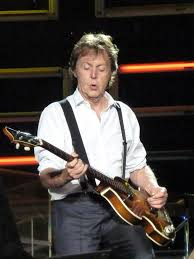
The Got Back tour opened at the Spokane Arena on 28 April 2022 and finally closed at the United Center in Chicago on 25 November 2025, three and a half years later. It covered 79 shows across eight legs in Europe, North America, Oceania and South America. Along the way came the 160-minute Glastonbury headline set on 25 June 2022, with Dave Grohl and Bruce Springsteen as guests, which made him the festival’s oldest solo headliner at 80.
Gross is not take-home
Tour grosses are often quoted as if they were profit. They are not. A stadium tour carries huge production costs, promoter shares, venue fees, crew wages and freight. A headline act typically keeps somewhere between 25 and 40 per cent of the gross, depending on the deal. Even at the lower end of that range, his touring from 2011 onwards would have added well over £150 million to his position, and it arrived as cash rather than as a paper valuation.
Touring into his eighties is unusual and commercially significant. Most artists of his generation stopped long ago, which concentrates demand on the few still performing and supports premium ticket prices. With Got Back finished, that engine is currently idle, and no new tour had been announced at the time of writing.
What Changed in 2025 and 2026
The two years since the billion-pound headline have been unusually busy for a man in his mid-eighties, and almost every release feeds the earning power of the catalogue rather than simply the archive.
- Anthology 4, 21 November 2025. A Beatles compilation produced by Giles Martin and Jeff Lynne, running to nearly two hours and drawing on sessions from 1963 to 1969 as well as the 1994–95 and 2021–22 reunion work. It came out alongside a reissued Anthology Collection and led with a 2025 remix of “Free as a Bird”.
- Got Back ends, 25 November 2025. The close of a tour that began in April 2022.
- “Days We Left Behind”, 26 March 2026. The lead single from a new album, produced with Andrew Watt. The Guardian’s Alexis Petridis gave it four stars out of five.
- “Home to Us”, 8 May 2026. A duet with Ringo Starr, the two surviving Beatles recording together again.
- Saturday Night Live, 16 May 2026. Performing the new single alongside “Band on the Run” and “Coming Up”.
- The Boys of Dungeon Lane, 29 May 2026. His nineteenth solo studio album, on Capitol, which entered the UK chart at number one and reached the top five across most major markets.
A UK number one album at 83, more than a quarter of a century into the digital era, is not just a sentimental milestone. New activity lifts the back catalogue in every streaming algorithm that rewards recent engagement, and that is where a growing share of modern catalogue income is decided.
The 2028 Beatles Films: The Biggest Licensing Event Yet
The largest identifiable future driver of Beatles-related income is already in production. The Beatles – A Four-Film Cinematic Event is a set of four biographical films directed by Sam Mendes and written by Jez Butterworth, Peter Straughan and Jack Thorne. They are produced by Sony Pictures Entertainment, Neal Street Productions and Apple Corps, and all four are due for simultaneous release on 7 April 2028.
Each film follows one band member: Harris Dickinson as John Lennon, Paul Mescal as Paul McCartney, Joseph Quinn as George Harrison and Barry Keoghan as Ringo Starr, with Saoirse Ronan as Linda McCartney and Anna Sawai as Yoko Ono. Mendes conceived the project in 2022, spent 2023 winning the agreement of the surviving members and the Lennon and Harrison estates, closed the deal with Sony by February 2024 and began filming in November 2025.
The financial point is synchronisation licensing. Four feature films built around the songs mean the catalogue is being licensed at a scale no previous project has matched, and every soundtrack, trailer and re-release triggers a corresponding wave of streams. As both a rights holder and a living subject whose consent was needed, McCartney benefits on both sides of that deal.
Streaming and the 2020s Revival
Streaming has been unexpectedly kind to catalogue artists. Beatles recordings arrived on streaming platforms at the end of 2015 and have since been played billions of times, producing recording and publishing income every year rather than in the occasional spikes of the CD era.
Several projects have amplified this. Peter Jackson’s Get Back documentary in 2021 drove a sizeable rise in Beatles listening. “Now and Then”, released in 2023 and assembled using machine-learning audio separation on an old Lennon demo, became a Beatles number one single more than fifty years after the band split and won a Grammy in 2025. Anthology 4 and the 2028 films continue the pattern. Each introduces the catalogue to a new generation, which is exactly what a publishing asset needs if its valuation multiple is to hold up.
Property, Art and Other Assets
McCartney has owned property in East Sussex, London, New York and Arizona for decades, much of it bought long before the price rises of the past thirty years. He is a serious art collector and a painter himself, and Linda McCartney’s photographic archive is a significant cultural asset in its own right.
Holdings like these explain why estimates for long-established figures vary so much. Trackers apply broad market assumptions to assets whose true make-up is private, and borrowings secured against them are invisible from outside. For a fortune of this size, the property and art component could reasonably be put anywhere within a range of a hundred million pounds either way.
Wealth Timeline: Key Milestones
| Year | Milestone | Why it matters financially |
|---|---|---|
| 1965 | Northern Songs floated on the London Stock Exchange | Writers held only minority stakes in their own publishing |
| 1969 | ATV takes control of Northern Songs | Lennon and McCartney lose the publisher’s share and licensing control |
| 1976 | MPL acquires the Buddy Holly catalogue | Start of a long strategy of buying other writers’ copyrights |
| 1985 | Michael Jackson buys ATV Music for a reported $47.5m | The Beatles publishing moves further out of reach |
| 1989 | First Sunday Times Rich List | Named Britain’s richest musician, a ranking held every year since |
| 2003 | Reported £40m income | Highest earner in British media that year without a major tour |
| 2008 | Divorce disclosure of £387,012,000 | The only self-certified figure on record |
| 2017 | New York lawsuit against Sony/ATV settles | US rights begin reverting on a rolling basis |
| 2024 | Rich List assesses him at £1bn | First British musician valued at a billion pounds |
| 2026 | Rich List figure rises to £1.055bn | Follows Anthology 4, the end of Got Back and a UK number one album |
How He Compares With Other Musicians
The Rich List figures for British and Irish musicians show how far ahead he sits.
| Artist | Net worth | Rich List year |
|---|---|---|
| Paul McCartney | £1.055 billion | 2026 |
| U2 | £625 million | 2022 |
| Andrew Lloyd Webber | £516 million (peak £820m in 2019) | 2026 |
| Elton John | £480 million | 2026 |
| Coldplay | £471 million | 2022 |
| Mick Jagger | £450 million | 2026 |
| Keith Richards | £450 million | 2026 |
| Ed Sheeran | £410 million | 2026 |
| Noel and Liam Gallagher | £375 million | 2026 |
| Brian May | £360 million | 2026 |
| Roger Taylor | £360 million | 2026 |
| Sting | £320 million | 2022 |
Globally the picture changes, which is one reason Forbes and the Rich List reach such different views of his ranking. Forbes’s 2026 figures put Jay-Z at $2.8 billion, Taylor Swift at $2.1 billion and Bruce Springsteen at $1.2 billion. Swift’s fortune is built on recorded music, touring and her re-recorded masters. Jay-Z’s largely is not: it rests on Armand de Brignac champagne, D’Ussé cognac and the sale of Tidal. Rihanna’s billionaire status came from Fenty Beauty rather than records.
That contrast sums up McCartney’s balance sheet. Many musicians have sold their catalogues for huge sums in the recent rights-buying wave; very few have spent fifty years buying other people’s copyrights and holding on to them. Among artists whose wealth rests on music rather than on a drinks or beauty brand, he has no British equal and few anywhere. For a comparable case where the headline number depends entirely on which assets an assessor counts, see our analysis of King Charles’s net worth.
Philanthropy and Public Causes
McCartney has campaigned on animal welfare and vegetarianism for decades, co-founding the Meat Free Monday campaign with his daughters in 2009. He has backed landmine clearance charities and supported music education through the Liverpool Institute for Performing Arts, which he helped establish in the building of his old school. He also performed at the closing ceremony of the London 2012 Olympics for a fee of £1. Giving of this kind reduces the accumulated total, but it is also a large part of how the wealth has been used rather than simply stored.
Why Published Estimates Disagree
- Joint assessment. The single biggest factor. The Sunday Times assesses McCartney with Nancy Shevell, whose family’s trucking business is reported to generate more than $300 million a year in revenue. Forbes assesses him alone and arrives at less than a billion dollars.
- Currency and timing. A dollar figure converts differently depending on the exchange rate on the day, which alone can shift a headline number by 10 per cent or more.
- Catalogue multiples. As the illustration above shows, applying a multiple of 15 rather than 20 to a large publishing business changes the total by hundreds of millions.
- Private holdings. Property, art and investments are estimated rather than known, and any debts against them cannot be seen from outside.
- Family wealth is not his wealth. Stella McCartney’s fashion business is a substantial company in its own right and belongs to her, not to her father, although casual reporting sometimes merges the two. The same applies to his other five children and their separate careers.
How to read any celebrity net worth figure
- Check who did the assessment and whether it covers an individual or a household.
- Look for the date and currency; a figure from a different year or converted at a different rate is not comparable.
- Ask whether the number includes catalogue or business valuations, and on what basis.
- Prefer sourced ranges over single precise figures, and treat court or regulatory disclosures as the firmest evidence available.
- Be wary of sites that update a figure every month without any new public information.
What Could Move the Figure Next
Several known events could shift future Rich List and Forbes assessments, in either direction. None of them guarantees a particular outcome, but each is worth watching if you follow the numbers.
- The 2028 films. Four simultaneous releases are likely to bring a surge in streams and licensing income, which could support a higher catalogue valuation.
- Further US reversions. As more late-1960s songs pass their 56-year dates, a larger share of US publishing income should flow to him rather than to Sony.
- Touring decisions. Got Back has ended. Any new tour would add significant cash; no tour at all removes what has been one of his biggest income sources since 2011.
- Catalogue market conditions. If interest rates fall and investors return to buying music rights, the multiples applied to MPL could rise again; the reverse would push estimates down.
- Exchange rates. Because much of the income is earned in dollars, a stronger or weaker pound alters the sterling figure even when nothing else changes.
- Methodology changes. If either tracker changed how it treats joint household wealth, the published figure could jump or fall overnight without any real change in his finances.
Bottom Line: What McCartney’s Fortune Teaches
The most revealing thing about McCartney’s wealth is that writing the most famous songs in pop history was not, on its own, the path to a billion pounds. Writing them made him rich. Losing the publishing on them taught him the difference between earning from a copyright and owning one, and acting on that lesson for half a century is what made him a billionaire contender. Ownership compounds; royalties merely accumulate.
The second lesson is about the numbers. When two of the most careful wealth trackers in the world differ by half a billion pounds over the same person, no single figure deserves to be reported as fact. The most accurate answer to “what is Paul McCartney’s net worth?” is a range: somewhere between Forbes’s roughly $650 million and the Rich List’s £1.055 billion, depending on whether you count his household or just the man.
Frequently Asked Questions
What is Paul McCartney’s net worth in 2026?
The Sunday Times Rich List 2026, published on 15 May 2026, valued him at £1.055 billion. Forbes disagrees and has never listed him as a billionaire, with its most recent published estimate at roughly $650 million. The Rich List assesses him jointly with his wife Nancy Shevell, while Forbes assesses him alone. The only figure McCartney himself certified is the £387,012,000 of personal net assets disclosed in court in 2008.
Was Paul McCartney the first British billionaire musician?
By the Sunday Times Rich List’s assessment, yes. In May 2024 it valued him at £1 billion, making him the first British musician to reach that mark, and the 2026 list raised the figure to £1.055 billion. Forbes does not accept the billionaire label and has never included him on its World’s Billionaires list.
Does Paul McCartney own the Beatles catalogue?
Not in full. The Lennon-McCartney publishing left the writers’ control when ATV took over Northern Songs in 1969, and it was later owned by Michael Jackson and then Sony. McCartney always kept the writer’s share, and since his 2017 lawsuit against Sony/ATV settled confidentially, US rights have been reverting to him on a rolling basis as each song reaches its 56-year termination date.
How does Paul McCartney make money now?
Mainly from publishing royalties on catalogues owned by MPL Communications, including Buddy Holly’s songs and musicals such as Guys and Dolls, Grease and Annie. He also earns recording and songwriting royalties on Beatles, Wings and solo material, increasingly through streaming, plus returns on property and investments. Touring paused after Got Back ended in November 2025, and licensing for the four Beatles films due in 2028 will add a further stream.
What has Paul McCartney released recently?
His nineteenth solo studio album, The Boys of Dungeon Lane, came out on 29 May 2026 on Capitol and entered the UK chart at number one. It followed the single Days We Left Behind in March 2026 and Home to Us, a duet with Ringo Starr, in May 2026. The Beatles compilation Anthology 4 was released on 21 November 2025.
Why did Michael Jackson buy the Beatles songs?
Jackson bought ATV Music, which held the Northern Songs catalogue, in 1985 for a reported $47.5 million, outbidding McCartney among others. It proved one of the most profitable music investments ever made. He merged it with Sony’s publishing arm in 1995, and Sony bought the estate’s remaining stake in 2016 for a reported $750 million or so.
Is Paul McCartney the richest musician in the world?
No. Forbes’s 2026 figures put Jay-Z at $2.8 billion and Taylor Swift at $2.1 billion, both ahead of any assessment of McCartney. Jay-Z’s fortune rests largely on drinks brands and the sale of Tidal, however, while McCartney’s comes from music itself. Among British and Irish musicians he has no equal, with U2 next at £625 million.
How much did the Got Back tour make?
No consolidated gross has been published. The tour ran from April 2022 to November 2025 and covered 79 shows across eight legs on four continents, including his Glastonbury headline set in June 2022. His previous tours reported grosses of roughly $130 million to $230 million each, of which a headline act typically keeps 25 to 40 per cent after costs.
How much was Paul McCartney worth in 2008?
During his divorce from Heather Mills, McCartney disclosed personal net assets of £387,012,000 to the High Court, worth roughly $600 million at the time. It remains the only figure he has certified himself. Every later estimate builds on that base with assumptions about income, spending and the value of his catalogues and property.