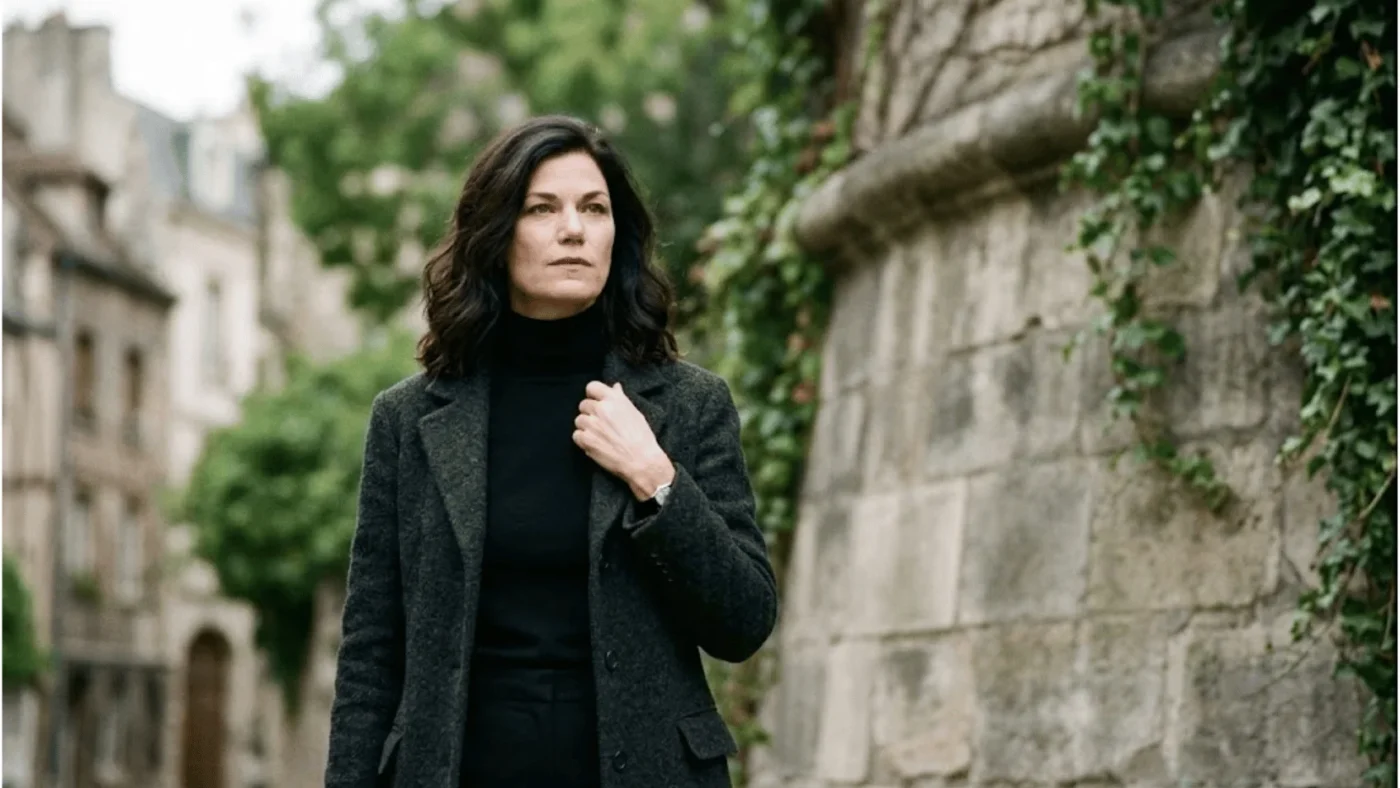
Linda Fiorentino became one of the most distinctive screen presences of 1990s American cinema. Her career mixed independent thrillers, studio comedies, and sharply written character roles. For UK viewers, her strongest legacy remains tied to The Last Seduction, Men in Black, and Dogma.
She was born Clorinda Fiorentino in Philadelphia on 9 March 1958. Her film career began in the mid-1980s and peaked during the following decade. She later withdrew from regular acting, leaving a compact filmography that still attracts interest.
Linda Fiorentino is an American former actress best known for The Last Seduction, Men in Black, and Dogma. Her breakthrough brought major critics’ awards and a BAFTA nomination. She later stepped away from regular acting, with Once More with Feeling from 2009 remaining her latest widely listed screen credit.
| Key fact | Details |
|---|---|
| Birth name | Clorinda Fiorentino |
| Born | 9 March 1958, Philadelphia, Pennsylvania |
| Age in 2026 | 68 |
| Known for | The Last Seduction, Men in Black, Dogma, After Hours |
| Major UK recognition | 1995 BAFTA Leading Actress nominee |
| Latest widely listed screen credit | Once More with Feeling, 2009 |
Key takeaways
- Her first major film year was 1985, with Vision Quest, Gotcha and After Hours.
- The Last Seduction transformed her critical standing and brought major awards attention.
- Men in Black gave her the broadest mainstream audience of her career.
- Public reporting supports a deliberate retreat from acting more than a mysterious disappearance.
Who is Linda Fiorentino?
Fiorentino is a Philadelphia-born performer whose career developed largely through film rather than long-running television work. She became known for controlled, unsentimental performances and characters who often resisted easy sympathy. That quality made her especially effective in thrillers and dark comedies.
Her public profile was strongest from the mid-1980s through the early 2000s. She worked with directors including Martin Scorsese, John Dahl, Barry Sonnenfeld, and Kevin Smith. Her relatively small body of work includes both cult titles and major studio releases. Similar career retrospectives appear across Readox’s entertainment coverage.
A striking start in the mid-1980s
Her first major screen year was 1985, when three contrasting films introduced her to audiences. Vision Quest cast her as Carla, while Gotcha! placed her inside a Cold War adventure. She also appeared as Kiki Bridges in Martin Scorsese’s After Hours.
Those roles established a pattern that would follow much of her career. Fiorentino was often cast as self-possessed, unpredictable, or emotionally guarded women. Even in supporting roles, her characters felt larger because they rarely behaved like conventional romantic leads.
The Last Seduction changed her career
The Last Seduction provided the defining role of her career as Bridget Gregory. John Dahl’s neo-noir centres on a ruthless woman manipulating several people around her. The performance turned a familiar femme-fatale type into something colder, funnier, and more modern.
Her work received unusually strong awards recognition for a hard-edged independent thriller. She won Best Actress from the New York Film Critics Circle and earned other critics’ prizes. BAFTA nominated her for Leading Actress at its 1995 Film Awards.
The film also has a notable UK connection through its continuing critical reputation. The British Film Institute lists it in its catalogue and offers related material on 1990s neo-noir. That helps explain why the performance still appears in British film discussion decades later.
Why there was no Oscar nomination
The absence of an Academy Award nomination has become part of the film’s history. The Last Seduction aired on American television before its theatrical release. That earlier broadcast made the performance ineligible under the rules applied at the time.
This detail matters because it separates an eligibility issue from a simple awards snub. The performance still received significant recognition from critics and other organisations. Its BAFTA nomination also gave the role a strong place in UK awards history.
Men in Black brought worldwide recognition
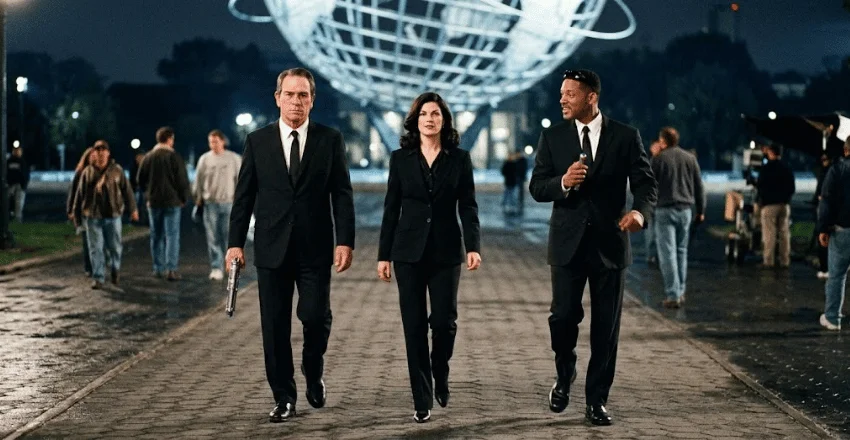
In 1997, Fiorentino played medical examiner Laurel Weaver in Men in Black. The film paired Will Smith and Tommy Lee Jones in a science-fiction comedy about secret alien monitoring. Her character becomes increasingly important as the story moves towards its ending.
The role introduced her to viewers who had never seen her darker independent work. Men in Black became one of the decade’s most recognisable studio films. It also created a sharp contrast with the morally severe tone of The Last Seduction.
Dogma and the final busy years
She returned to a more argumentative leading role in Kevin Smith’s Dogma in 1999. Fiorentino played Bethany Sloane, who becomes central to a religious fantasy involving fallen angels and a threatened universe. The film mixed comedy, theology, and road-movie structure.
Around the same period, she appeared in Where the Money Is and What Planet Are You From?. She also acted in Ordinary Decent Criminal and later Liberty Stands Still. These films kept her visible, though none matched her earlier critical breakthrough.
Why did she step away from acting?
Industry gossip isn’t needed to explain the broad direction of her later career. In 2002, The Guardian reported that she planned to quit acting. The report linked her decision to privacy concerns and unwanted attention around her home address.
That announcement did not mark an immediate, absolute stop. She later appeared in Once More with Feeling, released in 2009. Apple TV’s UK listing credits her as Lydia alongside Chazz Palminteri and Drea de Matteo.
The most accurate description is therefore a gradual retreat rather than a sudden disappearance. Publicly documented work became rare, and regular film roles stopped. Treat claims about secret disputes or hidden causes cautiously without strong sourcing.
Where is she now?
Reliable recent information about her private life is limited, and that should shape any current account. She has not maintained the constant public presence many modern celebrities do. Her low profile also means speculation can easily outrun confirmed facts.
What can be said safely is narrower but more useful. Her latest widely listed screen credit remains the 2009 comedy-drama Once More with Feeling. As of September 2026, there is no well-supported recent acting comeback to report.
Five films that explain her screen appeal
| Film | Year | Why it matters |
|---|---|---|
| Vision Quest | 1985 | An early leading role that introduced her screen persona |
| After Hours | 1985 | A memorable part in Martin Scorsese’s dark New York comedy |
| The Last Seduction | 1994 | Her signature performance and strongest awards achievement |
| Men in Black | 1997 | Her biggest mainstream science-fiction comedy role |
| Dogma | 1999 | A leading part in Kevin Smith’s religious satire |
New viewers should start with The Last Seduction if they want to understand her critical reputation. After Hours shows how much impact she could create in a smaller role. Men in Black then demonstrates how that screen presence translated into a broad studio hit.
UK viewers can also use the BFI’s film pages to explore related noir and neo-noir context. Streaming rights change often, so check availability before publication or viewing. A current UK service listing is more useful than an old platform claim.
Why her career still interests film fans
Fiorentino’s filmography is unusual because its reputation rests on a relatively small number of strong roles. She didn’t build a decades-long franchise career or a constant television presence. Instead, a handful of performances continue to drive discussion of her work.
The Last Seduction remains the clearest reason for that interest. Its central character is difficult, manipulative, and unusually free from conventional redemption. That gave Fiorentino material that suited her restrained style and made the performance hard to forget.
Frequently asked questions
How old is Linda Fiorentino?
She was born on 9 March 1958 in Philadelphia, Pennsylvania. That makes her 68 years old in September 2026. Some older online profiles have circulated a different birth year, so current sourcing matters.
What is she most famous for?
Her signature role is Bridget Gregory in The Last Seduction. Mainstream audiences also know her from Men in Black and Dogma. After Hours remains another important early film in her career.
Did she win an Oscar for The Last Seduction?
No, and she was not nominated for an Academy Award for that performance. The film’s earlier American television broadcast affected Oscar eligibility. She did receive major critics’ awards and a BAFTA Leading Actress nomination.
When did she last appear in a film?
Her latest widely listed acting credit is Once More with Feeling (2009). The film stars Chazz Palminteri and Drea de Matteo alongside her. No later screen role has made it into the standard filmographies reviewed for this article.
Why is she rarely seen in public now?
She chose a much lower public profile after years of regular film work. A 2002 report linked her planned exit to privacy concerns and unwanted attention. More dramatic explanations often rely on speculation rather than verifiable evidence.
Read more entertainment coverage on Readox
Readers exploring screen careers can continue with Readox’s Amanda Abbington film and television guide. The site also covers Martin Compston’s recent series work and broader Readox entertainment coverage. These pages offer related reading across British television, film, and performer profiles.