In today’s competitive market, businesses face the challenge of effectively pricing their products and services. Cost Plus Pricing is one pricing strategy that has gained attention for its straightforwardness and fairness. This approach, which involves calculating the total cost of producing a product and then adding a markup for profit, can foster transparency and build consumer trust. This article explores why Cost Plus Pricing is essential for creating transparent and fair pricing strategies in various industries.
Understanding Cost Plus Pricing
Cost Plus Pricing is a straightforward pricing strategy that involves calculating the total costs incurred in producing a product or delivering a service and then adding a fixed percentage or dollar amount as profit. The formula can be explained like this:
Price = Total Cost + Markup
Breakdown of the Cost Plus Pricing Formula
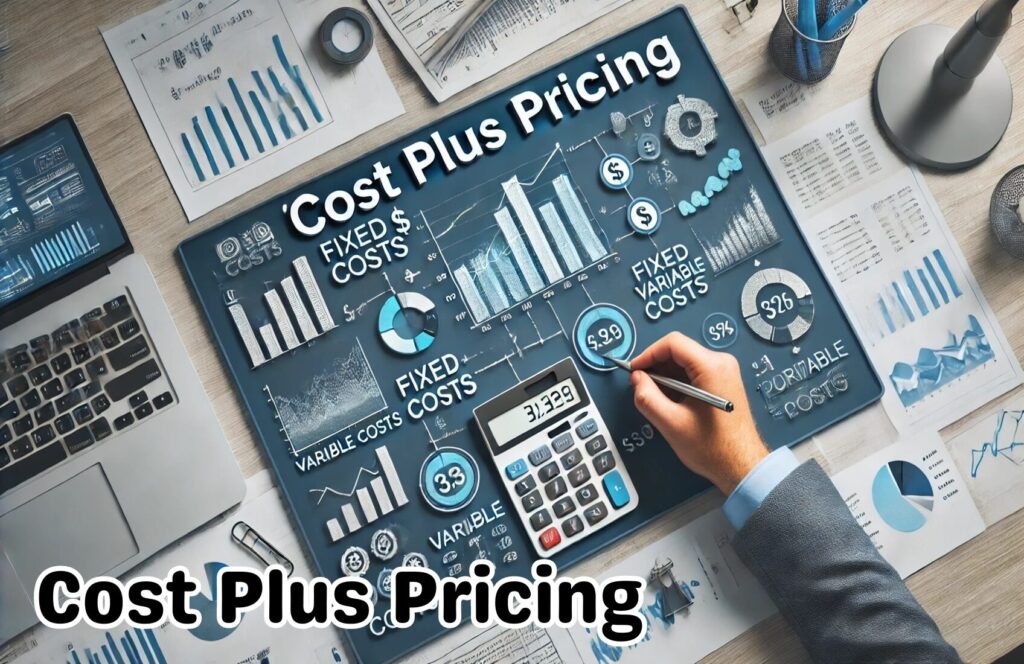
The total cost includes both fixed costs and costs that can change. Fixed costs are expenses that do not change with the production volume, such as rent, salaries, and utilities. In comparison, variable costs change based on how much you produce, such as the cost of materials and labor. By accurately determining these costs, businesses can establish a price that covers expenses and ensures a profit margin.
Historical Context
Cost Plus Pricing has been used for decades, particularly in government contracts and industries with high overhead costs. Its roots can be traced back to manufacturing and construction, which provided a clear pricing structure based on actual costs incurred. This historical significance highlights its relevance in various sectors, including retail and service industries, as it allows businesses to align pricing operational realities.
When Cost-Plus Pricing Works Best for Businesses
Cost-plus pricing is particularly effective for businesses operating in industries where production costs are consistent and easily measurable, such as manufacturing, construction, and wholesale supply. By adding a predetermined markup to the total cost of producing a product or delivering a service, companies can maintain a stable pricing framework that ensures costs are covered and expected profit margins are achieved. This approach reduces the guesswork in pricing decisions and fosters financial predictability, making it easier to budget for future expenses and evaluate profitability. Additionally, cost-plus pricing can be appealing in contractual or custom work scenarios where transparency in cost calculation builds trust between providers and clients, simplifying negotiations and strengthening long-term business relationships.
Benefits of Cost Plus Pricing
Transparency in Pricing
One of the most significant advantages of Cost Plus Pricing is its inherent transparency. Customers are often wary of arbitrary pricing strategies that need more clarity. Cost Pricing describes this concern by offering a straightforward breakdown of determining prices.
When businesses communicate the specific costs involved in producing a product, customers can better understand the rationale behind the price. This transparency fosters trust and loyalty, as consumers feel more informed and less likely to perceive they are being overcharged.
Simplified Pricing Process
The simplicity of Cost Plus Pricing also contributes to its effectiveness. Unlike more complex pricing models that require extensive market research and analysis, Cost Pricing relies on readily available data about production costs. This makes it easier for businesses, particularly small enterprises, to implement and manage.
Moreover, the reduced complexity in financial calculations allows businesses to focus on other critical aspects, such as marketing and customer service. By streamlining the pricing process, companies can allocate resources more effectively, enhancing overall efficiency.
Fairness to Consumers
Cost Plus Pricing promotes fairness by ensuring consumers pay a reasonable price based on actual costs. Unlike value-based pricing models, which fluctuate based on perceived value or market demand, Cost Plus anchors prices to tangible expenses. This alignment helps eliminate the perception of exploitation, making customers feel they receive fair value for their money.
For example, in industries like construction, where project costs can vary significantly, Cost Plus allows clients to see a detailed breakdown of expenses. This openness helps build a collaborative relationship between contractors and clients, fostering trust and reducing potential disputes over pricing.
Cost Plus Pricing vs Other Pricing Strategies
While cost-plus pricing offers simplicity and transparency, it differs significantly from other pricing strategies such as value-based and competitive pricing. Value-based pricing focuses on the perceived worth of a product to the customer, often allowing businesses to charge higher prices based on demand and brand reputation.
Competitive pricing, on the other hand, is influenced by what rivals charge in the market. In contrast, cost-plus pricing centers on internal production costs, making it easier to calculate and justify. This makes it particularly suitable for businesses that prioritize consistency, predictable profit margins, and clear communication with customers over market-driven fluctuations.
Case Studies of Successful Implementation
Several companies have successfully implemented Cost Plus Pricing, reaping the benefits of transparency and customer trust. For instance, many government contractors use this model to provide detailed cost reports, ensuring taxpayers understand where their money is going. This practice enhances accountability and encourages efficient use of resources.
Another example is a small artisanal bakery that uses this to price its goods. By openly sharing the cost of ingredients and labor, the bakery builds trust with its customers, who appreciate transparency. This strategy has resulted in a loyal customer base that values the business’s honesty and integrity.
Industry Applications
CPP is particularly beneficial in industries with fluctuating costs or where customization is common. For instance, the construction industry often employs this strategy to address the variability in project costs. By using this technique, contractors can provide accurate estimates based on actual expenses, minimizing disputes over pricingpricinglarly, manufacturers who produce customized products can benefit from Cost Plus. This approach allows them to calculate costs based on specific materials and labor needed for each unique order. As a result, customers receive tailored solutions while understanding the pricing structure.
Challenges of Cost Plus Pricing
Potential Drawbacks
While Cost Plus Pricing offers numerous advantages, it has. One of the most significant drawbacks is the potential for cost overruns, which can adversely affect profitability. If a business underestimates its costs, the markup may not cover the expenses, leading to financial strain.
Additionally, accurately determining costs can be complex. Businesses must have robust accounting systems in place to track expenses effectively. Failure to do so may result in inaccurate pricing and reduced profitability.
Strategies to Overcome Challenges
To overcome these challenges, businesses should adopt best practices for accurate cost assessments. Reviewing and updating cost structures helps ensure pricing prices align with actual expenses. Implementing robust accounting software can also streamline the process, making it easier to accurately track costs and calculate prices.
Furthermore, effective communication with customers is essential. Businesses should proactively inform clients about potential cost fluctuations and the reasons behind them. By setting clear expectations, companies can mitigate dissatisfaction and maintain trust even when prices change.
Conclusion
In a marketplace where transparency and fairness are increasingly valued, this technique emerges as a vital strategy for businesses aiming to build customer trust. By providing a clear and straightforward pricing structure, businesses can foster a sense of transparency, simplify their pricing processes, and ensure fairness in their pricing models.
While challenges exist, the benefits of Cost Plus, including enhanced customer loyalty and improved profitability, far outweigh the drawbacks. As businesses navigate an ever-evolving market landscape, embracing Cost Plus can lead to more transparent and fair pricing strategies, ultimately driving long-term success. Prioritizing transparency and fairness in pricing practices enhances their reputations. It cultivates loyal customer relationships that can withstand the test of time.
Apart from this, if you are interested to read an amazing article on “Keyring Maker“, then explore our “Business” category.
Frequently Asked Questions (FAQs)
Cost-plus pricing is a way to set prices. It means figuring out how much it costs to make a product or provide a service and then adding a certain percentage on top of that to determine the selling price.
Rigid cost-plus pricing is an easy way to set prices that rely only on the total cost of making and selling a product.
This can help you save time and money and lower the chance of pricing your products or services too low or too high. Another advantage of cost-plus pricing is that it ensures you cover your costs and earn a profit.
Cost-plus pricing is used to ensure that all production or service costs are covered while guaranteeing a fixed profit margin for the business.
It is commonly used in manufacturing, construction, government contracts, and service-based industries where costs are predictable.